
How to change a spotlight in a suspended ceiling
How GU10, GU5.3 and GX53 spotlights come out of the ceiling, how to deal with the retaining clip, and how to avoid damaging a stretch ceiling.
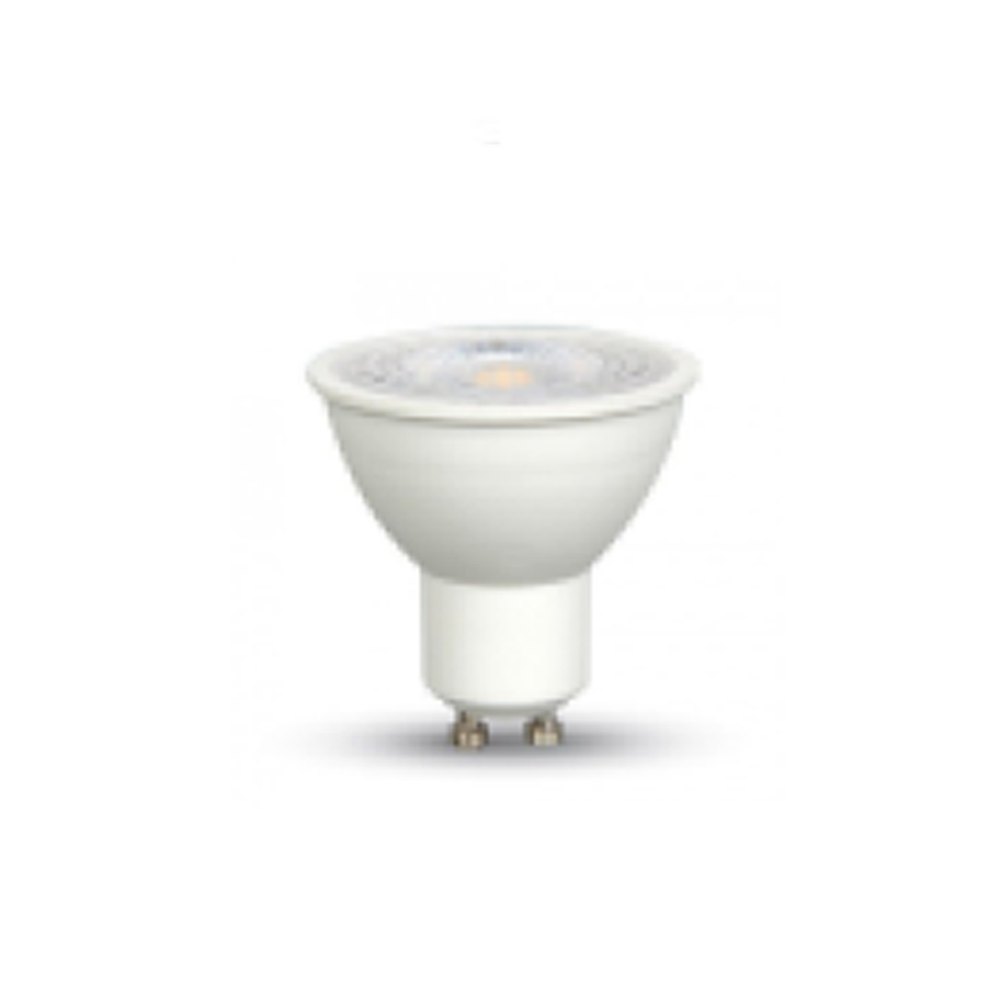
Nobody wonders how a spotlight is held in place while it works. Once one goes out, though, it turns out that the little round lamp in the ceiling will not unscrew like an ordinary bulb, and pulling it brings the whole fitting down on its wires. The job is actually simple; you just need to work out how the lamp is retained before you start.
Before you start
Switch the light off. Ceiling spots are usually grouped on shared switches; when it is unclear which switch feeds which group, cut power to the whole lighting circuit at the fuse board instead. Old halogen spots get very hot, so give them a few minutes to cool after switching off.
Use a stable stepladder or a solid chair, never a sofa or a swivel chair. Make sure your hands are clean and dry: touching the glass of a halogen lamp with bare fingers shortens its life, and on an LED lamp greasy fingerprints stay on the diffuser.
How the lamp is held: three common set-ups
Retaining clip. In GU5.3 (MR16) spots and many GU10 fittings, the lamp is held from behind by a thin wire spring clip. The two ends of the clip sit in small lugs inside the fitting. Look closely at the edge of the lamp and you will see the wire.
Twist-lock bayonet. Some GU10 fittings have no clip. Insert the pins, then rotate the lamp about a quarter turn clockwise until it locks.
GX53 disc lamp. The "tablet" lamps in ceilings also come out with a twist, but the turn is short and there is a wide surface to grip.
Step-by-step replacement
With a retaining clip:
- squeeze the ends of the clip together with your fingers or thin needle-nose pliers;
- lift the ends out of the lugs and swing the clip aside; it does not need to come out completely;
- the lamp will drop under its own weight, so catch it in your palm;
- pull a GU5.3 lamp straight off its pins; turn a GU10 anticlockwise first;
- fit the new lamp to the holder, place it in the fitting and seat the clip back in its lugs.
With a twist-lock GU10, grip the edge of the lamp, turn it anticlockwise and pull. If your fingers slip, a rubber glove or one of the small suction tools sold for the purpose helps. Push the new one in and turn it clockwise.
If the lamp will not come out and the whole fitting starts coming down when you pull, stop. That means the fitting is leaving the ceiling on its spring clips. Push it back up and check the retaining method again.
Before you buy the new lamp
Do not throw the old lamp away straight after removing it: it is the most accurate sample for choosing a replacement. The front or back usually carries several markings, and all of them matter:
- the base code, such as GU10, GU5.3 or another type;
- whether it runs on mains voltage or on 12 V, which reveals whether a transformer is hidden above the ceiling;
- the diameter: standard spots are about 50 mm, small MR11s about 35 mm, and one will not go in place of the other;
- the beam angle and colour temperature, so the new lamp looks like its neighbours.
If the markings have worn off, a photo of the back and side of the lamp shown to the shop assistant is enough. If a room has several spots, it makes sense to buy two or three lamps instead of one, so the next one to fail can be replaced with an identical lamp straight away.
Take care with stretch ceilings
The membrane of a stretch ceiling is thin and sensitive to sharp edges and heat. When changing a lamp, do not press on the fitting ring or push the membrane with your fingers. If you use pliers, keep their tips away from the ceiling. Replacing an old halogen lamp with LED brings an extra benefit here: less heat means less risk of yellowing and distortion around the fitting.
Checks after the change
- Switch on and watch for flicker; in a GU5.3 spot this can signal a mismatch with the transformer.
- Does the colour of the new lamp match the neighbouring spots?
- Is the lamp sitting straight in the fitting rather than tilted?
- Are the holder wires free of strain, and are the contacts free of scorching?
If one spot keeps failing, the cause may be a poor contact or overheating in the holder rather than the lamps. Replacing the holder in that case protects the lamps that follow.
Both spot types you are likely to find, GU10 and G5.3, are available as Zəfər İşığı LED lamps. Knowing the old lamp's base before you go shopping saves a second trip.
All news