
Beam angle in spotlights: narrow or wide?
Two spotlights of the same power can give completely different results depending on beam angle. Where narrow and wide beams belong, and how to work out the spot size.
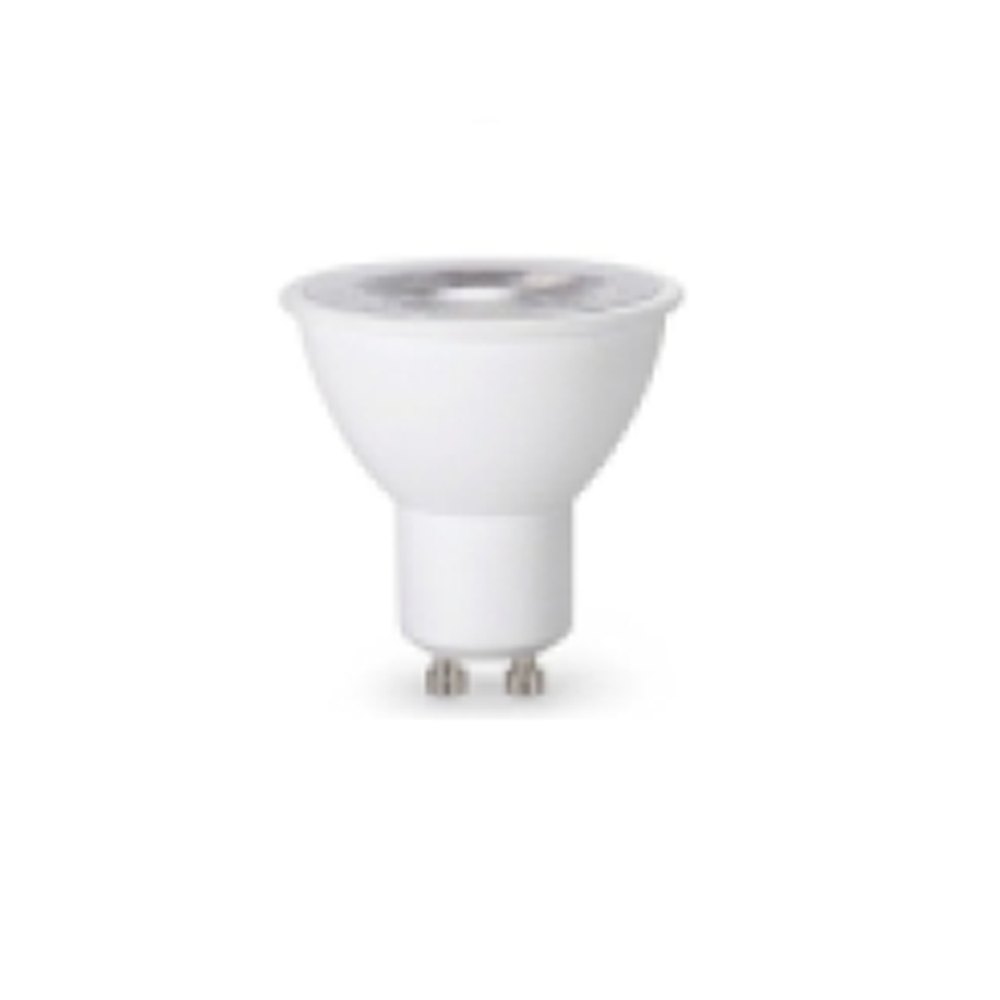
Twelve spotlights have been fitted in the ceiling, yet the room looks odd: bright circles on the floor with dark bands in between. In another home the same number of spots lights everything evenly, but the paintings and shelves look flat. In both cases the cause is often the same: the beam angle was not chosen for the job.
What the beam angle tells you
The angle printed in degrees on a spotlight box is the width of its cone of light. It is normally measured between the points where intensity falls to half of the value at the centre of the beam. So light does not stop abruptly at the edge of the angle; it fades gradually, but the main, useful light sits inside that cone.
One important point: the angle does not change the lamp's total output. The same lumens are concentrated onto a small area with a narrow beam, where they look very bright, or spread over a large area with a wide beam, where each point looks dimmer.
Typical ranges and where they fit
The angles you find on the market fall roughly into three groups:
- Narrow beam, around 10–25°. Accent lighting for display cases, paintings, sculptures, textured walls or a bar counter. Also used to get light from a high ceiling down to a specific spot.
- Medium beam, around 30–40°. A versatile choice for kitchen worktops, dining tables and hallways, where you want light that is directional yet reasonably broad.
- Wide beam, 60° and above. For general lighting with ceiling spots: bedrooms, living rooms, bathrooms and offices.
The most common mistake at home is buying narrow-beam lamps for general lighting. The result is pools of light on the floor while walls and corners stay dark.
Working out the size of the light pool
A quick formula tells you how wide the lit circle will be: diameter = 2 × distance × tan(angle / 2). A few ready-made examples make it easier:
- 24° at 2.5 m: a pool about 1.1 m across;
- 36° at 2.5 m: about 1.6 m;
- 60° at 2.5 m: about 2.9 m.
Take the distance from the lamp to the surface being lit. If you are lighting a table, subtract its height from the ceiling height. With a 2.7 m ceiling and a 75 cm table, the distance is about 1.95 m, so the pool is smaller than on the floor.
Spacing between spotlights
For general lighting, place spots so that the pools of neighbouring lamps overlap slightly. If they do not touch, dark areas appear between them. A practical rule: the spacing between two spots should be close to, or a little less than, the pool diameter on the lit surface.
Spots near a wall raise another issue. Fit a lamp very close to the wall and a wide beam paints long, sharp "scallops" on it. The effect is sometimes used decoratively, but if you do not want it, mount the spot a little further from the wall or choose a narrower angle.
Other factors in choosing an angle
Ceiling height. A wide angle works better under a low ceiling, because light has to spread over a large area in a short distance. Under a high ceiling a wide-beam lamp scatters too much and stays weak below; a medium or narrow angle is more effective there.
Glare. A narrow beam produces a very bright centre. If such a spot falls on a seat or a bed, it dazzles anyone looking up.
Surface finish. A narrow beam hitting glossy tiles or polished stone reflects and creates a second bright point. On matt surfaces this is hardly noticeable.
Adjustability. Tilting or rotating spot housings do not change the angle, but they let you aim the light where it is needed. This is particularly useful when furniture is moved.
A short checklist
Before buying spotlights, answer these questions:
- Is this general light, or does it highlight an object?
- How far is the lamp from the surface it lights?
- How wide a pool do you need, and will the pools meet?
- Will the beam fall into someone's eyes or onto a glossy surface?
Once the answers are clear, the angle on the box stops being just a technical figure and becomes the key to a specific result.
Zaferoğlu Elektrik's range includes 7-watt lamps with GU10 and G5.3 bases as well as an adjustable 3D spotlight; when choosing a beam angle, refer to the technical details on each model's packaging.
All news