
What a candela is and why it matters for spotlights
The candela describes how strong light is in a particular direction. For spotlights it says more than lumens do: how bright the centre of the beam is and how far the light reaches.
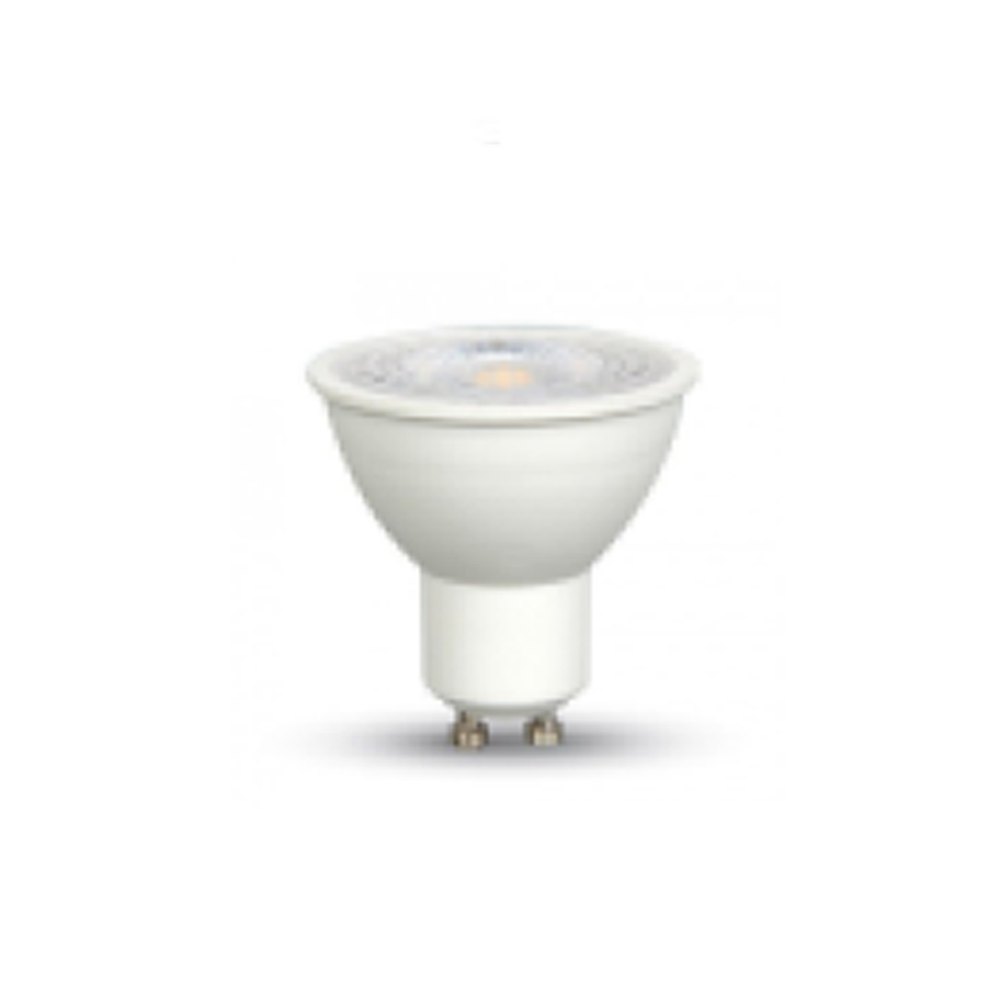
Lumens tell you how much light a lamp gives out in total, and lux how much lands on a surface. Between the two sits a third, less familiar unit: the candela. You hardly need it when buying an ordinary pear-shaped bulb. When choosing a spotlight, floodlight or torch, however, the candela is often the most useful figure of all.
What the candela measures
The candela (cd) is the unit of luminous intensity and one of the seven base units of the International System of Units (SI). It describes how strongly a light source shines in one particular direction. Historically the unit was set close to the light of a single candle, which is where the name comes from.
A simple example shows the difference. Two lamps produce the same amount of light: one spreads it in all directions, the other squeezes it into a narrow cone. Their lumens are equal. But along the beam of the second lamp the candela value is many times higher, because the same light is packed into a small solid angle.
How lumens, candelas and lux relate
The three units are linked in a straightforward way:
- lumens = candelas × solid angle (in steradians);
- lux = candelas / distance squared (along the beam axis, for a small source).
The second relationship is the most useful in practice. If the box states a centre intensity of, say, 1,600 cd, you can immediately work out the illuminance 2 metres directly below the lamp: 1,600 / (2 × 2) = 400 lux. At 3 metres it is 1,600 / 9, about 180 lux.
Angle and candela: an example
Suppose 500 lumens are packed into an evenly filled cone. This is an idealised calculation, since in a real lamp the centre of the beam is brighter than the edges, but it gives a useful picture:
- at 36° the cone's solid angle is about 0.31 steradians, and the average intensity comes out close to 1,600 cd; at 2 m that means about 400 lux;
- at 60° the solid angle is about 0.84 steradians and the intensity falls to around 600 cd; at 2 m, about 150 lux.
So with the same lumens and the same power, widening the angle from 36° to 60° cuts the illuminance at the centre of the beam roughly threefold. The reverse is also true: narrowing the angle strengthens light on the target considerably without a stronger lamp or higher consumption. That is why comparing spotlights by lumens alone is misleading.
How it appears on the box
On spotlights and reflector lamps the candela figure can be given in several ways:
- "cd" or "Peak intensity": the intensity at the brightest point of the beam;
- "CBCP" (centre beam candlepower): the intensity of the central beam, meaning the same thing;
- a light distribution diagram: some manufacturers show the pool diameter and lux values at various distances.
If such a diagram is provided, there is no need to calculate anything: the row matching your ceiling height shows both the pool size and the illuminance.
When the candela figure is decisive
High ceilings. If a display or counter must be lit from 4–5 metres up, enough light has to reach the bottom. Here a narrow-beam lamp with high candela performs better than a powerful wide-beam one.
Accent lighting. A painting or decorative object needs to be noticeably brighter than the background so the eye is drawn to it. Planning that contrast requires knowing the centre-beam intensity.
Outdoor lighting. When uplighting a tree trunk, a facade detail or a flagpole, distances are large and light falls off with the square of the distance.
Glare risk. High candela also means that an eye looking into the beam meets very strong brightness. Such lamps should not be aimed towards seats, walkways or stairs.
A practical approach
For general light at home there is no need to bother with candelas: lumens and a wide angle are enough. But if you want to light a particular spot, take three steps: measure the distance, decide on the lux you want, and multiply by the distance squared to find the candelas required. For 300 lux at 2.5 m, for example, you need a centre intensity of roughly 300 × 6.25, or about 1,900 cd.
Zaferoğlu Elektrik produces a variety of LED lamps in Ganja, including spot-type lamps; when planning accent lighting, considering a lamp's beam angle and centre intensity together gives a more precise result.
All news