
Frosted vs clear glass: light loss and softness
A frosted bulb softens light, while a clear one gives sparkle and crisp shadows. Where each works best, and how to think about light loss.
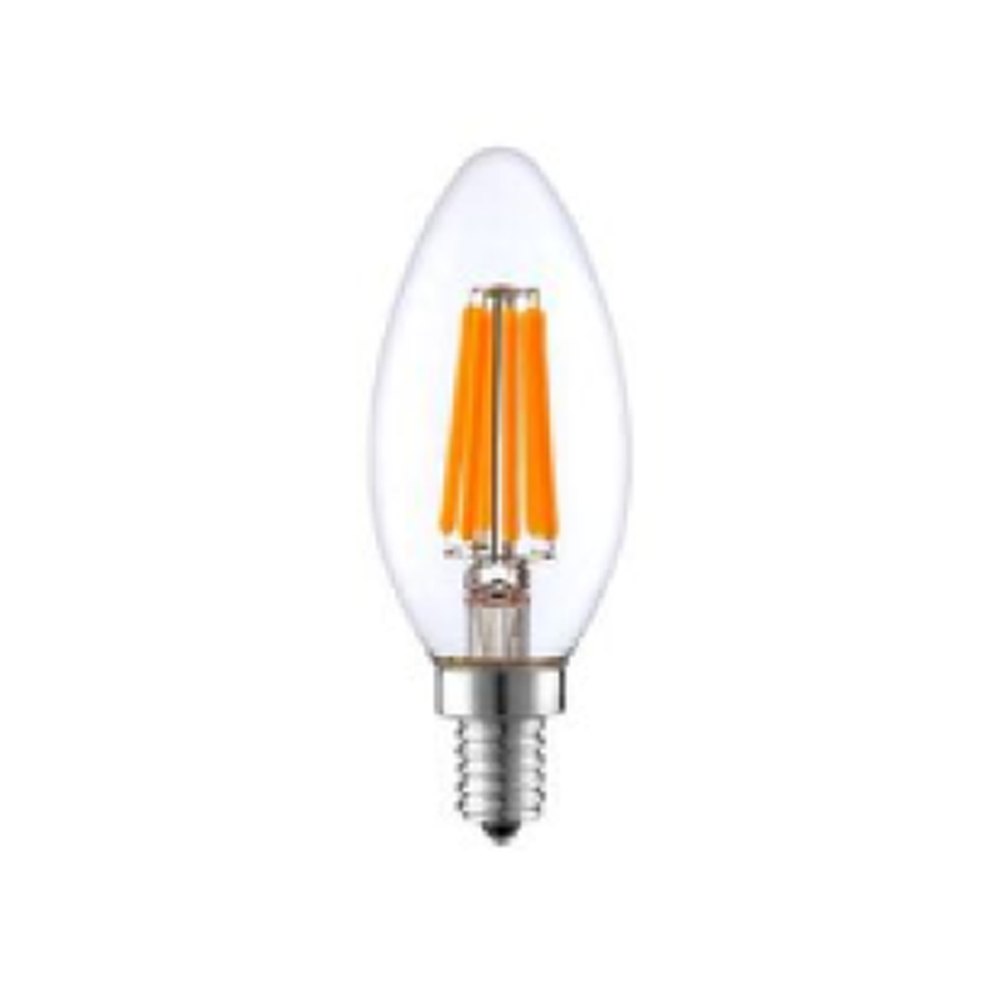
Two lamps of the same shape and wattage sit side by side on a shelf: one has a milky white bulb, the other is clear as glass with thin glowing filaments inside. The difference in price and watts may be small, yet at home the result can differ sharply. The choice is not only a matter of taste; it also depends on the type of fitting and where the lamp sits relative to eye level.
What the bulb does to light
A clear bulb lets light through almost unchanged. The eye sees the source inside directly, such as the filaments of a filament lamp. Because the source is small and bright, the light is "crisp" and shadows are sharp.
A frosted bulb acts as a diffuser. A coating on the inner surface, or the structure of the glass itself, scatters light in many directions. The whole bulb glows evenly, the apparent size of the source "grows", and the light looks soft.
Light loss: how serious is it?
Every diffuser absorbs or reflects back some light, so a frosted bulb does lose some output. How much depends on the density of the coating and the material, and it varies between manufacturers.
In practice, the key point is this: the lumen figure on the box is the light of the finished lamp, measured with its bulb. So there is no need to adjust anything for the type of glass when comparing two lamps; simply compare the lumen figures. In the same range a frosted version may list slightly fewer lumens than a clear one, but in everyday use the difference is often impossible to see.
Where clear bulbs work well
- Crystal and glass chandeliers. Crystals need a small, bright source to refract light and sparkle. With frosted lamps a chandelier looks "dull".
- Fittings with shades. If the lamp itself is hidden, the glare risk of a clear bulb disappears and the shade does the diffusing.
- Decorative lamps. Visible filaments are part of the design in loft, retro or restaurant interiors.
- Where directional light is needed. In a fitting with a reflector, a small source allows light to be aimed more precisely.
Where frosted bulbs work well
- Open fittings. A pendant with no shade, a bare lampholder, an open wall light: the lamp is seen directly, and a frosted bulb protects the eyes.
- Sources at eye level. A bedside wall light, a lamp next to a mirror, a low-hung pendant.
- Thin or clear glass shades. A clear lamp inside a clear shade shows up as a bright point; a frosted lamp lights the shade evenly.
- Places where soft general light is wanted. Bedrooms, children's rooms, relaxation areas.
Opal and "semi-clear" options
Between the two extremes there are intermediate options. An opal bulb diffuses more strongly than a frosted one and gives the look of a completely even white surface. Decorative filament lamps with smoky, amber or gold-tinted glass both soften light and warm its colour; these are meant for atmosphere rather than general lighting, because tinted glass holds back a noticeable share of the light.
A simple test for choosing
Look at the fitting from where you spend the most time: the sofa, the bed, the dining table.
- Can you see the lamp itself? If so, a frosted bulb is more comfortable.
- Is the fitting made of crystal or glass elements, and do you want sparkle? Choose clear.
- Is the lamp inside a shade and invisible from below? Both work, and clear may let out slightly more light.
- Do harsh shadows bother you? A frosted bulb softens them.
Try not to mix frosted and clear lamps in one chandelier: the sparkle in the crystals becomes uneven and the chandelier looks unfinished. For the same reason, when replacing lamps it is better to use one model throughout, because frosted coatings from different manufacturers vary in density and the bulbs look differently white side by side.
There is a difference in care as well. Dust and fingerprints show up faster on a clear bulb and reduce its sparkle. On a frosted bulb dirt is less visible but still dims the light. In both cases, wiping the lamp with a dry, soft cloth once it has cooled and is disconnected from power is enough.
Zaferoğlu Elektrik's range includes 6-watt E14 filament lamps in straight and teardrop shapes; when choosing for chandeliers and decorative fittings, consider the look of the bulb together with where the lamp sits relative to eye level.
All news