
Can you measure how bright a lamp is at home?
You cannot measure a lamp’s lumens accurately at home, but you can roughly check the light reaching your desk with a lux meter or phone and compare lamps.
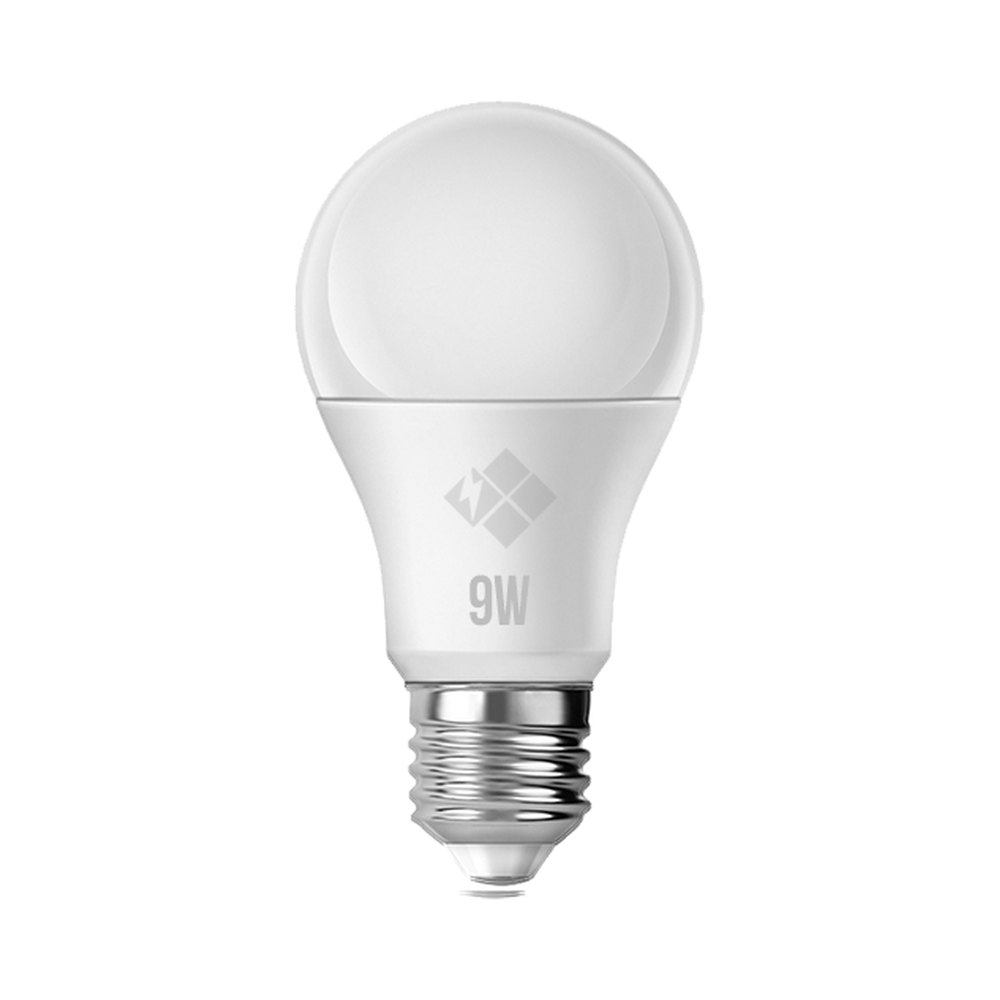
Maybe the new lamp seems weaker than the one it replaced. Or you want to know whether there is enough light on your desk. The natural question is whether you can measure this at home. The answer is "partly". Some things can be checked reliably enough; others can only be measured with laboratory equipment.
What you cannot measure at home
Lumens on the packaging describe the entire light output, summed over all directions. Laboratories measure it with instruments such as an integrating sphere or a goniophotometer: the lamp is either placed in a large sphere with a white inner coating, or its light is measured direction by direction and added up. That cannot be reproduced at home.
So a home measurement does not answer "how many lumens is this lamp?". It answers a different but very practical question: "how much light is falling on my desk?"
What you can measure
Light falling on a surface, illuminance, is measured in lux, and the instrument for it is a lux meter. With a lux meter you can:
- check light levels at specific points such as a desk, a kitchen worktop or a reading spot;
- compare two lamps under the same conditions;
- see the difference between the middle of a room and its corners;
- track whether a lamp dims over time.
Simple consumer lux meters are sold in electronics and tool shops. They are not as accurate as professional instruments, but they are good enough for comparisons.
Measuring with a phone
Most smartphones have a light sensor that adjusts screen brightness automatically, and some apps display its reading in lux. It is an interesting free tool, but you need to know its limits:
- the sensor is not calibrated as a measuring instrument, so different phones can show different figures in the same spot;
- it usually sits at the top of the screen, and screen protectors or cases affect the reading;
- some sensors stop reading beyond a certain level or show different errors under different colour temperatures.
The upshot: a phone is not reliable for absolute figures, but it is useful for comparing two lamps with the same phone in the same position.
A proper measuring routine
For the measurement to mean something, keep the conditions constant:
1. Measure in the evening with the curtains closed, so daylight does not mix in.
2. Switch off other lights in the room, or keep them the same for every measurement.
3. After switching on a new LED lamp, wait a few minutes for its output to stabilise.
4. Place the sensor face up on a horizontal surface, such as the desk.
5. Do not cast a shadow over the sensor with your body; if possible, set the phone down and step back.
6. Take several readings at the same point and use the average.
7. When comparing lamps, do not change the fitting, the distance or the sensor position.
Write the numbers down. Measuring at several points, such as the centre and edge of the desk, shows how evenly the light is spread.
How to interpret the result
Compare your figure with known reference levels. For office workplaces the EN 12464-1 standard specifies 500 lux on the surface for writing and reading; this is not mandatory at home, but it is a good reference for someone who reads for long periods or does fine work. Hallways and passages need far less light.
When comparing two lamps, do not attach too much importance to small differences. The eye is poor at noticing small changes in light; a difference of a few percent is invisible in practice. If one lamp gives noticeably fewer lux than another under identical conditions, it makes sense to recheck the lumen figures on the boxes, the beam angles and the type of bulb.
How to check for flicker
Besides brightness, flicker is another thing you can check at home. Point your phone camera at the lamp or at a lit white surface and look at the screen; with some lamps horizontal bands appear. Slow-motion mode can make this effect clearer. The method is not a precise measurement, and the absence of bands does not guarantee that there is no flicker at all, but it helps reveal an obvious problem.
If you want to compare Zaferoğlu Elektrik LED lamps with each other or with old lamps, the routine above lets you get a fair result under the same conditions.
All news