
Reading the data on an LED bulb box
Lumens, kelvins, Ra, rated hours and symbols: an LED lamp box says a lot about the lamp. Here is what each marking means and what deserves your attention.
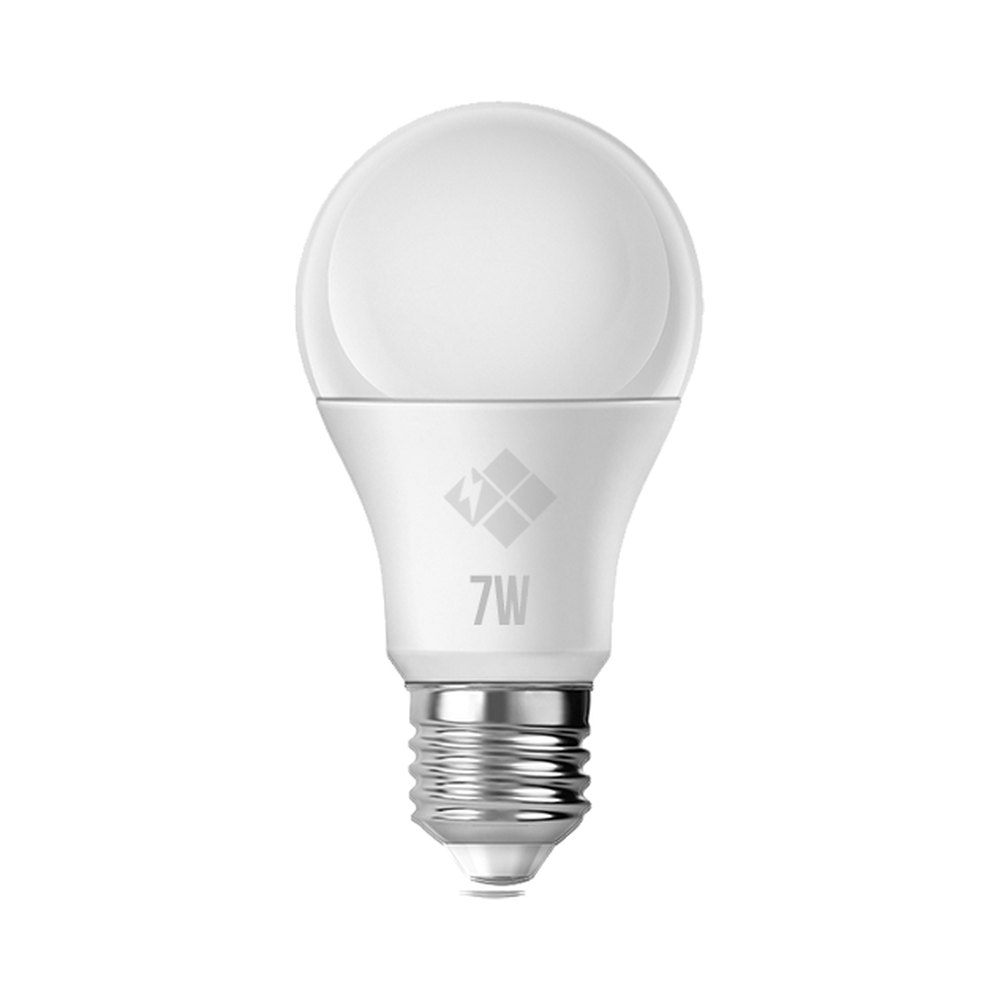
An LED lamp box is small, yet it carries dozens of figures, abbreviations and symbols. In the shop most people look only at the wattage and the price, and the rest goes unread. Once you learn to read the box properly, though, the chances of an unpleasant surprise after you get the lamp home drop considerably.
Light and energy figures
Lumens (lm). The amount of light the lamp produces, and the main way to compare brightness. When choosing between two lamps, look at this number first.
Power (W). The actual energy the lamp draws from the mains. This figure determines your electricity use.
Equivalent wattage. Text such as "equal to 60 W" is a rough comparison with an old incandescent bulb. It is a helpful pointer, but it is not what the lamp consumes.
Energy label. Lamps sold for the European market carry a label showing their energy class. The 2021 version of the label is stricter, and scanning its QR code opens the product's record in the EU register.
The character of the light
Colour temperature (K). Given in kelvins. Roughly 2700–3000K is warm, yellowish light, around 4000K is neutral white, and 6000–6500K is cool, bluish white. Sometimes words like "warm white" or "cool daylight", or a colour scale, appear instead of a number.
Colour rendering (Ra or CRI). Shows how natural colours look under the lamp. Ra 80 and above is considered normal for the home; for painting, make-up or choosing fabrics, a higher value is an advantage.
Beam angle. Given in degrees on spotlights: a small number means a narrow beam, a large one a wide spread. On a standard pear-shaped bulb this is often not stated, or the spread is simply wide.
Technical compatibility
Base. Codes such as E27, E14, GU10 and G5.3 show which lampholder the lamp fits. Compare with the marking on the old lamp's base.
Voltage. Usually "220–240V ~ 50/60Hz". Some low-voltage lamps, such as certain G5.3 types, may be marked 12V; these connect through a transformer rather than directly to the mains, and the wrong choice can destroy the lamp immediately.
Dimensions. Diameter and length in millimetres. The heat-sink section of an LED lamp is sometimes longer than an old incandescent bulb and can stick out beyond a lampshade ring. Useful for checking in advance whether the lamp will fit a small shade or fitting.
Dimming. If the box has no "dimmable" wording or symbol, the lamp is not designed for a dimmer switch. Connecting it to one can cause flicker and buzzing.
Life and operating conditions
Rated hours. A figure such as "15,000 hours" usually refers to the average time until the light output falls to a certain level, not a promise that every lamp will fail at that moment. It is sometimes accompanied by a note like L70, meaning the point at which output has dropped to 70 percent of the initial value.
Switching cycles. Worth checking for places where the light is switched often, such as a hallway with a motion sensor.
Operating temperature and enclosed-fitting symbol. Some lamps are not suitable for sealed, enclosed fittings, which is shown by a crossed-out luminaire symbol. A permitted temperature range for outdoor or cold locations may also be given.
The small symbols
- a crossed-out wheelie bin: do not throw the lamp away with household waste; hand it in as electronic waste;
- the CE mark: the manufacturer's declaration of conformity with European requirements;
- "Hg-free" or mercury-free: unlike fluorescent lamps, it contains no mercury.
Flicker and power factor. Some packaging says "flicker-free" or states the power factor (PF). A flicker-free lamp is more comfortable for people who read for long periods or sit in front of a screen. Power factor matters mostly where many lamps are connected, such as offices and shops.
If the box has none of this information and just says "super bright" in large letters, that is reason enough to be cautious.
Zaferoğlu Elektrik's product pages list the power and base type of each lamp; checking these against the lampholder and fitting at home before buying makes the choice easier.
All news