
Lumens per watt: how to compare lamp efficiency
Watts tell you how much energy a lamp uses, lumens how much light it gives. Their ratio shows real efficiency and makes it possible to compare two lamps fairly.
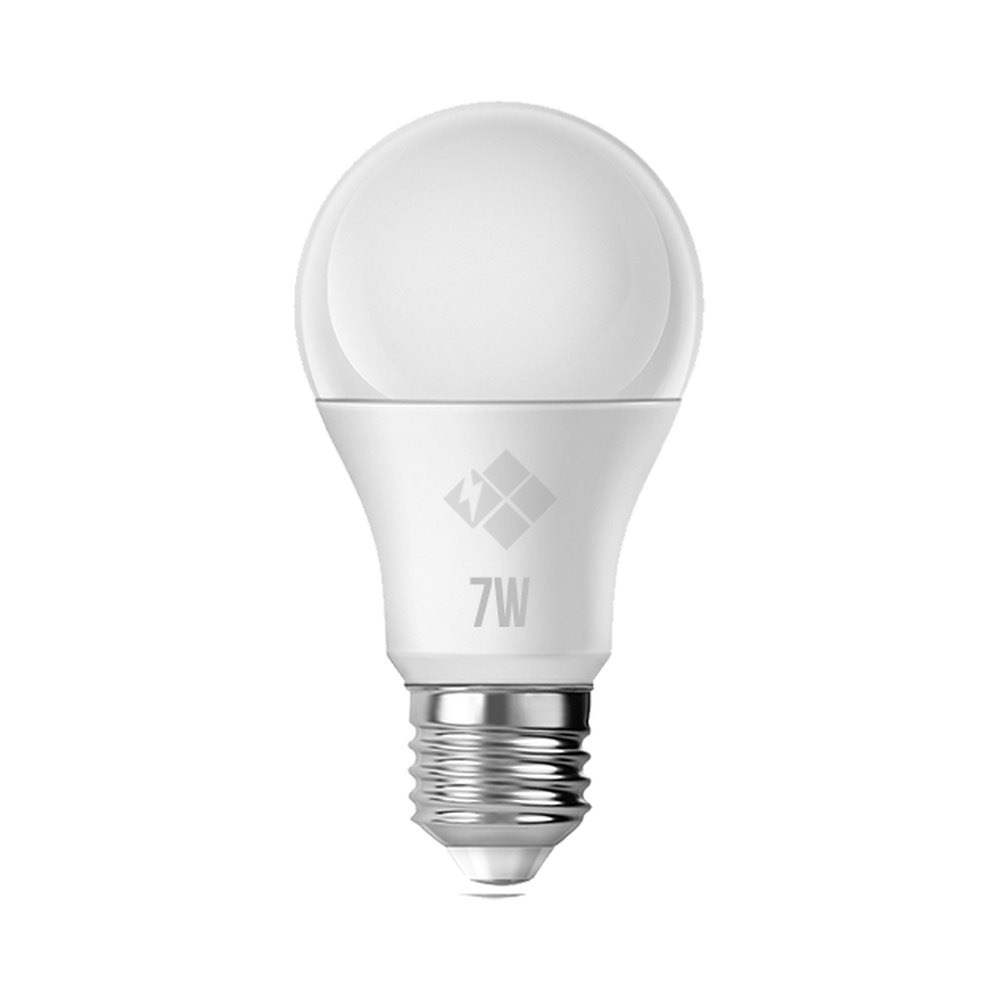
Faced with a 9-watt and a 10-watt LED bulb, which should you take? Many people assume the lower wattage is the "economical" choice. But saving energy is not only about drawing less power; it is about how much light you get from that power. The figure that captures this is luminous efficacy, expressed in lumens per watt (lm/W).
How the figure is calculated
The maths is simple: divide the luminous flux on the box (lumens) by the rated power (watts). A 9 W lamp giving 900 lumens has an efficacy of 100 lm/W. A 10 W lamp giving 950 lumens reaches 95 lm/W. So the first lamp gets slightly more light out of every watt, even though the second is brighter overall.
The rated power of an LED lamp includes the losses in its driver, because that is what the lamp actually draws from the mains. A calculation based on the box figures therefore reflects the efficiency of the whole lamp, not just its LED chips.
Differences between technologies
Typical efficacy varies hugely between lamp types:
- a standard incandescent bulb gives roughly 10–15 lm/W, turning most of its energy into heat;
- halogen lamps do a little better but stay close to that level;
- compact fluorescent lamps are around 50–70 lm/W;
- household LED lamps usually exceed 80 lm/W, and good models go considerably higher.
That gap explains why electricity use drops so sharply when old lamps are replaced by LED: the same light needs several times less power.
A simple example: if an incandescent bulb needs about 60 watts for 800 lumens, an LED lamp at 100 lm/W delivers the same light with 8 watts. For a lamp on five hours a day, that difference adds up to more than 90 kilowatt-hours a year. The efficacy figure lets you see this in advance.
Conditions for a fair comparison
When comparing lm/W between two lamps, their other properties must match, otherwise the numbers mislead.
Colour temperature. Within one range, a cool white lamp often gives slightly more lumens than a warm white one. That does not make warm light "worse"; the phosphor coating simply behaves differently.
Colour rendering index (Ra or CRI). Lamps that render colours more naturally are usually a little less efficient. Comparing an Ra 90 lamp with an Ra 80 lamp on lm/W alone is not fair.
Bulb and optics. A frosted envelope, lens or reflector absorbs part of the light. The lumen figure on the box already applies to the finished lamp, but design choices still affect efficacy.
Lamp type. Comparing a spotlight, a candle bulb or a filament lamp directly with a standard pear-shaped bulb makes little sense; each shape has its own technical limits.
What not to be fooled by
On some packaging the biggest number is the "equivalent" wattage, such as "replaces 75 W". That is not the lamp's real consumption but a rough brightness comparison with an old incandescent bulb, and manufacturers round it differently. Use only the real rated power for efficacy.
Another trap is a box with no lumen figure at all. In that case efficiency cannot be judged, because you do not know how much light the lamp produces. It is better to choose lamps whose packaging clearly states lumens, power and colour temperature.
Finally, a very high lm/W figure is not everything. Driver quality, flicker, heat management and colour rendering also shape everyday comfort.
A practical approach at home
In practice: settle on the lumens you need, narrow the choice to lamps with the same kelvin and comparable Ra, and then pick the one with the best lm/W. In a multi-bulb chandelier or lights that stay on all day, this small difference adds up to a noticeable saving over a year. For a pantry light switched on for a minute or two, it hardly matters.
The E27 lamps in Zaferoğlu Elektrik's Zəfər İşığı range come in ratings from 7 to 22 watts; when comparing them, the lumen and power figures on each model's packaging can be checked using the rule above.
All news