
Lighting cold stores and refrigerated rooms
Sub-zero temperatures, condensation, washdowns and food safety call for a different approach from ordinary warehouse lighting. The key criteria for cold zones.
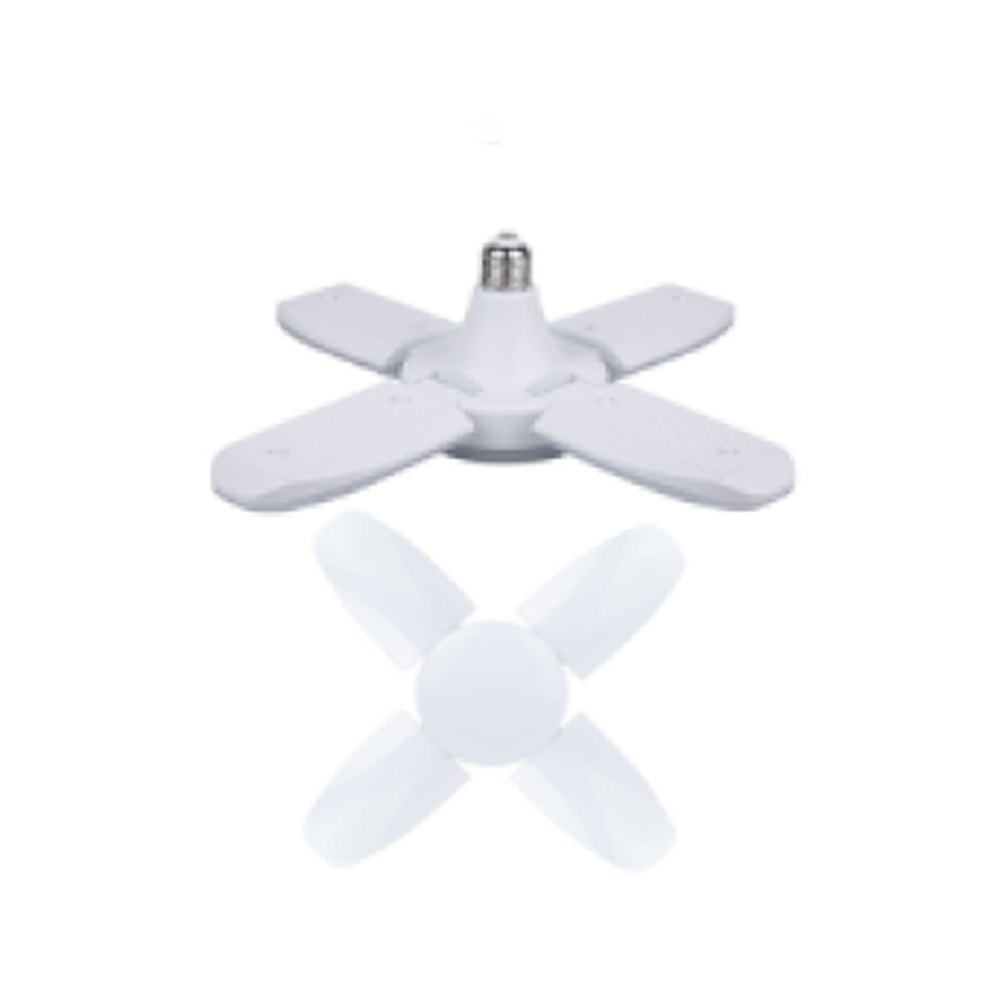
Lighting a cold room looks simple: fix a few fittings to the ceiling and the job is done. A few months later the problems start: some lights are slow to come on, water collects inside housings, cables crack, and a food safety audit flags the glass covers. A cold zone is a different environment from an ordinary warehouse, and the lighting has to be chosen for those conditions.
How cold affects light
Different light sources react differently to low temperatures. The light output of fluorescent lamps drops noticeably in the cold, and some struggle to start. That is why dim, flickering light is a familiar sight in older cold stores.
LED technology has the advantage here: low temperatures help carry heat away from the LED chip, and LEDs come on instantly even in the cold. The weak point is the electronics. A fitting's driver, and its capacitors in particular, are designed for a certain temperature range. When choosing, check the operating temperature range in the fitting's datasheet: the minimum ambient temperature must cover the actual temperature of the room.
It is also important to distinguish freezer rooms from chillers. A fitting that suits a chiller running above zero may not behave the same way in a deep-freeze zone.
Condensation and ingress protection
Moisture is the biggest enemy of a cold zone. Every time a door opens, warm humid air enters and condensation forms on cold surfaces. Equipment moving from the cold zone into a warm one goes through the same process. Moisture that gets into a fitting destroys the electronics, and at sub-zero temperatures it can freeze and damage the housing.
For this reason, cold stores use fittings with a high level of protection against dust and water; IP65 or higher is often recommended in this field. The rating does not apply to the fitting alone, but to the whole installation:
- cable entries must be sealed with correctly sized cable glands;
- junction boxes must have the same level of protection;
- the cable must stay flexible in the cold, since some ordinary insulation materials stiffen and crack in frost;
- keep fittings away from the airflow of evaporators and fans where possible, as ice and condensation build up there.
Food safety and cleaning
In food storage areas, breakable glass is a serious risk. If a glass bulb or cover shatters, fragments can fall onto products and put a whole batch at risk. Food safety systems, such as approaches based on HACCP principles, require this risk to be controlled. Fittings with glass-free, impact-resistant polycarbonate covers are therefore preferred in such areas.
Cold rooms are washed and disinfected regularly. A fitting's surface should be smooth, without deep grooves where dirt collects, and the housing material must withstand the cleaning agents in use. If water jets are likely to be aimed at the fitting during cleaning, factor that into the choice of rating too.
Heat load and sensors
Every watt of electricity used inside the room ends up as heat, which the refrigeration plant then has to remove. In other words, lighting costs energy twice: once to produce light and once to take away the heat it creates. A source that needs less power for the same light also reduces the load on the refrigeration system.
People are not in cold stores all the time. Staff and forklifts enter and leave for short periods. That is ideal for motion sensors, with the light on only when someone is inside. Because LEDs tolerate frequent switching and reach full output without delay in the cold, this arrangement is practical. The sensor itself must also be suitable for a cold, humid environment.
Racks, aisles and safety
In cold stores with high racking, light distribution follows the same rules as in any warehouse: in narrow aisles light must reach the rack faces and labels, so optics that spread light along the aisle are chosen. Fitting positions should be planned with the risk of collisions with forklifts and masts in mind.
Small cold rooms raise another safety issue: someone getting trapped inside. Alongside requirements such as a door release that works from the inside and signs visible from within, it makes sense to provide emergency lighting so that a power cut does not leave the room in total darkness.
A short checklist:
- does the fitting's operating temperature range cover the room temperature?
- are the IP rating and cable glands suited to condensation and washdown?
- are there any glass elements in the food zone?
- are sensors and control devices designed to work in the cold?
- have emergency lighting and the exit route been considered?
For warehouses and large areas, Zaferoğlu Elektrik's catalogue also features T-shape high-power lamps under the Zəfər İşığı brand; suitability for cold environments should be confirmed with the manufacturer for each model.
All news