
Hotel room lighting: what guests expect
Guests arrive at night, leave in a hurry and use the controls for the first time. Here is how to plan hotel room lighting that feels comfortable and obvious.
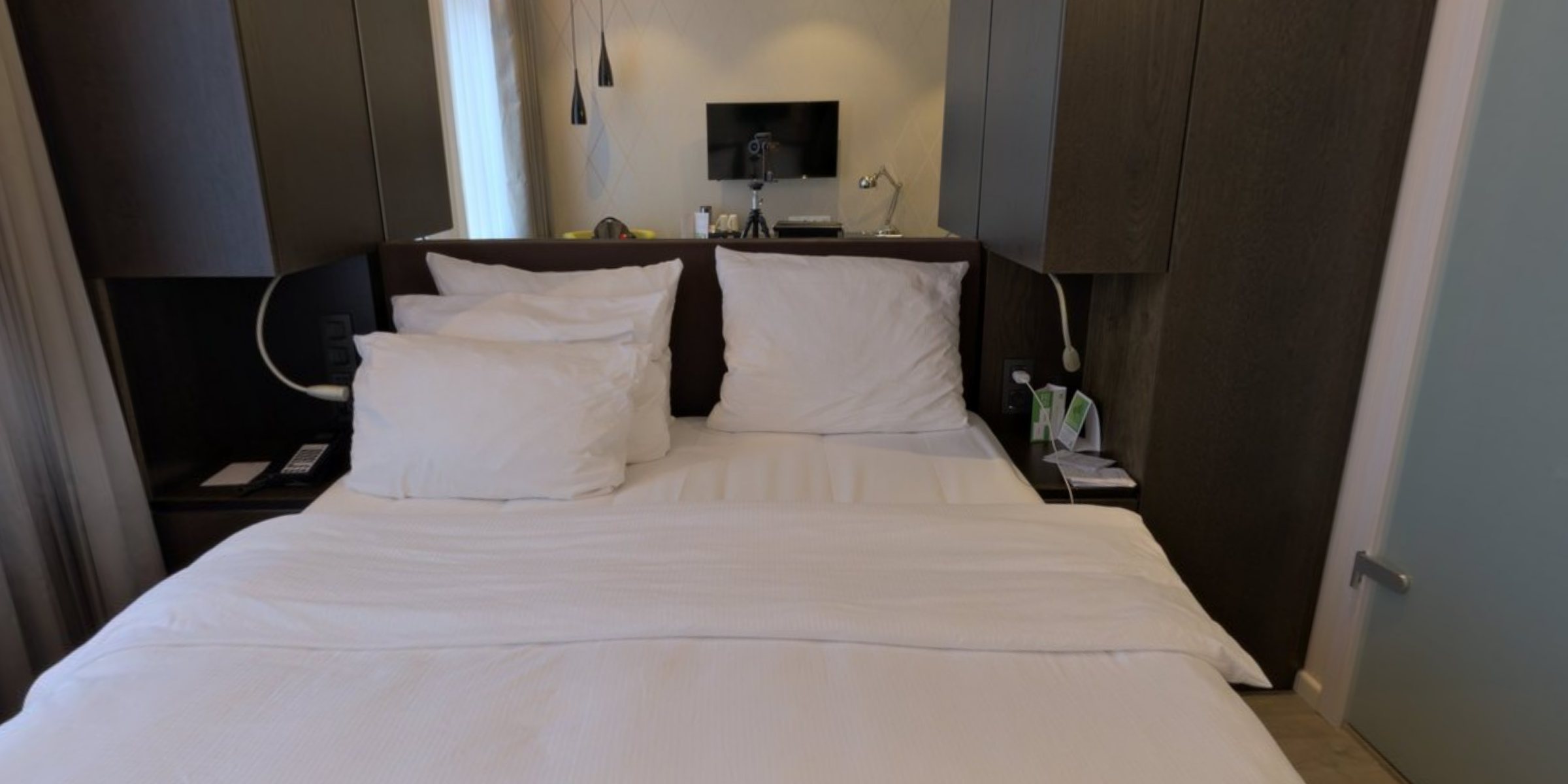
At home we can find the light switches half asleep. A hotel guest sees the room for the first time, often arrives tired late at night and ends up running a hand along the wall in the dark. That is why, in a hotel room, clarity comes before looks: the guest should understand everything without having to learn anything.
The entrance: the first ten seconds
The moment the door opens, the guest needs to find the first light. In rooms with key-card switches, it is good practice for the entrance light to come on as soon as the card goes in. The switch itself belongs on the lock side of the door, at the height where a hand naturally reaches. Light at the entrance should be enough to put a suitcase down, take off shoes and open the wardrobe, without a bare spot shining straight into the eyes.
The bed area
The bed is where guests spend most of their time in the room, and it has two different needs. First, reading before sleep — a book, a phone or documents. Each side needs its own adjustable reading light so one guest can read while the other sleeps. Second, a soft background light that calms the room, such as a concealed strip behind the headboard or a pair of bedside lamps.
The most important detail is being able to switch off every light in the room without getting out of bed. A guest getting ready to sleep should not have to walk to the door to hunt for a switch. Bedside controls should be simple and labelled; a five-button panel with no markings is a reliable source of irritation.
Desk and mirror
Many guests travel for work and use a laptop. The desk needs a table lamp or wall light, positioned so it does not reflect off the screen. A socket next to the desk matters as much as the light itself.
At the mirror, light should reach the face from the front and the sides. Light coming only from the ceiling casts shadows under the eyes and chin and makes people look more tired than they are. Diffused light on both sides of the mirror, or around its frame, solves this.
The bathroom
Think of two modes in the bathroom. In the morning: clear, reasonably strong light for shaving, make-up and showering. At night: a low light that does not chase sleep away. A guest who goes to the bathroom at midnight and is hit by full brightness will struggle to fall asleep again, so mirror lighting and general lighting should be on separate switches.
Wet zones take only fittings with a protection rating suited to those conditions. Placing an ordinary room fitting next to the shower is not acceptable from a safety point of view.
Colour temperature and night light
Hotel rooms usually use warm white light, because it suggests rest and comfort. One room should not mix tones: a yellow reading light beside a bluish ceiling light makes the room look careless. When maintenance staff replace a lamp, the new one should match the colour temperature of the old.
Darkness is part of the lighting plan too. A bright standby LED on the TV, the air conditioner or a phone charger glares in a dark room, and some guests end up covering it with tape. Positioning such devices out of sight from the bed, or choosing models with dim indicators, matters as much as the fittings themselves. Street light leaking round the edge of blackout curtains also disturbs early-morning sleep, so the curtain track should extend beyond the window.
The night light is often forgotten. A dim source at floor level that lights the path from bed to bathroom stops guests tripping over a suitcase in the dark and removes the need to switch on the room lights.
A checklist through the guest's eyes
- Can the first switch be found in the dark within three seconds of opening the door?
- Can all lights be switched off while lying in bed?
- Does the reading light cover the book without spilling onto the other pillow?
- Is the face free of shadows in the mirror?
- Is there a low-light option in the bathroom for the night?
- Is it clearly marked what each switch does?
- Are all lamps the same shade of white?
Think about energy as well. A key-card switch turns the lights off when the guest leaves, but it often cuts power to the phone charger too. Keeping one socket independent of the card switch is a real convenience for guests, while decorative lights that stay on in an empty room should be kept to a minimum.
Testing this list on a single sample room at the design stage, then rolling it out to every floor, prevents costly corrections. The best test of all is for a member of staff to spend a night in that room and take notes.
A hotel refurbishment usually needs several lamp types at once: standard E27, decorative E14 and spot lamps. In the Zəfər İşığı catalogue from Zaferoğlu Elektrik these can be filtered by cap type, and an offer can be requested for bulk orders.
All news