
What an LED bulb is made of and where the materials come from
An LED bulb combines semiconductors, metals, plastics, electronics and chemicals. What each component is made of and where it typically comes from.
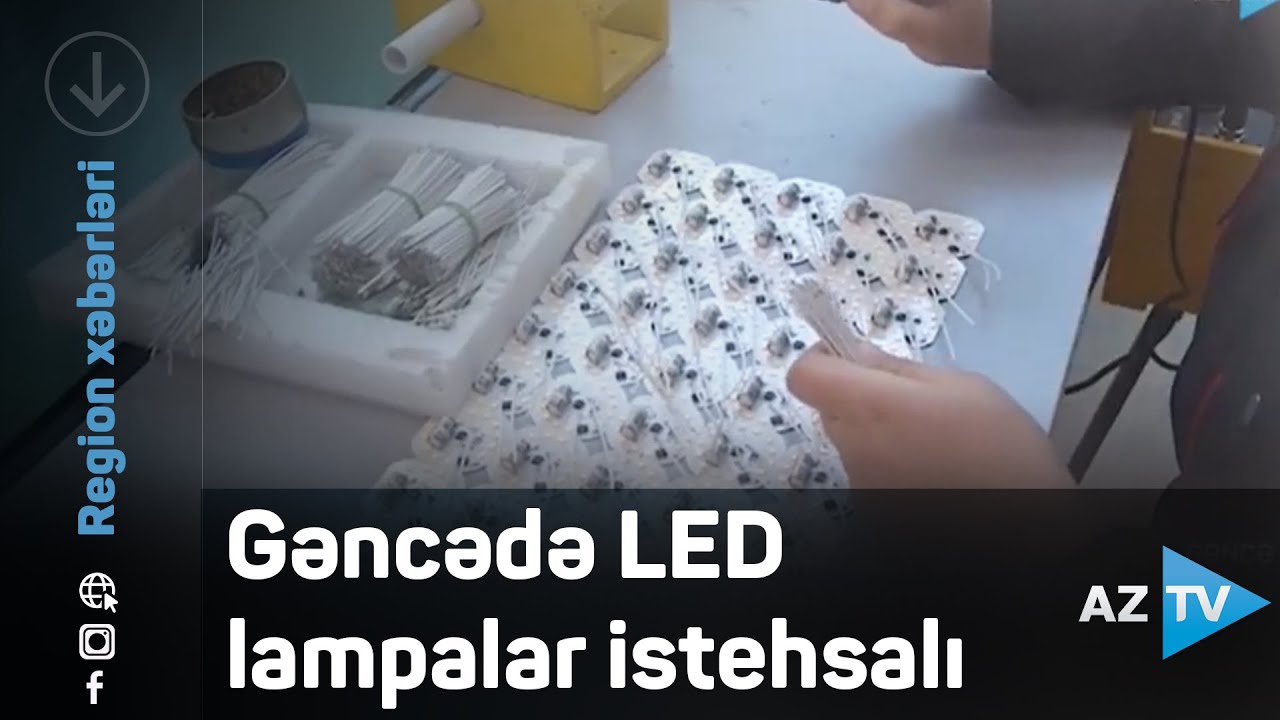
We think of an LED bulb as one product, but it brings together the output of many industries. Inside are a semiconductor crystal, a phosphor based on rare earth elements, aluminium, copper, plastic, electronic parts, solder, adhesive and cardboard. Each of these materials comes from its own supply chain. Knowing them helps explain why a bulb behaves as it does, and what a manufacturer might mean when it talks about ‘local raw materials’.
The light source: chip and phosphor
At the heart of an LED chip is a semiconductor crystal. In white-light bulbs this is usually a gallium nitride-based crystal grown on sapphire or another substrate. Making it requires an extremely clean environment, sophisticated equipment and large investment. For that reason chip production worldwide is concentrated in a relatively small number of specialist plants, and the great majority of lamp factories buy chips ready-made.
The yellow phosphor layer over the chip converts part of the blue light into other colours. Phosphors are specialised chemical compounds that use rare earth elements. The chip package — the small plastic or ceramic cup that protects the crystal — its contact leads and a clear silicone encapsulant are also part of the chip.
The board and the heat path
The board the chips are soldered to consists of an aluminium sheet, a thin insulating layer and copper traces. Aluminium and copper are widely produced metals. The solder paste that joins parts to the board is made from a tin-based alloy and flux. Between the board and the housing sits thermal paste or a thermal pad, usually based on silicone with ceramic fillers.
The driver’s electronic parts
The driver board gathers the widest variety of components:
- rectifier diodes or a bridge, which turn alternating current into direct current;
- electrolytic and ceramic capacitors, which smooth the voltage;
- a control IC, which regulates the current supplied to the LEDs;
- resistors, an inductor and a fuse element;
- a glass-fibre printed circuit board.
These parts also come mainly from specialist electronics manufacturers. A driver’s lifespan is often set by its weakest component, especially the quality and operating temperature of the electrolytic capacitor. Which capacitor goes into the driver is therefore one of the biggest factors in a bulb's lifespan.
Housing, dome and cap
The visible parts are made from simpler materials, but they have strict requirements too:
- The dome is usually polycarbonate. It is strong, does not shatter like glass when dropped and transmits light well. A diffusing agent is added to spread the light, and additives improve resistance to heat and ultraviolet.
- The housing may be plastic, aluminium, or aluminium with a plastic shell. Heat-resistant, flame-retardant grades of plastic are chosen.
- The cap is formed from sheet metal into a screw thread and coated to resist corrosion; an insulating piece separates the centre contact from the shell.
On top of that come the adhesive holding the dome, wires, thermal materials, and cardboard, paper and ink for the packaging.
What ‘local raw materials’ means
The list above shows that a bulb contains both high-tech and widely available materials. High-tech parts such as chips and ICs cannot be made in every country. Plastic parts, metal parts, packaging materials, some chemicals and services, on the other hand, can be sourced locally.
When the Zaferoğlu Elektrik plant opened, the company said roughly two-thirds (65 per cent) of its input materials came from domestic suppliers and the remaining 35 per cent were imported, and that it intended to raise the domestic share. A split like this is typical of the industry: high-tech components are imported, and as much as possible of the rest comes from local sources.
Practical takeaways for buyers
Knowing the components answers several everyday questions. If a bulb survives a fall, that is thanks to the polycarbonate dome. If a bulb fails quickly in an enclosed shade, heat has most likely aged the driver’s capacitor or the chips. If a bulb has turned yellow, the plastic of the dome was not resistant enough to heat and UV.
It is useful for disposal too: an LED bulb contains no mercury, but it does contain electronics and metals. So where possible, a dead bulb is best handed in separately as electronic waste.
Zəfər İşığı bulbs are assembled by Zaferoğlu Elektrik in Ganja. The company’s product pages state that the bulbs contain no mercury.
All news