
The room looks darker after switching to LED: why?
You swapped an old bulb for LED and the room went dim. Here are the usual causes and how to check each one in turn.
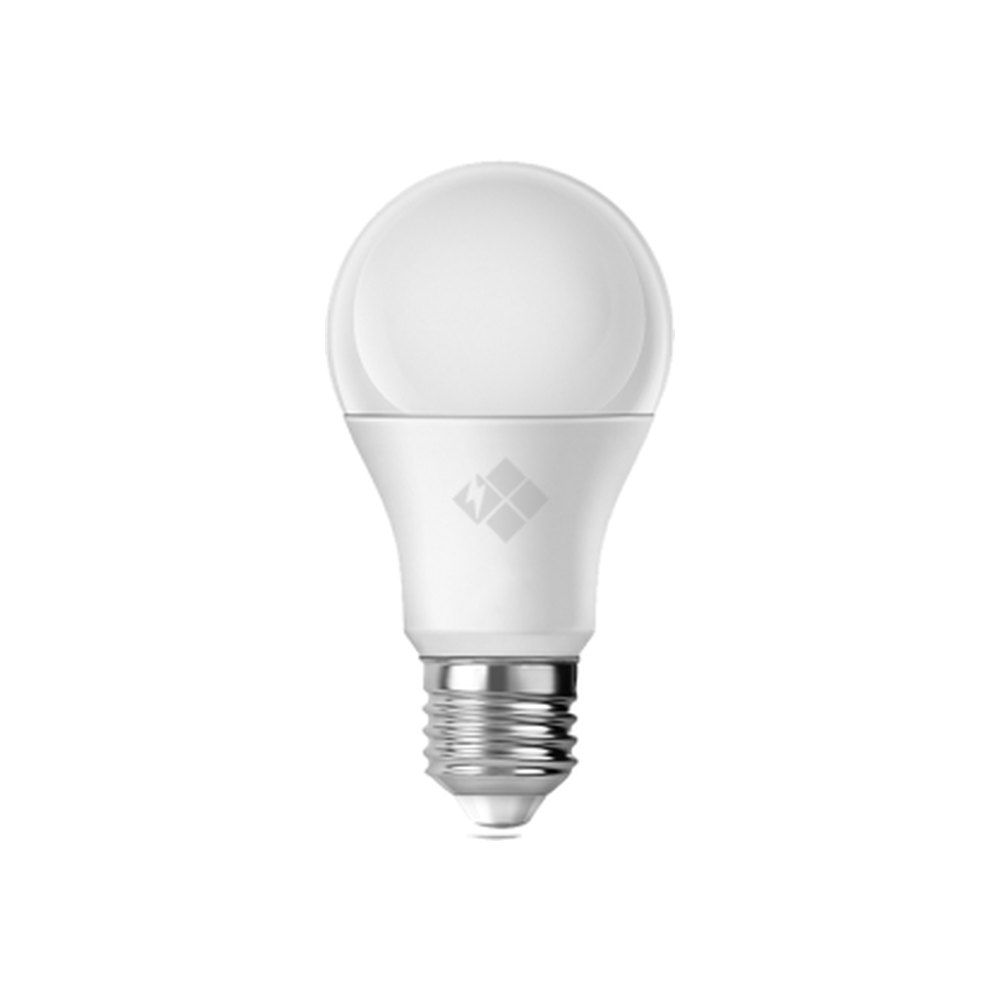
You fit the new LED bulb, flick the switch, and the first impression is that the room has become darker. It is one of the most common complaints after a switch, and in most cases the cause is not LED technology itself but how the bulb was chosen or how the fitting behaves. The easiest way to find it is to work through the possibilities in order, from the simplest check to the least likely one.
Compare lumens, not watts
With incandescent bulbs, ‘60 watts’ meant both the power drawn and, in practice, the brightness. On an LED bulb the wattage only tells you how much electricity it uses. The amount of light is measured in lumens. A standard 60 W incandescent bulb gives roughly 700–800 lumens, so its LED replacement should state a similar figure on the box.
The trouble is that some packaging prints ‘60 W equivalent’ in large letters while the actual lumen value in the small print is noticeably lower. Turn the box over and find the specification table: if lumens are missing or well below the equivalent, you have found the reason. If the old bulb was 100 W, you should be looking for close to twice as much light.
Beam spread and the shape of the fitting
An incandescent filament sends light out in almost every direction. In many LED bulbs the chips sit on one face of a board, so most of the light heads down towards the tip of the bulb. Even with the same lumen rating, the distribution changes:
- less light reaches the ceiling and upper walls, so the room feels lower and duller;
- in an uplighter or a lamp with a shade, less light bounces off the ceiling and the general background level drops;
- if a narrow-beam spot has been used for general lighting, you get a bright patch below it and shadow around it.
In these situations the fix is not another bulb of the same wattage but one designed to spread light widely, sometimes labelled omnidirectional, or a filament-style LED bulb.
Colour temperature changes how bright a room feels
How a room looks depends on more than lumens. Some people who move from warm white (around 2700–3000 K) to cool white (around 6000 K) find the space pale or greyish, even though the measured light is not lower. The reverse happens too: someone used to cool light for years may find warm light dim at first.
Colour rendering matters as well. Under a lamp with low CRI, colours look washed out, and the eye often reads that as ‘not enough light’. For a home, Ra 80 or higher on the box is a sensible starting point.
Enclosed shades, heat and dimmers
The most sensitive parts of an LED bulb are its driver and the temperature of the chips. In a sealed shade with no air movement the bulb gets hot. Some better drivers reduce current to protect themselves when they overheat, which shows up as the light fading noticeably after the lamp has been on for a while. Try the bulb in an open fitting: if the problem disappears there, the shade is the cause.
If an ordinary, non-dimmable LED bulb has been fitted on a circuit with a dimmer, the light can be weak, unstable or flickering. A dimmer circuit needs a bulb whose packaging clearly says it is dimmable.
A step-by-step checklist
1. Compare the lumen output of the old and the new bulb.
2. Look at the beam angle and at the direction the fitting throws light.
3. Choose a colour temperature close to what you had, then judge the difference.
4. In an enclosed shade, watch whether the light drops after some time.
5. Check whether the circuit has a dimmer, a motion sensor or an illuminated switch.
6. Inspect the shade or glass for dust and yellowing; an old diffuser absorbs part of the light too.
Often it is a combination: slightly fewer lumens, a narrower beam and a dull shade add up to a clear difference. Dealing with each factor separately usually leaves the room brighter than it was before the switch.
One bulb or several sources?
In a large living room, a single ceiling light is rarely enough, whatever the bulb. The warm, yellowish glow of an incandescent lamp used to hide that shortfall a little, and the move to LED sometimes just exposes an old problem. In a room like that, adding a floor lamp or a wall light to the ceiling fitting gives a more comfortable, even result than pushing up the output of one bulb.
Zaferoğlu Elektrik’s Zəfər İşığı range includes classic E27 LED bulbs in several power ratings. When choosing one for a room, it is better to go by how much light the old bulb gave and by the type of fitting than by the wattage on the label.
All news