
Can you mix LED and incandescent bulbs in one chandelier?
When a few bulbs in a chandelier fail, it is tempting to use LEDs and keep the old bulbs in the rest. Electrically that is possible, but it raises issues of appearance, heat and dimming.
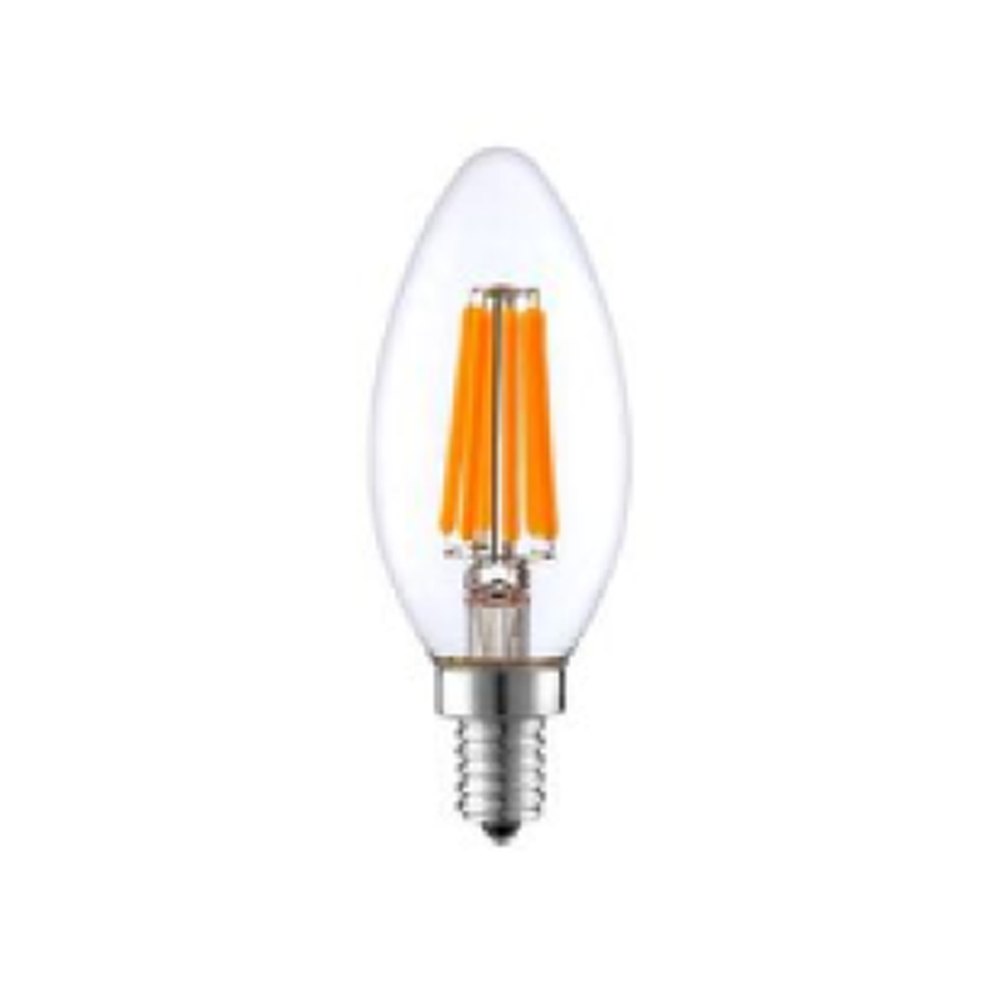
Two bulbs in a six-arm chandelier have blown. There are no spare incandescent bulbs at home, but there are a few LED bulbs. The other four bulbs still work and you do not want to throw them away. So the question arises: can LED and incandescent bulbs be used together in the same chandelier? The short answer is that, in a chandelier on an ordinary switch, it is not electrically dangerous. But the result is not always attractive, and in some circuits problems arise.
What happens electrically
The lampholders in a chandelier are usually wired in parallel: each bulb receives the mains voltage separately and draws its own current. So a bulb in one holder does not directly affect the others. An LED bulb works through its driver and an incandescent bulb works as a simple resistance, and the two can run side by side without trouble.
The total load goes down, since each LED bulb uses far less energy than an incandescent bulb for the same light. That also reduces the load on the chandelier's wiring and lampholders.
Appearance: the most noticeable difference
The main problem with a mixed chandelier is aesthetic.
- Colour. Incandescent light is warm and yellowish. Even an LED bulb labelled warm often looks slightly whiter. A cool or neutral LED bulb contrasts sharply with an incandescent one next to it.
- Brightness. Even when an LED bulb's equivalent rating matches the incandescent bulb, in practice one may look brighter than the other.
- Shape. The body, glass and size of an LED candle bulb differ from an incandescent candle. In an open chandelier that difference is easy to see.
- Sparkle in crystals. A clear incandescent bulb and a frosted LED bulb create different sparkle in crystal drops.
The result is a chandelier that looks unfinished. For a chandelier hanging in the middle of a living room, that is often unacceptable.
Heat: the LED bulb's neighbour
An incandescent bulb gives off a lot of heat. In a chandelier with enclosed shades, glass candle cups or arms close together, that heat also warms the neighbouring LED bulb. The LED driver is sensitive to heat, and constant high temperatures shorten its life.
In an open chandelier with widely spaced arms, the effect is small. But in small enclosed chandeliers, or where the bulbs point upwards so heat rises straight onto neighbouring bulbs, mixed use can shorten the life of the LED bulbs.
Dimmers, sensors and remote controls
Mixing is more difficult in chandeliers with control systems.
Dimmer. Old-style dimmers were designed for incandescent bulbs. With a mixed load, the incandescent bulb may satisfy the dimmer's minimum load, while the LED bulb may flicker, buzz or go out when dimmed. Because each bulb dims at a different rate, the chandelier looks uneven as the light is turned down: the incandescent bulb turns reddish while the LED stays white.
Remote-controlled chandeliers. In chandeliers with a built-in radio receiver module, the module is often designed for a particular type of load. A mixed load sometimes causes bulbs to glow faintly when off or to switch unreliably.
Sensors and timers. Similar problems can occur in circuits with motion sensors and timers.
As a temporary solution
If mixing is only temporary, you can improve the result:
- place the LED bulbs symmetrically, for example on opposite arms, so the colour difference does not look random;
- choose LED bulbs with light as warm as possible, around 2700K;
- if the chandelier is split into two groups, make one group entirely LED and keep the other incandescent;
- if there is a dimmer, use the chandelier at full brightness for the time being.
The long-term approach
For the best result, convert the whole chandelier to LED at once. Colour and brightness line up best when every arm gets an identical model bought at the same time. If you do not want to throw away incandescent bulbs that still work, use them in a table lamp, a pantry or anywhere else they are needed.
This also maximises the energy saving: in a multi-bulb chandelier each bulb's share may seem small, but the total can be significant.
If you decide to convert the whole chandelier, Zəfər İşığı offers E14 filament models and a C37 candle bulb. Choosing the same model for every arm keeps the chandelier looking uniform.
All news