
Bulb shape codes explained: A60, C37, G45 and T
Codes such as A60, C37 and G45 on the box tell you the shape and diameter of the bulb. What the letters and numbers mean and why they matter when you choose.
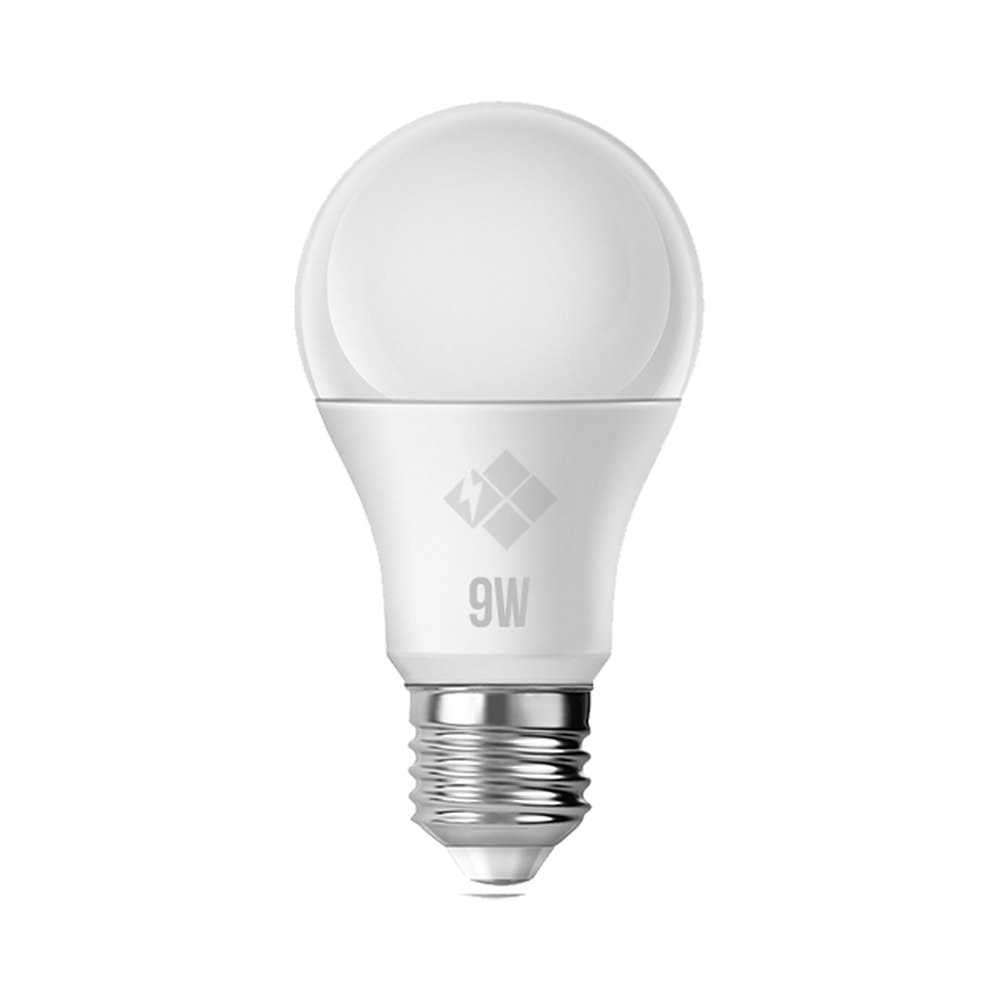
Besides the cap code, a bulb box usually carries another short label: A60, C37, G45, P45, T37 or R63. Many people take it for a model number and ignore it. In fact it tells you what the glass looks like and how much room the bulb takes up. A lot of bulbs that will not fit a shade, poke out of a lampshade or look awkward in a chandelier were bought without a glance at this code.
The code has two parts
In the system used in Europe and in our market, the letter gives the shape and the number gives the diameter of the widest part of the glass in millimetres. So A60 is an A-shape bulb about 60 mm across, and G45 is a globe about 45 mm across.
The code has nothing to do with the cap. A C37 candle is not tied to one base; both E14 and E27 versions exist. That is why you need to read both codes together: one decides whether the bulb fits the holder, the other whether it fits the fitting.
The main letters
- A is the classic pear shape, the everyday household bulb. Sizes include A55, A60 and A65, with A60 the most common.
- C is the candle. C35 and C37 are widely used in chandeliers and wall lights. The version with a bent, flame-like tip is sometimes labelled CA or called a "tip candle".
- G is a globe. G45 is small, while G95 and G125 are large decorative globes.
- P is a small round "golf ball" shape. P45 is often confused with G45, and in practice they are very similar.
- T is tubular. The range runs from a small T25 fridge bulb up to large high-output T lamps.
- R is a reflector. R50, R63 and R80 have a mirrored back that pushes light in one direction.
- ST is the elongated "Edison" shape, usually seen on filament bulbs, such as ST64.
Some makers add their own letters, such as "F" for filament or "FR" for frosted glass, but the core meaning stays with the letters above.
US codes are read differently
On bulbs from the United States or from English-language websites you will see codes like A19, B11 or G25. Here the number is not millimetres but eighths of an inch. An A19 is roughly 60 mm across, close to our A60, and a G25 is a globe of about 80 mm. Reading the number as millimetres and concluding that a G25 is a tiny globe is a common mistake.
When ordering from abroad, a simple rule helps: multiply the US number by 3.175 to get the approximate diameter in millimetres. A B11 works out at a candle of about 35 mm, and a G16.5 at a small globe of about 52 mm. The calculation does not change the shape; it just converts the size into a familiar unit so you can see in advance whether the bulb will fit the shade.
What the code helps you with
Fitting inside a shade. The neck of an enclosed glass shade is often narrow. An A60 may not pass through, while a G45 or C37 with the same cap slides in easily. Measuring the old bulb's diameter and comparing it with the new code is the simplest check.
Appearance. In an open chandelier or a clear shade the bulb is part of the design. Put pear-shaped bulbs on candle arms and the fitting loses its character.
Heat on lampshades. In a fabric or paper shade it is better if the bulb does not sit too close to the material. A smaller diameter, say a G45 instead of an A60, leaves more space between bulb and shade.
Light distribution. An R bulb throws light downwards and leaves the ceiling dark, while a globe spreads light all round. The code tells you this before you even open the box.
Length is not part of the code
One thing to watch: the shape code gives the diameter only, not the length. One A60 can be several centimetres longer than another, particularly in powerful LED models with a large heat sink. Length is listed separately in millimetres on the box or product page, and for a tight shade you need to check both measurements.
Note these before buying
- Cap code: E27, E14 and so on.
- Shape code: A60, C37, G45 and so on.
- The diameter of the shade's opening and the length available inside.
- If the bulb will be visible, whether its shape suits the style of the fitting.
The Zəfər İşığı catalogue uses shape codes in its product names too, for example the C37 E14 candle bulb and the C45 E27 bulb, which makes it easy to choose by both cap and shape.
All news