The large E40 cap: where it is used in street and industrial lighting
E40 is a screw cap roughly half as wide again as a household bulb. Why it is used for streets, warehouses and factories, and what matters when converting to LED.
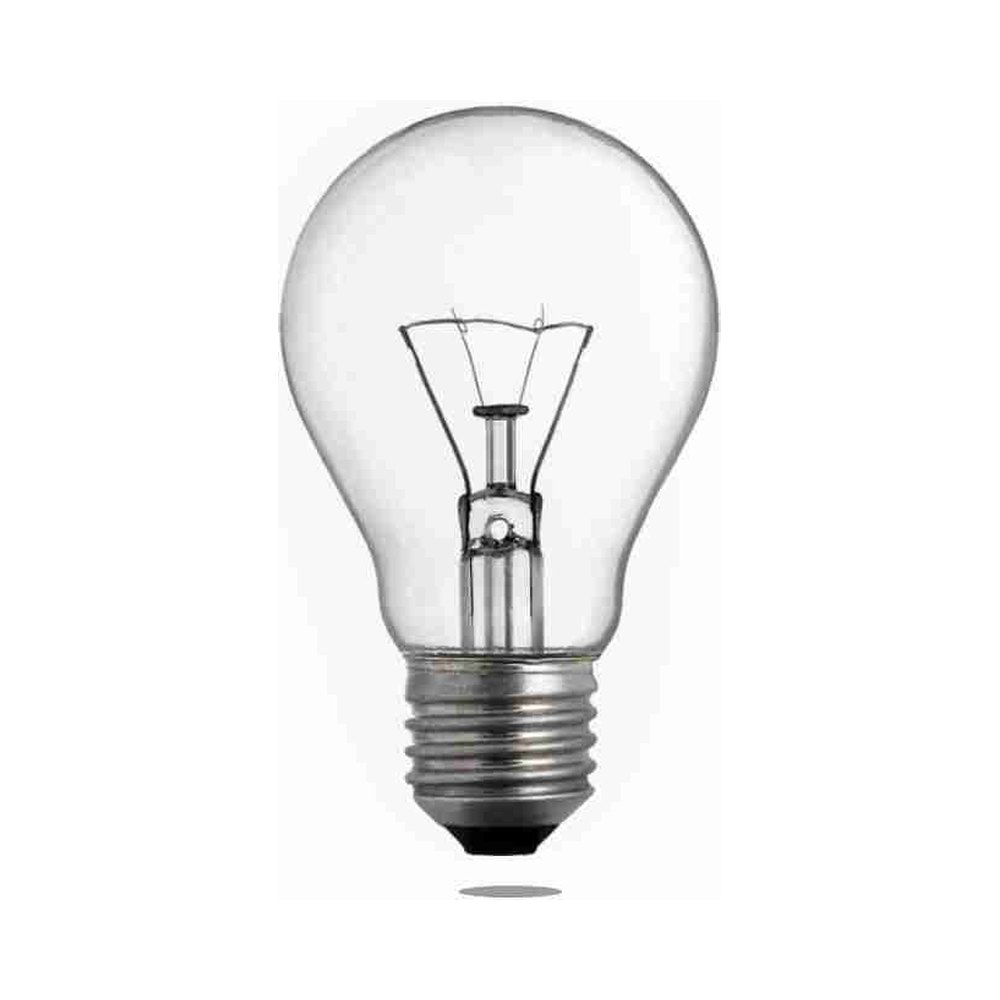
Open up a street lantern, the big bell-shaped light in an old warehouse or a high-bay fitting in a factory and you will usually find a familiar screw cap, just much larger than a household one. That is the E40. Rare in homes, it has been the standard cap for lighting large spaces for decades.
What E40 is
Like E27 and E14, E40 is an Edison screw. The number is the approximate thread diameter, here about 40 mm. In some countries it is called a Goliath cap, and in North America the similar size is known as "mogul".
The larger diameter makes practical sense. A big thread sits more securely, holds a large and heavy lamp, offers a wider contact area and copes better with the heat of high-power operation.
Where it is used
E40 is chosen mainly for large, high-output lamps:
- street and park lanterns;
- high ceilings in warehouses, hangars and sports halls;
- production halls and workshops;
- older floodlights and outdoor area lighting;
- some farm buildings and greenhouses.
Historically these places used sodium, metal halide and mercury discharge lamps, as well as high-wattage incandescent and halogen lamps. The Zaferoğlu Elektrik catalogue also lists incandescent and halogen lamps with an E40 cap.
At home you meet E40 only in special cases: an old post lantern in the yard, or an industrial-style bell fitting hung in the garage of a house or a small workshop. The same rules apply there as on a factory floor: check the lamp's weight, its heat and whether there is a ballast inside before you change anything.
Are E40 and E27 interchangeable?
No. An E27 lamp just spins loosely in an E40 holder, and an E40 will not enter an E27 holder at all. Adapters from E40 to E27 exist and are sometimes used to run a powerful E27 LED lamp in a large holder. But an adapter lowers the lamp, adds another contact and increases the leverage a heavy lamp puts on the holder. If space inside the fitting is tight or the lamp is heavy, an adapter should not be treated as a permanent fix.
Converting from discharge lamps to LED
In older street and warehouse fittings the E40 lamp does not work alone. It is paired with a ballast and often an ignitor, which start the discharge lamp and limit its current. An LED lamp needs neither, and in some cases they do harm: the high-voltage pulse from an ignitor can destroy the LED driver.
So when buying an E40 LED lamp, check the pack or instructions for the wiring it requires:
- If it says the ballast must be bypassed, the internal wiring of the fitting has to be changed: the ballast and ignitor come out of the circuit and the holder is connected straight to the supply.
- Occasionally a maker allows operation with a specific ballast type, and this must be stated clearly.
Rewiring is electrical work, often carried out at height. It should be done by a qualified electrician, and the fitting should be labelled "no ballast, LED only" for whoever works on it next.
Weight, heat and enclosed fittings
High-output LED lamps contain a large aluminium heat sink, so they can be both heavy and long. Before choosing one, check:
- Will the lamp fit once the cover or glass of the fitting is closed?
- Can the holder and its mounting carry the lamp's weight, especially when the lamp sits horizontally?
- If the fitting is fully enclosed, does the maker allow the lamp to run in a closed housing?
- In outdoor use, does the fitting itself provide protection against moisture and dust?
An LED heat sink struggles to shed heat in a tightly sealed, airless housing, and that shortens the life of the driver.
Does a new project need E40?
New street and warehouse projects often use integrated LED fittings instead of a lamp and holder: the diodes, optics and heat sink share one housing and there is no lamp to change. When you want to keep existing poles and housings, E40 LED lamps are a quick way to upgrade.
Which route suits you depends on the condition of the existing fittings, the mounting height and where the light needs to go. Lamps intended for large spaces can also be found in the Zəfər İşığı catalogue.
All news