
How to identify the cap of the bulb you are replacing
A step-by-step guide to pinning down the base of a dead bulb before you shop or order online: markings, measuring, pins and clues from the fitting itself.
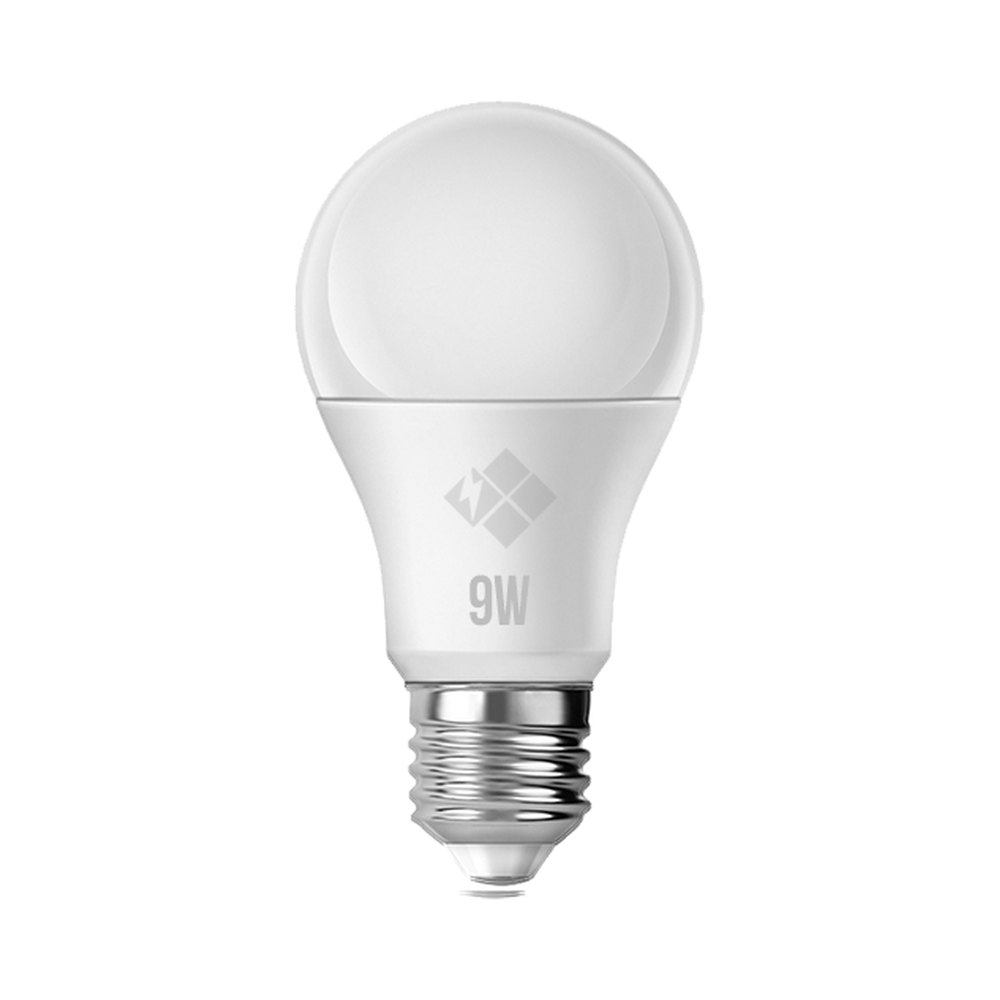
Bulbs tend to fail at the worst possible moment: in the evening, just as the shops close, or when you are in a hurry to place an online order. That is when you need a quick, reliable answer to "which one was it?" The good news is that, although there are many bases, a few simple steps are enough to tell them apart. You do not need special tools, just a ruler, a phone camera and a little attention.
Safety first
Switch the light off before taking the bulb out. If you are not sure which wire the switch breaks, or the fitting has an exposed holder, turning off the circuit breaker as well is safer. Incandescent and halogen bulbs stay very hot for a while after switching off, so wait a few minutes. If the bulb is broken, wear gloves.
Step one: look for markings
Often the answer is printed on the bulb. Places to check:
- the metal part of a screw cap or the plastic collar next to it;
- the body of an LED bulb, including the side of the heat sink;
- the back or outer rim of a spotlight;
- the lower part of the glass on a capsule lamp.
Codes such as E27, E14, GU10, GU5.3, G9 or G4 usually appear in one of these spots. If the print is faint, take a close-up photo with your phone and zoom in. When you find the code, note the voltage (220–240 V or 12 V) and the wattage beside it.
Step two: identify the type of base by eye
If there is no marking, work out the general type. In practice there are four groups:
Screw (E). The base has a spiral thread and the bulb screws in. You will confirm the size in step three.
Bayonet (B). The base is smooth with two small lugs on the side. The bulb pushes in and locks with a short twist. It is rare here and mostly found in imported fittings.
Two-pin (G, GU, GX). The base has two pins, so look at their shape. Thickened ends mean GU10; thin, straight pins suggest GU5.3 or G4; looped wire pins mean G9.
Tubes and flat lamps. A long tube with two pins at each end is most likely G13 (T8) or G5 (T5). A flat disc lamp in the ceiling is usually GX53.
Step three: measure
For screw caps, the diameter settles everything. Put the ruler across the widest part of the thread:
- about 10 mm: E10 (torches, string lights);
- about 14 mm: E14;
- about 27 mm: E27;
- about 40 mm: E40 (industrial, street lighting).
For two-pin bases, measure the distance between the pin centres. It is usually close to the number in the code: 4 mm for G4, about 5.3 mm for GU5.3, 9 mm for G9, 10 mm for GU10. For tubes, measuring the tube diameter helps separate T8 from T5.
Step four: check the holder and the fitting
If the bulb has broken and left its base in the holder, the holder itself can help. Many holders have the cap code and maximum wattage moulded into the body. A transformer or power supply behind a spotlight suggests a low-voltage system, and therefore a GU5.3 or G4 lamp.
If you kept the fitting's instructions or box, they will state the lamp type and the maximum permitted wattage too, which is especially useful for chandeliers.
Once you know the cap, write down two more things: the shape of the bulb (pear, candle, globe, spotlight) and its overall length. In an enclosed shade, a longer bulb with the same cap may not fit.
A short note for ordering online
If you cannot take the old bulb to the shop, keep a note like this on your phone:
- cap code (for example, E14);
- voltage (220–240 V or 12 V);
- shape and diameter (for example, candle, about 37 mm);
- length;
- the old bulb's wattage and light colour (warm, neutral, cool);
- whether there is a dimmer.
With this list, a call to the seller or a filter in an online catalogue takes a minute. With the cap identified, finding a Zəfər İşığı replacement takes seconds using the cap filter.
All news