
E14 to E27 adapters: when they are fine and when to avoid them
Cap adapters widen your choice of bulbs, but they are not safe in every fitting. When you can use one, and when you should simply buy the right bulb.
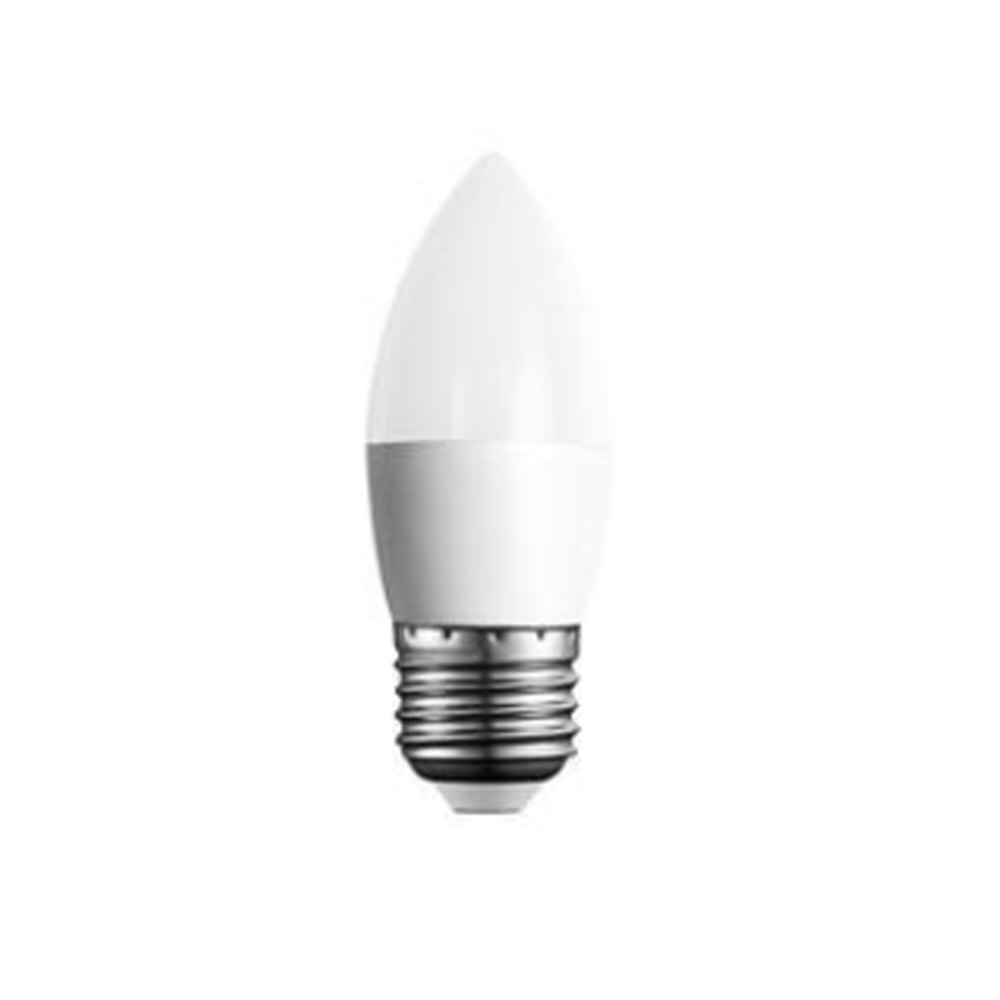
You have a spare E27 bulb at home, but the one that failed was the E14 in a wall light. Or the other way round: the bulb you like for your table lamp only comes with an E14 cap. Small adapters, one cap on one side and another on the other, look like the obvious answer. They can indeed solve the problem, but only under certain conditions. In some fittings they create a hidden risk of overheating and damage.
How an adapter is built
An adapter is essentially a small lampholder joined to a small screw cap. Inside there are two contact paths: the centre contact of the holder is passed to the tip of the adapter, and the side contact to the thread. Every transition adds a contact surface, and some heat is produced as current passes through it. If the contacts are firm and clean, that heat is negligible. With weakly sprung contacts or thin metal, noticeable heating begins.
The types you see most often are:
- E14 to E27: to fit an E27 bulb into an E14 holder.
- E27 to E14: to fit an E14 bulb into an E27 holder.
- E40 to E27: to run an E27 LED bulb in an industrial holder.
- rarer conversions such as B22 to E27 and GU10 to E27.
When it is acceptable
An adapter can be a reasonable solution when all of these conditions are met:
- the bulb is an LED and gives off little heat;
- the fitting is open, so air circulates freely around the bulb;
- the bulb is light and the holder is vertical, pointing up or down;
- the adapter is marked with its maximum wattage and voltage, and the bulb is well below that limit;
- in its new position the bulb does not stick out of the shade.
A typical good example is putting a small E14 LED bulb into a simple table lamp with an E27 holder, or fitting a light E27 LED bulb into an open E40 holder in a storeroom.
When reading the maximum wattage on an adapter, note one subtlety. That figure is the limit of the adapter itself, not of the fitting. If the lampholder or the fitting's instructions state a lower maximum, the lower figure applies. An adapter does not raise the limit the maker set for, say, a table lamp with a fabric shade.
When to avoid it
Enclosed shades. Heat builds up inside a closed glass shade. The adapter lowers the bulb closer to the glass, and warm air stays around the contacts. Here, buy a bulb with the correct cap instead.
Heavy bulbs. A powerful LED bulb with a big heat sink plus an adapter forms a long lever. If the bulb sits horizontally, that lever constantly bends the holder's thread and plastic body. Over time the holder can crack and the contact can loosen.
Chandeliers. On slim arms an adapter is visible and lifts the bulb out of its decorative cup. And with several adapters heating up at once, nobody is keeping an eye on them.
Damp locations. In a bathroom, an open balcony or a garden light, an adapter adds another joint and weakens moisture protection.
High-wattage incandescent and halogen bulbs. They produce a lot of heat, and the plastic parts of an adapter may not be rated for those temperatures.
How to spot a well-made adapter
- The body is ceramic or flame-retardant plastic that does not feel soft or flex.
- It is marked with voltage, maximum wattage and a maker's mark.
- The centre contact is sprung or firm, and you feel the bulb seat properly as you screw it in.
- The metal parts show no rust, blackening or oily residue.
A few days after fitting an adapter, switch the light off, let it cool and touch the adapter. If the plastic is still firm and there is no discolouration or smell, the contact is fine. If you notice flicker, crackling, a burning smell or scorching, remove the adapter straight away.
The best answer is still the right bulb
An adapter is useful as a stopgap: to use a bulb you already have, or to get light back quickly. For a permanent installation, a bulb that matches the fitting's holder is always simpler, safer and neater. Today the same shapes and outputs of LED bulbs are widely sold with both E14 and E27 caps.
Since Zəfər İşığı bulbs come with both E27 and E14 caps, an adapter is rarely the only answer.
All news