
Swapping halogen spotlights for LED: compatibility checks
Replacing halogen spots with LED can bring surprises from transformers, caps, recess depth and beam angle. Compatibility checks for GU10 and GU5.3 spots.
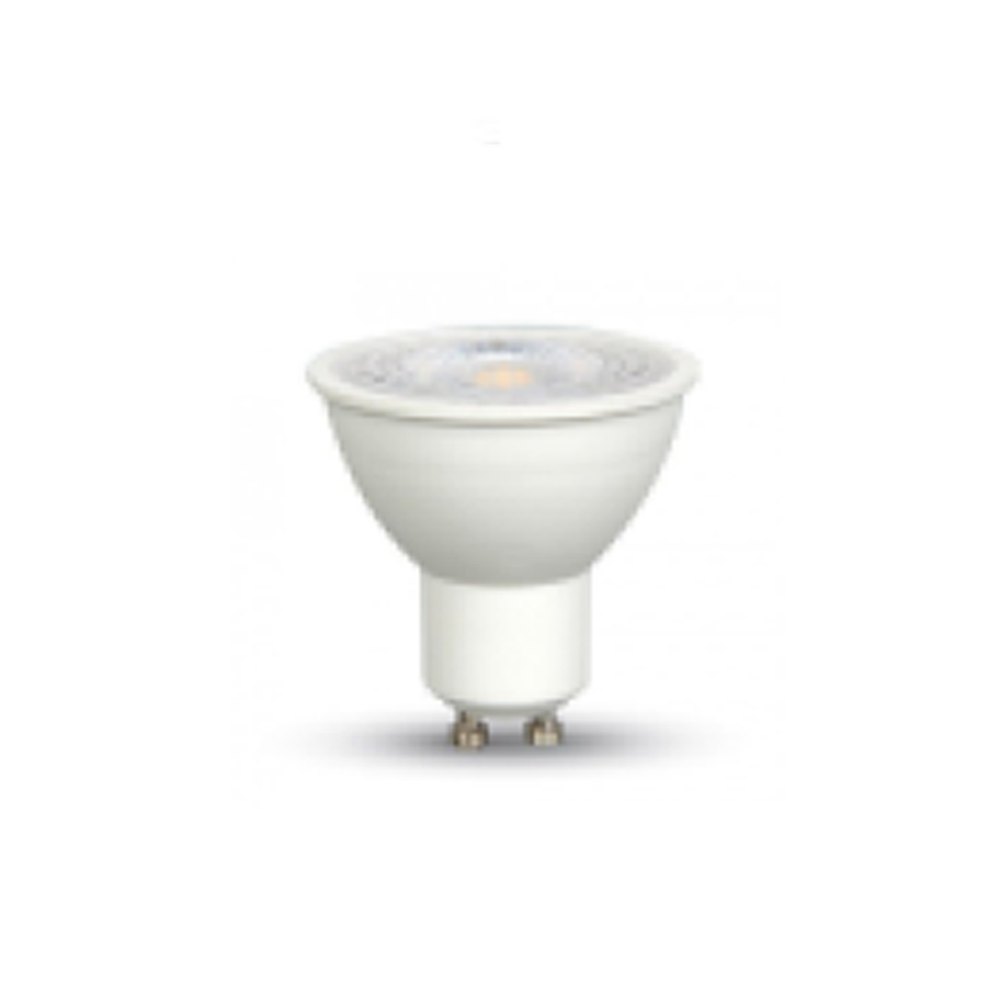
Halogen spotlights in suspended ceilings were the go-to lighting solution for years. Their light is bright and warm, but they use a lot of energy and generate plenty of heat inside the ceiling. Moving to LED makes sense, yet it involves more subtleties than swapping an ordinary screw-in bulb. The key questions are: what voltage does the spot run on, is there a transformer behind it, will the new lamp fit in the ceiling void, and how will it spread its light?
Identify the cap first
Two spotlight caps are most common in homes, and they are powered in completely different ways.
- GU10 has two thick pins with flared ends. The lamp is pushed into the holder and twisted slightly to lock. It runs directly on mains voltage, 220–230 V.
- GU5.3 (also known as MR16) has two thin straight pins. The lamp is pushed straight into the holder. It runs on low voltage, usually 12 V, and needs a transformer in the ceiling.
This difference is crucial. A GU10 LED lamp simply replaces the old halogen. With GU5.3, you must check separately how the new lamp will behave with the existing transformer.
The transformer problem
Two kinds of transformer have been used with halogen spots: heavy wound electromagnetic transformers and light electronic ones. Both were designed for the relatively large load of halogen lamps.
Many electronic transformers have a minimum load. An LED lamp draws far less than that, so the transformer cannot operate properly. The symptoms are familiar: flicker, the lamp switching off and on periodically, buzzing, or no light at all. If several spots share one transformer, converting them all to LED at once makes the problem even more obvious.
There are three ways out:
- choose GU5.3 LED lamps whose packaging states compatibility with electronic transformers, and test the result;
- replace the old transformer with a constant-voltage 12 V driver designed for LED loads;
- change the holders to GU10 and drop the transformer altogether, which is work for an electrician.
Electromagnetic transformers usually cause fewer problems with LED, although some hum or slight flicker can still occur.
Depth and heat
A halogen spot is a short lamp with a glass reflector. An LED spot has a driver and a heat-conducting aluminium or plastic body behind it, so it is often a few millimetres longer. In shallow suspended ceilings, or where cables are packed tightly behind the holder, the new lamp may not seat fully.
Heat behaves differently too. A halogen sent most of its heat forward along with the light. An LED sends heat backwards into its body. If the back of the spot housing is fully buried in insulation, the LED driver overheats and may fail early, so leave a little air space behind each spot in the ceiling.
Beam angle and brightness
A spotlight throws light in a cone, and the width of that cone is the beam angle. A narrow beam, such as 24–36°, concentrates light on one point and is used to highlight a shelf, a painting or a display. A wide beam of 60° or more gives more even general lighting, with fewer shadows and bright patches on the walls.
When replacing halogen with LED, knowing the old lamp's beam angle matters. Replace a narrow-beam halogen with a wide-beam LED and the light spreads out but gets dimmer on the floor. Put a narrow-beam LED where a wide-beam halogen was, and the room fills with bright circles and dark gaps.
For brightness, consider lumens and beam angle together rather than watts: the same lumen output looks brighter in a narrower beam.
Dimming and final checks
Halogen spots were often dimmed. LED spots can only be dimmed when the packaging says so, and the dimmer itself must suit LED. In a GU5.3 system the transformer joins that chain, and getting all three components to work together is harder.
After the swap, check the following:
- do all spots have the same colour temperature and brightness?
- does any spot glow faintly when switched off?
- does flicker or buzzing appear after a few minutes?
- after an hour of use, is any spot's trim getting excessively hot?
Zaferoğlu Elektrik produces LED spots for both common halogen bases, GU10 and G5.3. Before choosing, settle the compatibility questions above, especially the transformer issue.
All news