
Replacing fluorescent tubes with LED tubes: wiring and steps
There are three ways to put LED tubes into a fluorescent fitting: ballast-compatible, ballast-bypass and hybrid tubes. Which to choose and the order of work.
Long fluorescent tubes are still everywhere in office corridors, classrooms, garages and warehouses. Replacing them with LED tubes is attractive: the fitting stays, the light comes on instantly, it does not flicker in the cold, and there is no mercury inside. An LED tube, however, is not just a same-size copy of a fluorescent one. Depending on the tube type, the circuit inside the fitting either stays as it is or gets rewired.
What is inside a fluorescent fitting
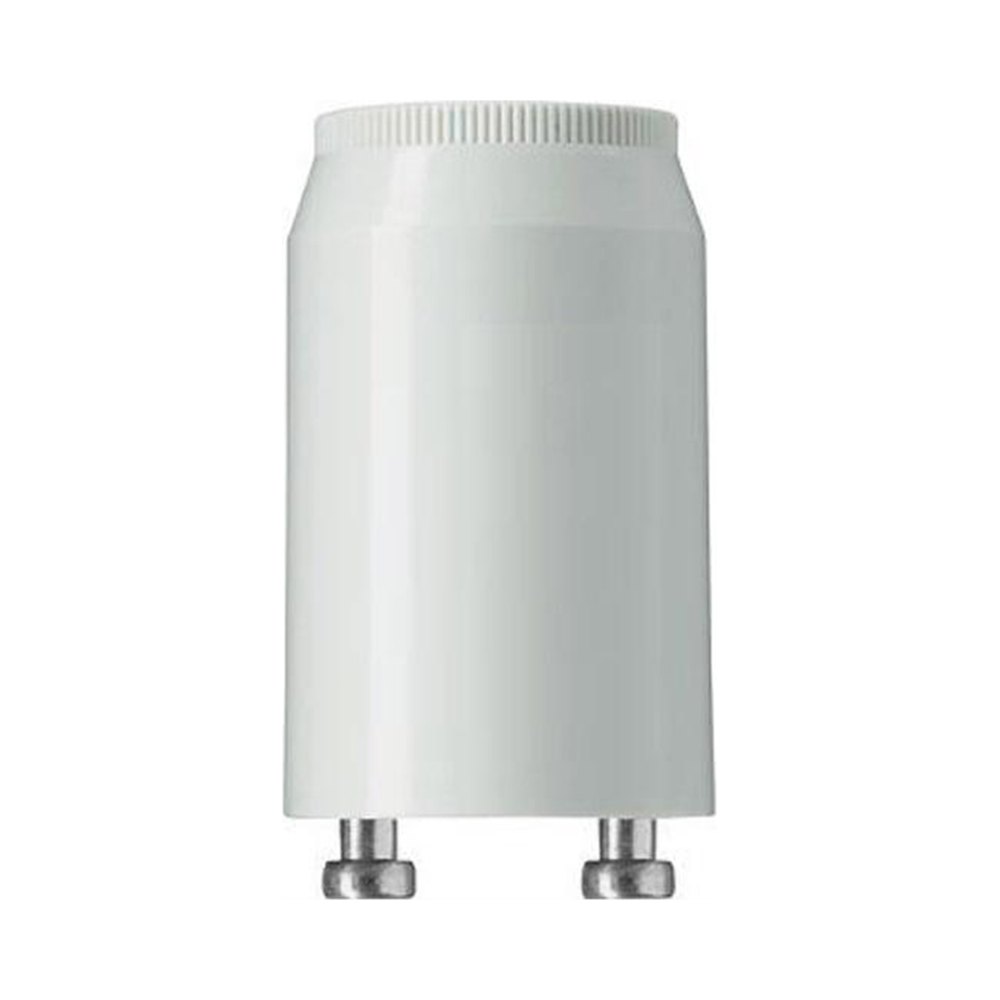
Besides the tube, a conventional fluorescent fitting has two key components: the ballast (choke) and the starter. The ballast limits the current through the tube, and the starter preheats the tube electrodes and triggers ignition at switch-on. Newer fittings replace both with a single electronic ballast and have no starter socket at all.
The tubes have two-pin G13 caps at each end. T8 tubes are about 26 mm in diameter and come in standard lengths such as 600 mm and 1200 mm. LED tubes are made with the same caps and lengths, so they fit the fitting mechanically.
Three kinds of LED tube
The choice depends on how the tube works with the fitting's circuit.
- Ballast-compatible tubes (often called Type A). The existing ballast stays. In a fitting with an electromagnetic ballast, the old starter is swapped for a special LED starter, which is simply a fused link. In a fitting with an electronic ballast, the tube goes straight in, but compatibility is not guaranteed with every electronic ballast, so check the manufacturer's list.
- Direct-mains tubes (Type B). The ballast and starter are removed from the circuit and mains voltage is fed directly to the tube ends. This requires rewiring inside the fitting.
- Hybrid tubes. They work with or without a ballast: install them on the ballast first, and rewire when the ballast eventually fails.
Ballast-compatible tubes are the easiest to install, but the old ballast keeps wasting energy and will fail sooner or later. Direct-mains tubes are more efficient and remove the dependence on the ballast, but installation is electrical work.
Direct wiring: the point that needs care
Direct-mains LED tubes can be fed in two ways: double-ended, with live at one end and neutral at the other, or single-ended, with both conductors on the two pins of one end. Which applies depends on the tube and is shown on it, usually with an arrow or label.
Wrong wiring can have serious consequences: the tube may not light, a short circuit may occur, or a single-ended tube inserted the wrong way round may blow a fuse. There is another risk: someone who later services the modified fitting may try to fit an ordinary fluorescent tube. That is why a converted fitting should carry a clear label such as 'LED tubes only, ballast removed'.
Order of work
- Isolate the circuit and use a tester to make sure the fitting is dead.
- Remove the old tube by turning it 90° to release it from the holders, taking care not to break it.
- Work out the fitting's circuit: is there a starter socket, and what type of ballast is it? That tells you which LED tube is suitable.
- For a ballast-compatible tube, swap the starter for an LED starter and fit the tube.
- For a direct-mains tube, take the ballast out of the circuit, wire the lampholders as shown in the tube's instructions and attach the label.
- Switch the circuit on and check: the tube should light instantly and evenly, with no flicker or hum.
What to do with the old tubes
Fluorescent tubes contain a small amount of mercury. Removed tubes must not go in household bins, be broken or be mixed with construction waste. Take them unbroken, in their original box or a cardboard sleeve, to a dedicated collection point. If a tube breaks, air the room and pick up the fragments with damp paper, not a vacuum cleaner.
The Zaferoğlu Elektrik catalogue includes fluorescent tubes and starters for them, for those who keep their fittings on the old circuit. If you plan to move to LED, identifying the fitting's circuit first is the basis of choosing the right tube.
All news