
Mercury in fluorescent lamps: why they do not go in the bin
Fluorescent tubes and compact "energy-saving" bulbs contain a small amount of mercury. Why they need separate collection and how to clean up if one breaks.
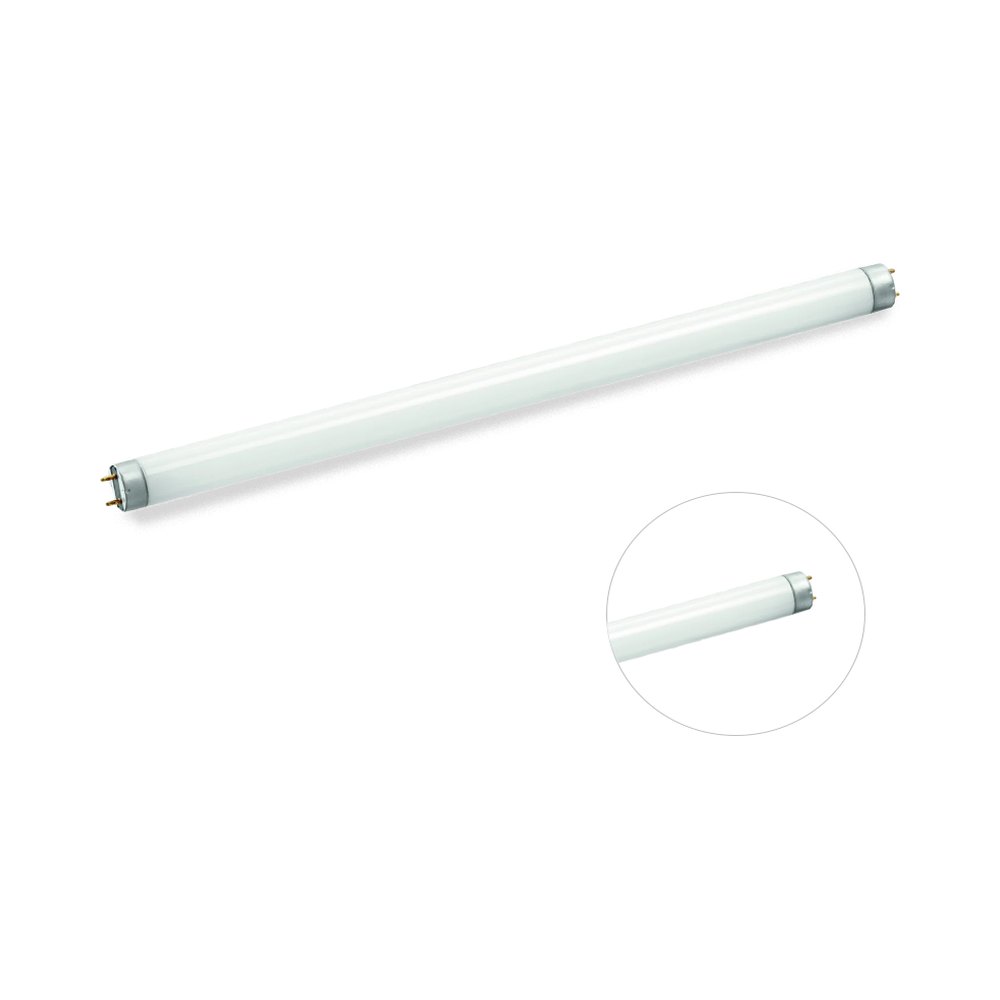
The long white tubes in office ceilings, old kitchen fittings and spiral "energy-saving" bulbs have one thing in common: they are all fluorescent lamps, and they need a small amount of mercury to work. An intact lamp poses no danger in use, but throwing it out with ordinary household waste at the end of its life creates a problem for people and for the environment.
What mercury does inside a fluorescent lamp
A fluorescent tube is filled with gas at low pressure plus mercury vapour. When a discharge forms between the electrodes, mercury atoms are excited and emit mostly invisible ultraviolet radiation. The white powder coating the inside of the tube, the phosphor, absorbs that radiation and converts it into visible light. Mercury is therefore part of the technology itself; it cannot simply be taken out of the lamp.
As the lamp operates, some of the mercury becomes bound into the phosphor layer and the glass. That is why an old, burnt-out lamp does not count as mercury-free either. Compact fluorescent lamps work on the same principle in miniature, with a spiral or folded tube and an electronic ballast built into one body.
What happens in ordinary waste
A fluorescent lamp in a bin bag is almost certain to break during collection, compaction and tipping. When it does:
- mercury vapour escapes into the air, and the people handling the waste are the first to be exposed;
- mercury compounds can enter the soil and from there reach groundwater and surface water;
- mercury in water accumulates in living organisms and enters the food chain;
- if the waste is incinerated, the mercury vaporises again and goes into the atmosphere.
The amount in a single lamp is small, but the combined total from the many tubes and bulbs discarded across a city adds up to a serious source. Lamps collected separately are processed in dedicated facilities, where glass, metal caps, phosphor and mercury are separated and can be reused.
Symbols on the packaging
In many countries, fluorescent lamp packaging carries a picture of a wheeled bin with a cross through it. This symbol means the product is electrical and electronic waste that must be collected separately from household rubbish. In the European Union the requirement comes from the WEEE Directive, which is how the symbol became so widespread. Some packs also show "Hg", the chemical symbol for mercury.
The absence of a symbol does not mean a lamp is harmless. You can recognise a compact fluorescent by its spiral or U-shaped glass tubes, and a fluorescent tube by the pin caps at both ends. Lamps that have lost their boxes should be sorted by these features and kept separately too.
Storing and handing in used lamps
- Keep a burnt-out lamp unbroken, ideally in its original box or wrapped in thick paper.
- Never break long tubes to make them fit in a bin, and do not try to bend them.
- Store them somewhere dry, out of reach of children, without heavy objects on top.
- Ask your local municipal or public services and electrical retailers about collection; some shops and organisations accept used lamps.
- If an office, school or workshop replaces many tubes, arrange disposal in advance with a service that handles this type of waste.
If a lamp breaks
Widely published safety guidance recommends:
- get people and pets out of the room, open a window and air the room for at least 10–15 minutes; switch off central air conditioning or forced ventilation if there is any;
- do not vacuum the debris, because a vacuum cleaner spreads mercury into the air and becomes contaminated itself;
- wear gloves, gather the pieces with stiff card or paper, pick up small fragments with sticky tape and wipe the surface with a damp paper towel;
- seal the pieces in a lidded jar or zip bag and store it on a balcony or in a shed until you can drop it off;
- keep airing the room for several hours afterwards, and finally wash your hands with soap.
Mercury is hard to remove completely from carpets or fabric. In that case it is sensible to ask your local public health service for advice.
On switching from fluorescent to LED
Fittings with fluorescent tubes are still in use in many places and need maintenance. Moving to LED removes the mercury waste issue for the future, but the fitting's circuit has to be considered: some LED tubes work with the existing ballast and starter, while others require the wiring to be changed. An electrician should decide this based on the instructions for the fitting and the LED tube.
The Zaferoğlu Elektrik catalogue still includes fluorescent tubes and starters for existing fittings. Those planning a switch will find Zəfər İşığı LED lamps with various caps, made in Ganja, in the same catalogue.
All news