
Why an incandescent bulb can burst when switched on
Why incandescent bulbs so often fail at the moment of switching on, why the glass sometimes bursts, and how to remove a broken bulb safely.
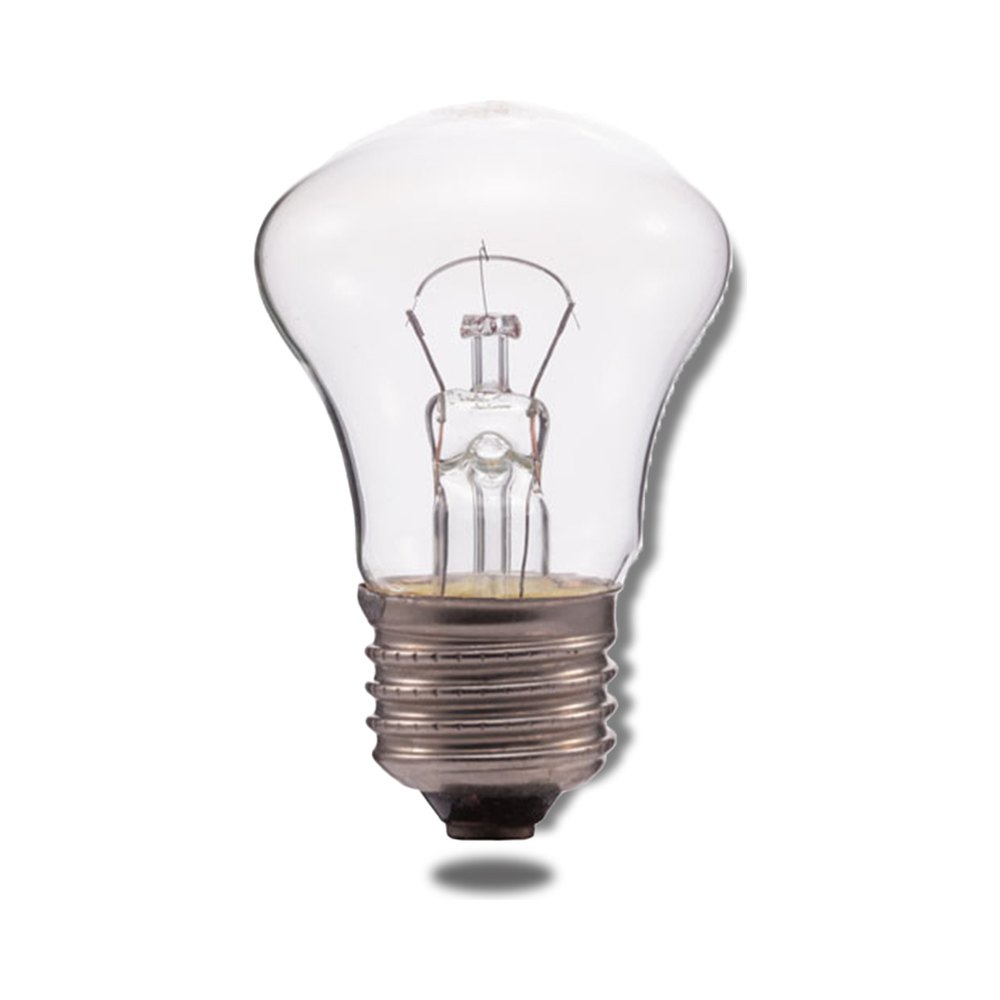
You press the switch, there is a bright flash and a pop, and the bulb goes dark. Sometimes that is the end of it; sometimes the glass cracks or fragments scatter. Most incandescent bulbs fail not during hours of running but in the very second they are switched on. There is a physical explanation, and knowing it helps reduce the risk and respond correctly.
The hidden load on a cold filament
The resistance of the tungsten filament in an incandescent bulb depends strongly on temperature. At room temperature, a cold filament's resistance is many times lower than when it is hot and running. So at the instant the switch closes, a current several times higher than the rated value flows through the bulb. Within milliseconds the tungsten glows, its resistance climbs, and the current drops to its working level.
That short surge hits the filament's weakest point. Over years of use, tungsten slowly evaporates and the filament thins in places. A thin spot has higher resistance, heats faster, and is the first place to break at switch-on.
How a break turns into a burst
When the filament breaks, an electric arc can strike between the two ends. In the inert gas inside the bulb, the arc lasts only briefly but draws a very large current, which explains the bright flash and the pop. Many bulbs contain a tiny internal fuse in one lead wire. It blows during the arc and opens the circuit, preventing the breaker from tripping. Sometimes the fuse is not fast enough and the breaker in the consumer unit trips.
Several factors can make the glass itself shatter:
- the sudden heating and pressure spike produced by the arc;
- a drop of water landing on hot glass, for example in a bathroom, kitchen or an open outdoor fitting;
- a microcrack left during manufacture, or an earlier knock to the bulb;
- supply voltage above the bulb's rating, or sharp voltage spikes;
- a poor contact in the holder, which adds heating and sparking.
Conditions that raise the risk
Frequent switching means a fresh surge on a cold filament every time. In stairwells, hallways and storerooms where lights are switched on for short periods, incandescent bulbs fail sooner.
Vibration fatigues the filament too. Fittings next to doors, beneath ceiling fans or in workshops with running machinery see filament damage earlier.
Finally, if the bulb's wattage exceeds what the fitting allows, both glass and holder run too hot. Contact between that hot glass and cold air or water becomes more dangerous.
Old-style dimmers play a part too. Turning a dimmer from its lowest setting straight to full delivers the same shock to the filament again. Conversely, modern dimmers with a soft-start function and some stairwell timers raise the voltage gradually over a few hundred milliseconds, greatly softening that first surge through a cold filament. Theatre and studio lighting, where incandescent lamps were switched constantly, used such solutions for exactly this reason. At home, though, changing the type of bulb is usually simpler than going down that route.
What to do when a bulb bursts
- Turn off the circuit breaker straight away. The wall switch is not enough, because the holder may still be live.
- Wait for the fragments to cool, and take children and pets out of the room.
- Do not walk over the glass. Pick up large pieces wearing gloves, then collect fine fragments with a damp paper towel.
- Do not try to remove the cap left in the holder with bare hands. Use pliers with insulated handles, taking care not to crush the holder.
- A blackened or deformed centre contact means the holder itself must be changed first.
How to reduce the risk
Where you still use incandescent bulbs, an enclosed fitting with a glass cover keeps fragments contained. Avoid bare bulbs in damp rooms and outdoors. If voltage spikes are frequent, talk to an electrician about them.
The most thorough solution is to switch from incandescent to LED. An LED bulb has no hot filament, there is no cold-filament surge at switch-on, and models with plastic covers do not scatter glass. At the opening of the Zaferoğlu Elektrik plant, the company stated that Zəfər İşığı bulbs are resistant to mechanical impact and do not break when dropped on a hard surface. The catalogue also still includes incandescent lamps for specific needs.
All news