
Rechargeable emergency bulbs: light at home during power cuts
How LED bulbs with a built-in battery light up when the power goes, where they are genuinely useful and what their limitations are.
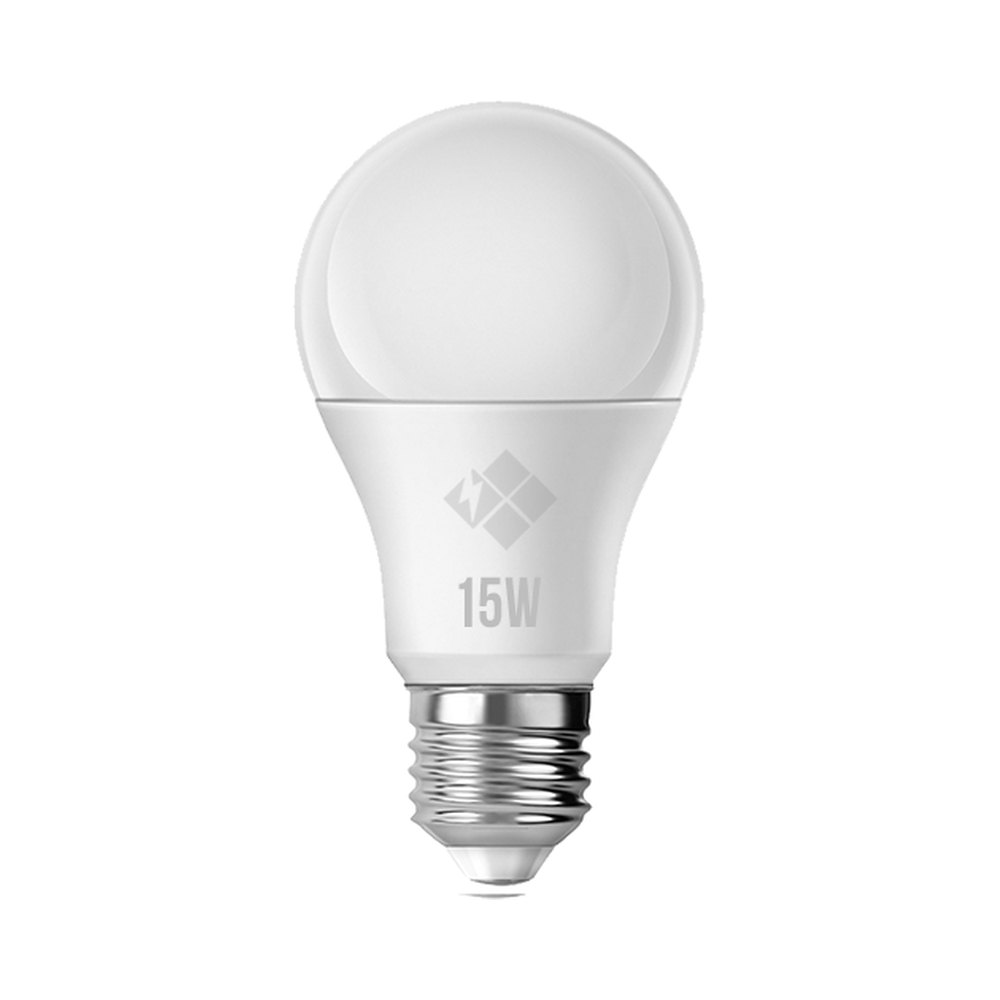
When the power suddenly goes out, the first thing people grab is the torch on their phone. With children, elderly relatives or stairs in the house, though, even a few minutes of darkness can be a problem. Rechargeable LED bulbs are designed to fill that gap: they look like ordinary bulbs but hide a small battery and control circuit inside.
How they work
The bulb screws into a standard E27 holder and gives normal light on mains power while charging its internal battery. When the supply is cut, the circuit detects the loss of mains voltage and switches the bulb over to battery power.
There is a catch: most models detect the outage through the circuit itself, so the wall switch has to be on. If the switch is off, the bulb cannot tell whether mains is present and will not change over. In other words, if the power fails at night in a room where the light is switched off, the bulb will stay dark.
Some models have another mode: take the bulb out of the holder and touch the contacts on the cap, and it lights up. That lets you carry it around like a torch. Whether a bulb has this feature is stated on the box.
What to expect in battery mode
On battery, the bulb usually gives less light than on mains. That is intentional, not a fault: it stretches the small battery's energy over a longer period. Run time depends on battery capacity and the bulb's power and is stated by the manufacturer on the packaging. That figure applies to a new, fully charged battery; over the years, and with frequent deep discharges, real run time gets shorter.
The battery only charges while the bulb is running on mains. A bulb installed in a room that is rarely used may meet a power cut with a flat battery.
Where they make sense
- Hallways and stairs, where the risk of falling in the dark is highest.
- Children's rooms, particularly if a light is kept on at night.
- The kitchen, for power cuts while cooking on gas or handling hot pans.
- The area near the consumer unit, where you need light to check a breaker.
- In areas with frequent outages, one or two strategic points around the home.
Making every bulb rechargeable is pointless. A few well-chosen points are enough.
How they compare with other options
A rechargeable bulb is not the only choice and does not suit every situation, so it helps to compare it with the alternatives.
Wall-mounted emergency light fittings with their own batteries are common in public buildings. They light up in a power cut regardless of any switch, because they are connected to a separate, permanently powered supply. Installing one at home is a job for an electrician, but the result is more predictable.
Rechargeable portable lanterns and camping lights need no installation and can be carried to any room. Their drawback is that nobody knows where they are when needed, and their charge has to be checked separately.
Uninterruptible power supplies are usually bought for a computer, router or boiler controls. Lights can be connected to them, but the unit's capacity is better reserved for the more important devices.
Limitations and safety
A bulb containing a lithium-based battery is more sensitive to heat than a standard LED bulb. Avoid using it in a sealed, unventilated shade, above a hot cooker hood or near a sauna.
On a dimmed circuit, such a bulb may misbehave, because the circuitry can mistake a change in voltage for an outage. Illuminated switches can also make it act unpredictably.
When the battery finally dies, the bulb must not go in household waste: the battery inside needs separate collection. If a bulb is damaged, swollen or getting hot, switch it off and remove it from the holder straight away.
Checklist before buying
- Cap type: usually E27, but check your fitting's holder.
- Are battery run time and light level on battery stated on the box?
- Does the manual explain what happens when the wall switch is off?
- Do you need the hand-held torch function?
- Is the fitting open, and will the body of the bulb fit inside?
A rechargeable bulb does not replace a generator or an uninterruptible power supply; it simply gets you safely through the first minutes of darkness. For everyday lighting at home, ordinary LED bulbs remain the sensible base, and the Zəfər İşığı range by Zaferoğlu Elektrik offers classic-shaped E27 LED bulbs in several power options.
All news