
Securely fixing a heavy light fitting to the ceiling
A heavy chandelier must hang from the ceiling structure, never from its cable. Fixing methods for concrete, hollow-core slabs, plasterboard and stretch ceilings.
When a chandelier falls, more than the fitting gets broken: whoever sits below, the dining table or a child's cot takes the blow. In most such cases the cause is the same — a heavy fitting was trusted to a plug that does not suit the ceiling, or to the cable itself. Choosing a fixing requires two pieces of information: how much the fitting weighs, and what the ceiling is made of.
Find out the weight first
The fitting's weight is usually printed on the box or data sheet. If it is not, weigh it on bathroom scales: weigh yourself, then weigh yourself holding the fitting, and take the difference. Chandeliers with glass drops, crystal elements or several shades can be much heavier than they look.
The fixing should be rated for a load several times the fitting's weight. Static weight is not the only force: pulling the fitting while cleaning, leaning on it while changing a bulb, and vibration from the floor above all add load.
Cables are not meant to carry weight
A light fitting must never hang from its electrical cable. The copper conductors are designed to carry current, not load. A cable under tension can pull out of its terminal, the insulation can be cut and the contact can work loose. Pendant fittings transfer the weight to a dedicated wire rope, chain or hook, while the cable hangs free with a little slack.
Fixing by ceiling type
A solid concrete ceiling is the easiest case. Use an expansion anchor or a hook anchor designed for concrete. The hole must match the anchor size and be cleaned of dust, or the anchor will not expand properly.
Hollow-core slabs are common in older buildings. If the drill suddenly drops into a void while drilling, an ordinary plug will not hold. Here you need special anchors that open up inside the cavity, or chemical anchors designed for hollow material. It matters that the hook bears on the solid part of the slab, not just on the thin wall of the void.
Plasterboard hung from a metal grid cannot hold a heavy fitting on its own. Butterfly-type plugs may do for a light fitting, but a heavy chandelier needs a fixing extended through to the structural ceiling behind, for example with an adjustable hanger or bracket. Ideally this is planned while the suspended ceiling is being installed.
In a stretch ceiling, the fitting is never attached to the membrane. Before the membrane is fitted, a mounting platform is fixed to the structural ceiling and the membrane is cut over it. Adding a heavy fitting later means taking down part of the membrane.
The electrical connection behind the canopy
Once the fixing is ready, the electrical connection comes next, and weight plays a role here too. Wires tend to be joined in a hurry while someone holds the fitting up, and that is exactly when mistakes happen.
Connecting the conductors with clamp-type connectors is more reliable than twisting them together. If a metal chandelier has an earth terminal and a green-and-yellow conductor comes out of the ceiling, it must be connected. Joints should not be crammed inside the canopy, and the canopy must not cut into the cable insulation.
In a multi-bulb chandelier, the total power determines the current through the joint. Switching from old incandescent bulbs to LED reduces that load, but it does not lower the demands on contact quality.
During installation
- Before drilling, check for hidden cables and heating pipes; a detector helps.
- Isolate the lighting circuit at the fuse board before touching any wires.
- Do not lift a heavy fitting alone: one person holds while the other fixes it.
- Once fixed, test the anchor and hook with a firm pull by hand, without hanging your weight from it.
- The decorative canopy hides the fixing point; make sure every screw is fully tightened before you close it.
Periodic inspection
Fixing is not a one-off job. Over the years, vibration, temperature changes and movement during cleaning can loosen a hook. Once a year, for example when you clean the chandelier, check that it does not sway and that there are no cracks or crumbling plaster behind the canopy. New cracks in the ceiling or plaster breaking away around the fitting need attention straight away.
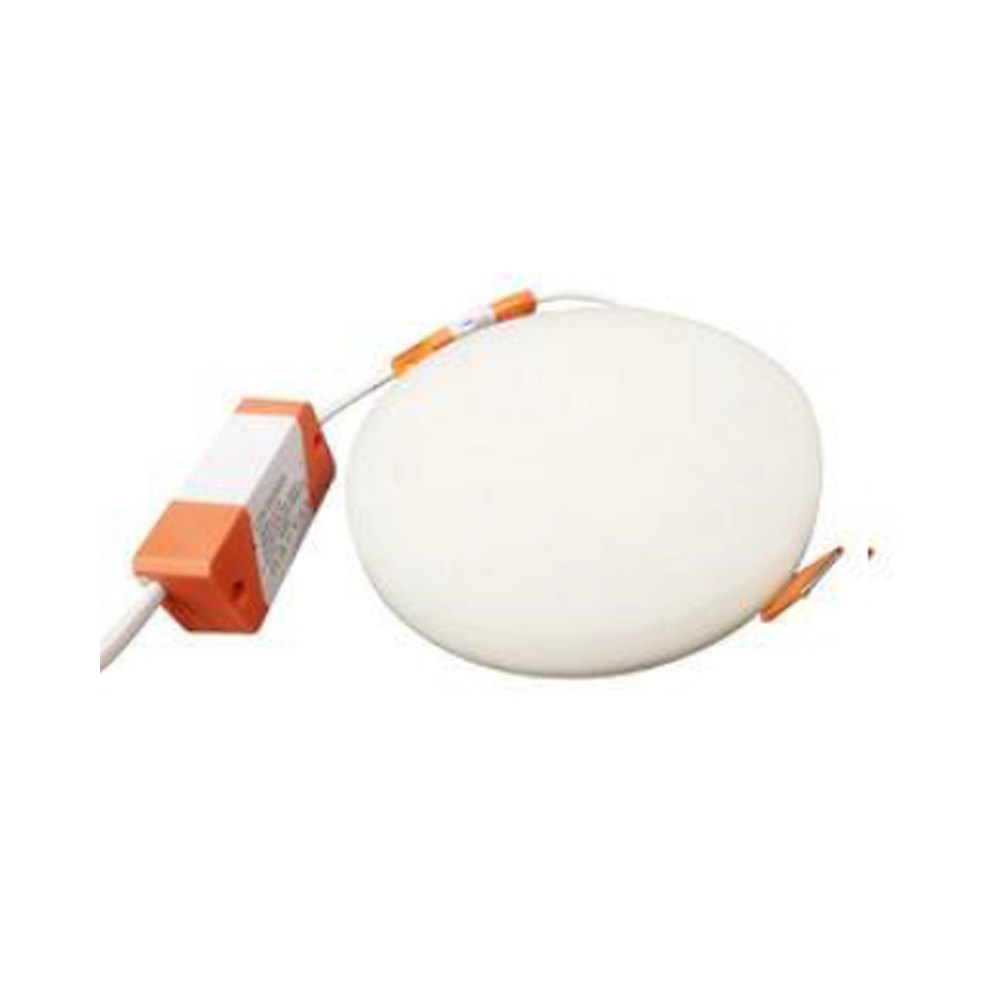
How securely a light hangs matters as much as the light it gives. The Zəfər İşığı range by Zaferoğlu Elektrik includes candle bulbs for chandeliers and round LED panels for ceiling mounting, and the same rules apply when installing them.
All news