
Connecting a new light fitting to old aluminium wiring
Aluminium wire behaves differently from copper: it oxidises, creeps under pressure and corrodes when joined directly to copper. How to connect a fitting safely.
In older buildings, the wires hanging out of the ceiling are often dull grey aluminium. The leads and terminals inside a new light fitting are copper. Joining the two metals carelessly, especially by twisting them together, can lead to a hot contact, a flickering light and, in the worst case, a fire.
How aluminium wire differs
Aluminium conducts electricity less well than copper, but that is not the main issue. Three other properties matter more at a connection.
First, aluminium quickly forms a thin oxide film in air. The film conducts poorly and raises contact resistance. Second, aluminium creeps under pressure: a wire clamped under a screw slowly thins out and the contact loosens. Third, aluminium expands differently from copper as it heats and cools, so every on-off cycle weakens the joint a little more.
Then there is age. Decades-old aluminium wire turns brittle, snaps where it has been bent several times, and its insulation dries out and cracks inside the ceiling.
Why it must not be joined directly to copper
When copper and aluminium touch in the presence of moisture, they form a galvanic couple. The aluminium corrodes at the joint, oxide builds up and resistance rises. Higher resistance makes the contact hotter, heat speeds up corrosion, and the process feeds itself.
That is why simply twisting copper and aluminium conductors together and wrapping them in tape is unacceptable. Such a joint may work for years, but nobody can predict when it will fail.
Safe ways to make the connection
If a fitting has to be connected to an old aluminium circuit, one of these methods is used:
- connectors whose markings state they are suitable for aluminium; some contain a paste that breaks down the oxide layer and keeps it from re-forming;
- a bolted joint with steel washers, where the copper and aluminium conductors are clamped under separate washers and never touch each other;
- special splice sleeves with a separating layer between the metals.
Whatever the method, cut the wire back to clean, bright metal and do not keep an oxidised or blackened end. When stripping insulation, never score the conductor with a knife: aluminium tends to break exactly at such a nick.
If the fitting's own terminal block is designed only for copper, make a proper transition joint first instead of clamping the aluminium wire straight into it.
A sensible order of work
Rushing is the most common source of mistakes with aluminium wiring. A careful sequence helps:
- switch off the lighting circuit breaker and confirm there is no voltage on the ceiling wires;
- when removing the old fitting, avoid bending the wires much; hold them with one hand while undoing the terminal with the other;
- look for blackening, signs of melting or a greenish deposit on the ends — they show that the old joint was overheating;
- if there is enough length, cut off the damaged section; if the wire is already too short, extend it with a suitable transition connector;
- once the new joint is made, lay the wires loosely behind the canopy rather than cramming them in, so the brittle aluminium is not bent and broken again.
After the connection is finished, running the fitting for a few hours and checking by hand for heat or a burning smell around the canopy gives extra reassurance.
When the wiring itself should be replaced
Some signs show that the problem is bigger than one fitting:
- wire ends crack or snap when bent;
- insulation crumbles or falls away;
- junction boxes contain blackened or melted joints;
- lights flicker at several points on the same circuit, or there is a smell of burning.
In these cases, connecting the fitting is not enough; have an electrician inspect the circuit. Replacing old aluminium wiring with copper in stages is often the most dependable solution.
LED lowers the load but does not fix a bad contact
An LED fitting draws much less current than an incandescent lamp for the same light, which eases the load on old wiring. A poor contact still causes trouble at low current, though: an LED driver reacts to an unstable connection with flicker and early failure. Lower load is no substitute for a sound joint.
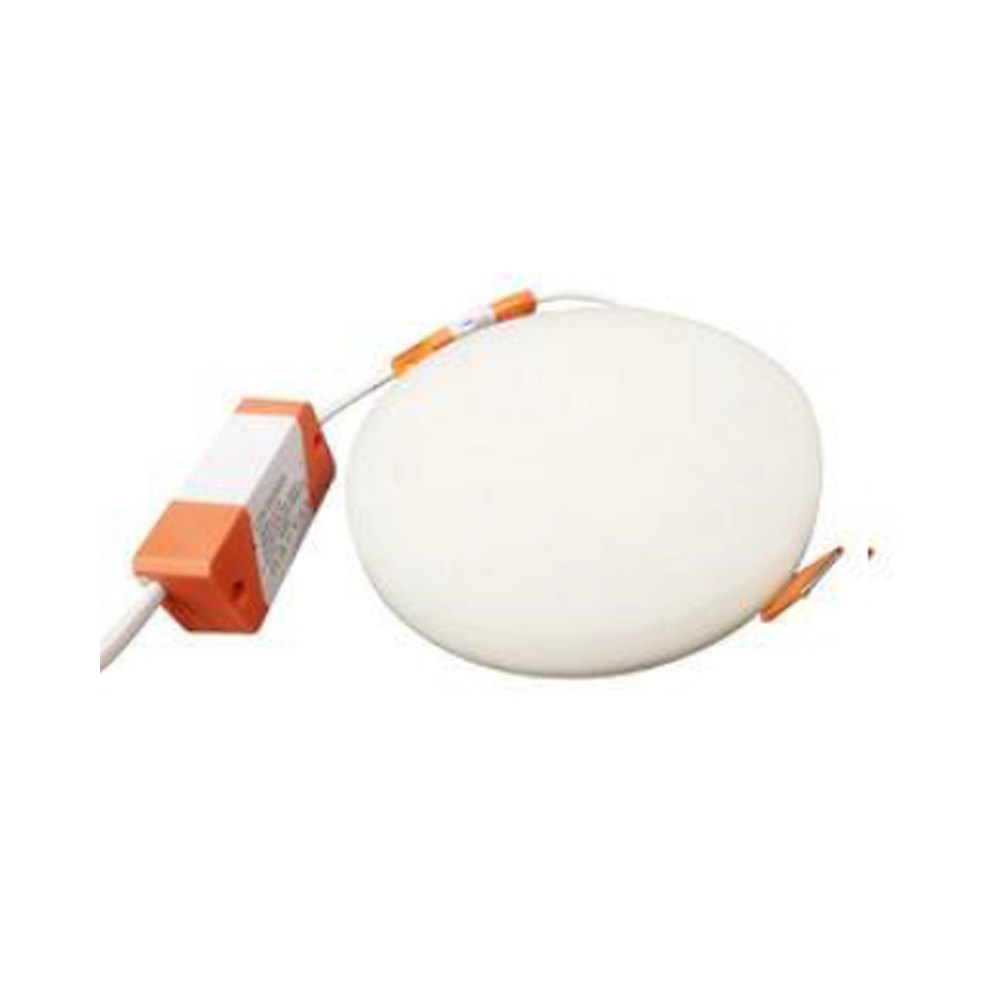
The Zaferoğlu Elektrik range includes round LED panels for ceiling mounting. Whichever fitting you choose, a long service life begins with the condition of the ceiling wiring and a correctly made connection.
All news