
E27 vs E14 lamp caps: the difference and how to tell them apart
Both are screw caps; what differs is the diameter. Here is where each one is used and how to identify an old bulb without guesswork.
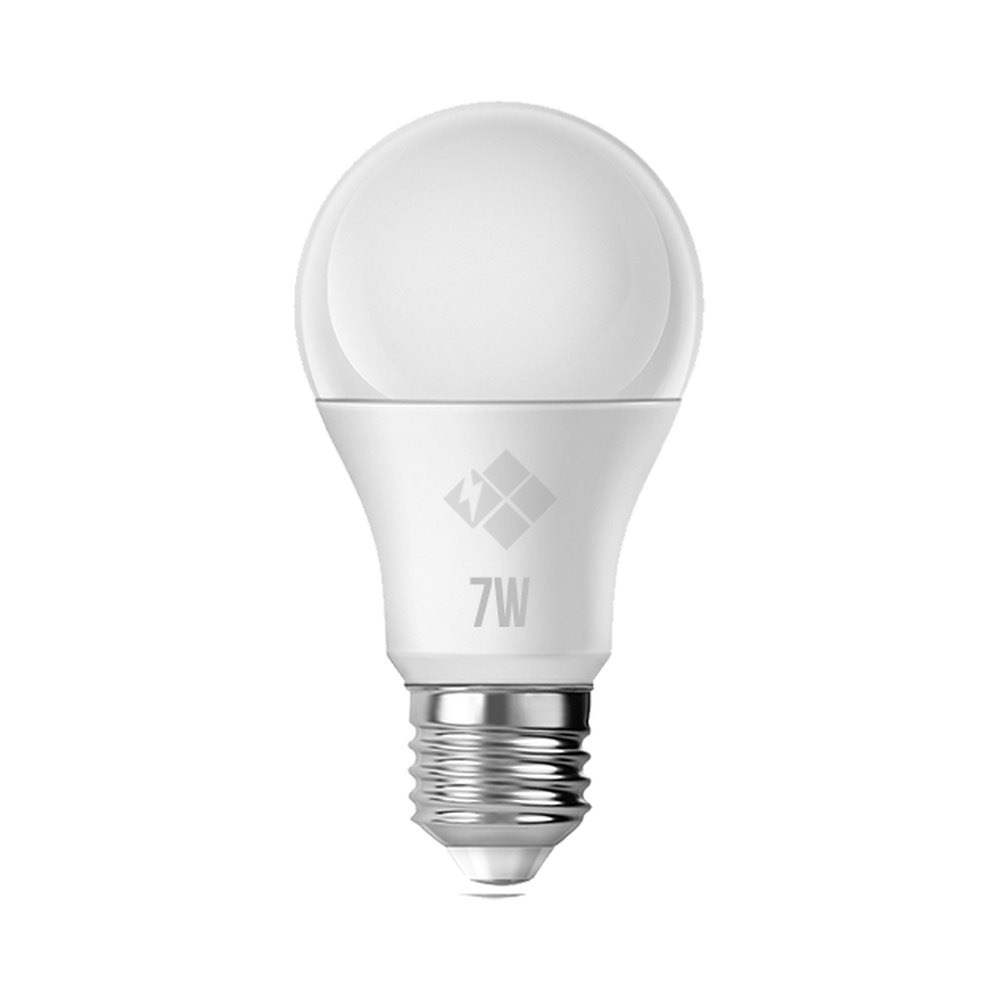
When a bulb burns out, the most common question at the shop counter is simply: "the big one or the small one?" Most screw-in bulbs found in homes use one of two standards, E27 or E14. They look alike, but they are not interchangeable: an E14 bulb falls straight through an E27 lampholder, and an E27 bulb will not go into an E14 holder at all.
What the letter and the number mean
The letter "E" stands for the Edison screw. It dates back to the incandescent era and is still the most widespread way of fixing a bulb, LED ones included: the bulb is screwed into the holder, and contact is made through the threaded side of the cap and the small contact point at its tip.
The number after the letter is the approximate diameter of the thread in millimetres. On an E27 it is about 27 mm, on an E14 about 14 mm. So the difference is not about shape or technology, it is about size. The same system also includes the smaller E10 (torches, string lights) and the very large E40 (street and industrial fittings), but inside a home you will mostly deal with E27 and E14.
Where each cap is used
E27 is the all-rounder. You will usually find it in:
- ceiling lights, simple flush fittings and pendants;
- most table lamps and floor lamps;
- ceiling fittings in hallways, bathrooms and utility spaces;
- the large-bodied lamps used in warehouses, garages and workshops.
E14 is chosen where space is tight or the look of the bulb matters:
- multi-arm chandeliers, especially with candle bulbs;
- wall lights and small sconces;
- decorative night lights and small shades;
- some appliances, such as cooker hoods, fridges or sewing machines (these need bulbs made for their conditions, not an ordinary household lamp).
Shape does not determine the cap. A candle bulb can come with an E14 or an E27 base, and the classic pear-shaped bulb is sold in both versions too. Judging the cap by the shape of the glass alone is a common mistake.
How to identify the bulb you have
The most reliable source is the bulb itself. The cap code is often printed on the metal base or the glass: "E27" or "E14". If the marking has worn off, a quick measurement settles it. Use a ruler or a caliper across the widest part of the thread: roughly 26–27 mm means E27, roughly 14 mm means E14.
Without a measuring tool, a visual comparison still works. An E27 cap is noticeably wider than an adult's thumb, while an E14 is closer to the thickness of a little finger. If you have another bulb at home with a known cap, putting the two side by side is the fastest check of all.
If the fitting is open, look at the lampholder too. Many holders are stamped with the cap type and the maximum permitted wattage, which tells you both the size and how much heat the fitting is designed to handle.
Taking the old bulb to the shop, or photographing it with the cap clearly visible, is an easy way to avoid a wasted trip.
Are adapters a solution?
You can buy adapters that convert E14 to E27 and the other way round. They can help as a stopgap, but keep a few points in mind. An adapter pushes the bulb several centimetres further out of the holder, so it may stick out of the shade or become visible under a lampshade. It also adds another set of contacts: in a poorly made adapter a weak contact can lead to heating and flicker. For chandeliers and enclosed fittings, a bulb with the correct cap is the better long-term choice.
When you change the bulb
Once you know the cap, the swap itself is straightforward. Switch the light off at the wall, and if the old bulb was incandescent or halogen, give it time to cool. Screw the new bulb in until it stops, without forcing it; overtightening can damage both the thread and the holder.
Even with the right cap, the body of the bulb has to fit the fitting. Some LED bulbs are longer or wider than the incandescent lamps they replace, particularly higher-output models, so it is worth checking the dimensions before buying for an enclosed shade.
The Zəfər İşığı lamps made at the Zaferoğlu Elektrik plant in Ganja include standard LED bulbs with E27 caps as well as candle and filament lamps with E14 caps. In the catalogue you can filter the range by cap to find the one you need.
All news