
Balcony lighting: damp, dust and comfort
A balcony sits between indoors and outdoors: damp, dust, temperature swings and insects. Rules for choosing fittings and bulbs for open and glazed balconies.
In many flats the balcony is used like an extra room: a small table for evening tea, drying laundry, plants, sometimes a work corner. But in lighting terms a balcony is neither fully indoors nor fully outdoors. Rain falls on an open balcony, wind blows in dust, it is cold in winter and overheats in the summer sun. Even on a glazed balcony, moisture collects as condensation. An ordinary ceiling light designed for a room quickly deteriorates in these conditions and can become unsafe.
Open versus glazed balconies
Choosing a fitting starts with the type of balcony.
Open balconies and terraces. Here the fitting is directly exposed to rain, wind and all kinds of dust. You need an outdoor fitting with a high ingress protection (IP) rating. Where rain can hit it directly, choose models resistant to water jets, such as IP65 and above; under a roof overhang where it is partly sheltered, splash-resistant models are used.
Glazed balconies. There is no direct rain, but temperature differences cause condensation on the glass and ceiling, and it gets cold in winter and hot in summer. An enclosed fitting protected at least against splashes and dust is a sensible choice here.
The protection rating is shown on the fitting's box and in its technical documentation. A shade that merely looks “closed” is not necessarily moisture-resistant.
Temperature and bulb choice
Temperatures on a balcony swing widely over the months. In an enclosed shade that sits in winter cold and then in direct summer sun, a bulb can get very hot. LED bulbs' sensitivity to heat shows in the driver and diodes: high temperatures shorten their life, and in severe cold some models are slow to switch on.
Practical advice:
- avoid mounting fittings on walls that get direct sun where possible;
- do not use an over-powered bulb in an enclosed shade;
- check the operating temperature range stated by the manufacturer;
- check whether a plastic fitting is UV-resistant, as poor plastic yellows and cracks in the sun.
Light and insects
Switch on a balcony light on a summer evening and insects gather at once. Insects are more sensitive to certain parts of the spectrum, especially short-wavelength blue light close to ultraviolet. For this reason many people notice that warm light attracts fewer insects outdoors. It will not stop them entirely, but choosing a warm colour temperature and placing the light a little away from the seating area, for example in a corner of the wall, can reduce the nuisance.
Insects getting inside an enclosed shade is another common problem. A tightly sealed, dust-protected fitting prevents that too.
Placement and comfort
Balcony light is often for evening relaxation, so soft, downward-facing light suits it better than bright glare. A wall light placed slightly above and to the side of the seating lights the table without shining into the eyes.
Think of the neighbours as well: strong light aimed upwards or at a neighbour's window is a nuisance. A downward-facing fitting with shielded sides keeps the light on your own balcony.
If you grow plants or dry laundry on the balcony, those areas may not need separate light points, but make sure the general light is enough for doing chores in the evening.
Electrical safety
- The balcony circuit should have a circuit breaker and, ideally, a residual-current device.
- On an open balcony, run cables in UV- and moisture-resistant conduit.
- Switches and sockets should be moisture-resistant types located out of the rain.
- Running temporary lights on an extension lead is dangerous, especially in the rainy season.
- Leave installation and connection of fittings to a qualified electrician.
Quick checklist
- The protection rating suits the type of balcony.
- The fitting is not in direct sun and is UV-resistant.
- The bulb is warm in colour and its wattage suits the shade.
- Light is aimed downward and does not spill onto neighbours.
- The electrical circuit is protected and cables are covered.
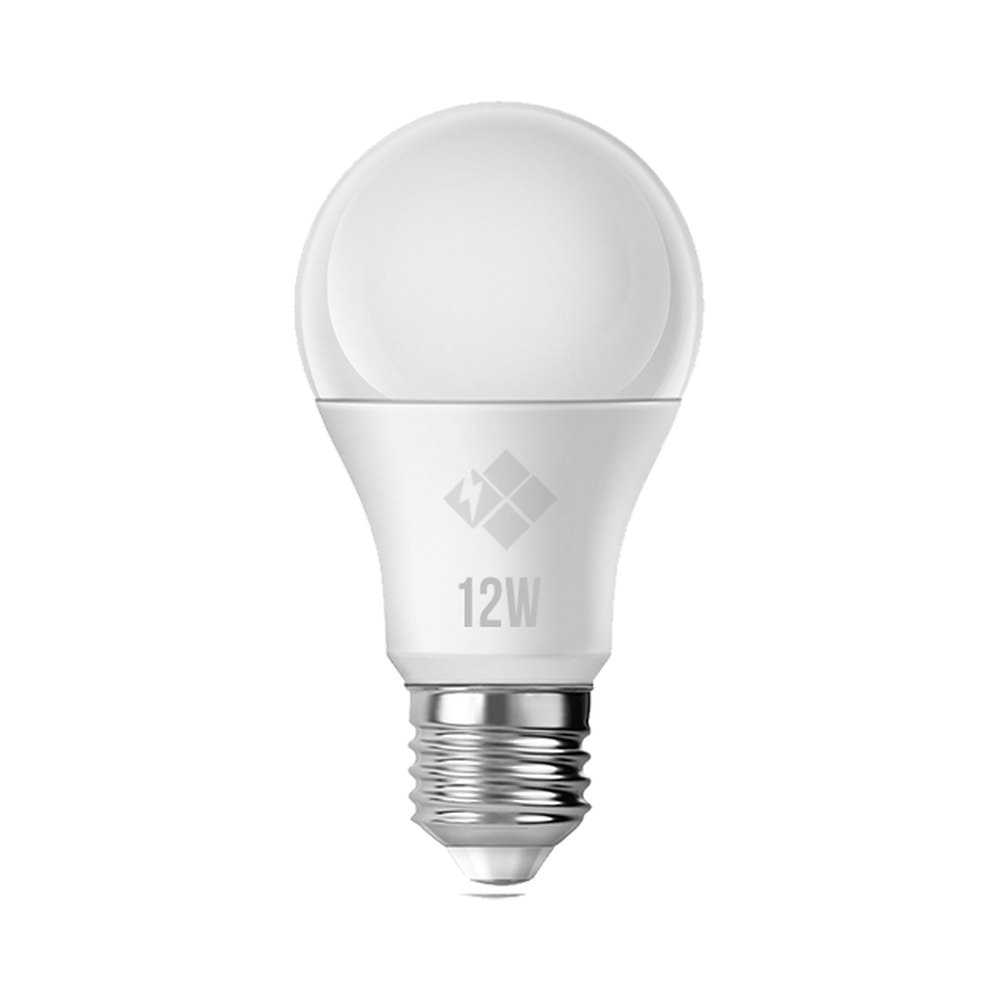
Balcony shades usually take E27 bulbs. An E27 Zəfər İşığı LED bulb will fit this kind of enclosed balcony light; match the bulb to the fitting's maximum wattage and operating conditions.
All news