
Lighting an attic room with a sloping ceiling
A sloping ceiling complicates pendants, downlights and even floor lamps. Lighting ideas that make use of the slopes and respect heat and insulation under the roof.
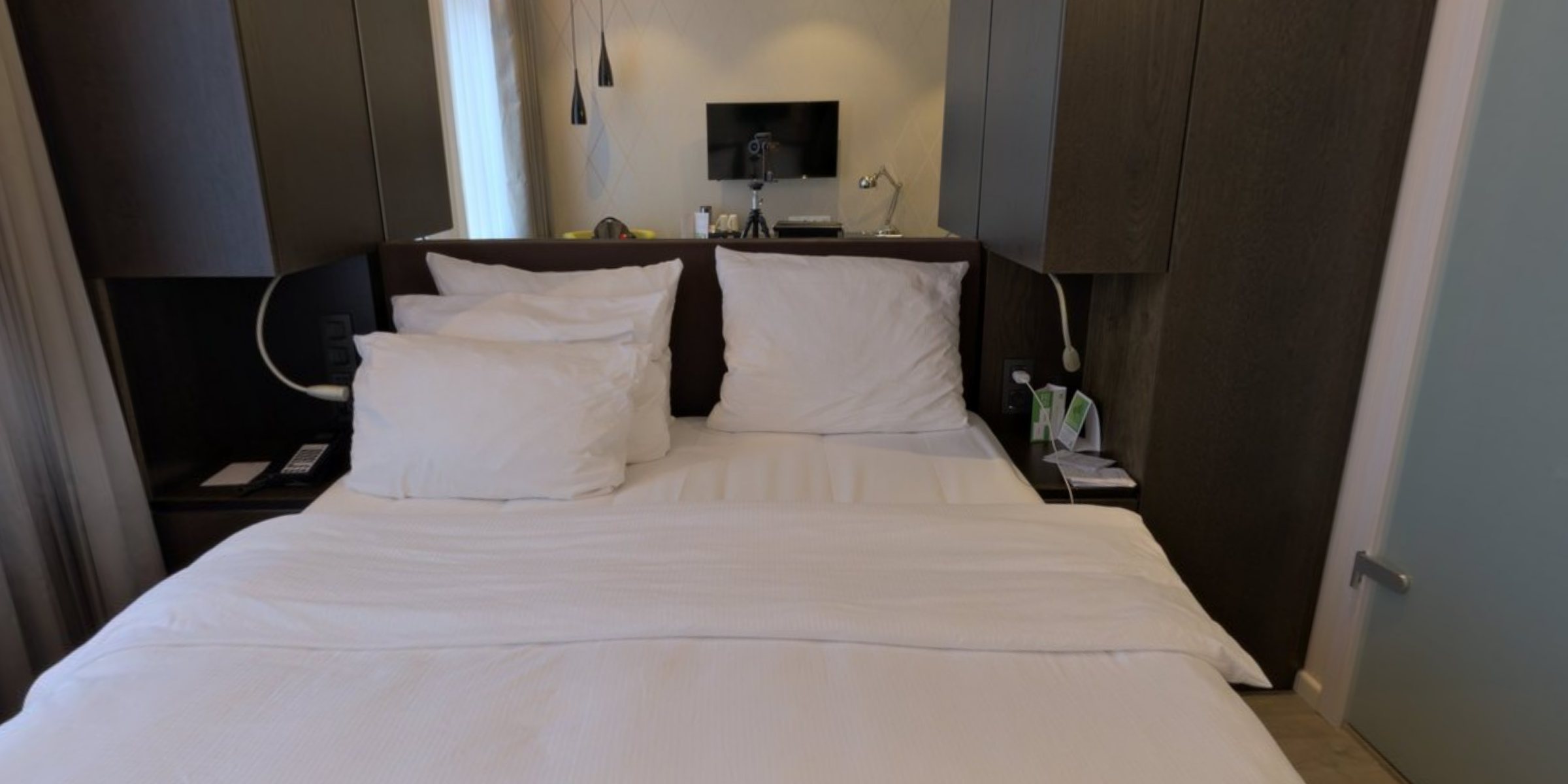
An attic room can become the cosiest corner of a home: sloping ceilings, a roof window, a character of its own. But the lighting solutions that work in an ordinary room often fail here. There is no flat surface in the middle for a pendant, a spot set into the slope throws light sideways rather than down, and a tall floor lamp will not fit on the low side. Attic lighting has to be planned around the shape of the room.
The slope is on your side
A sloping ceiling looks like a problem, but used well it is a big advantage. A pale slope spreads light widely because it acts as ceiling and wall at once. Light aimed up at it fills the whole room with soft, shadow-free illumination.
That is why in an attic, directing the main general light upwards often works best:
- wall lights along the low wall that throw light onto the slope;
- concealed linear lighting along a beam or ridge line that spreads light across the slopes;
- a floor lamp in the tallest part of the room that sends light upwards.
This is especially effective when the slopes are matt and light in colour. Dark timber cladding absorbs light and calls for extra sources.
Along the high line of the room
The highest part of an attic, the line running along the middle of the roof, is a natural place for light. There are several options:
- Pendants. If there is a beam or a flat strip of ceiling, pendants can hang along it. Choose the cable length so nobody hits their head.
- Track system. A rail along the highest line holds adjustable spots, each of which can be aimed where it is needed: a desk, shelves or the bed.
- Beam-mounted fittings. Where timber beams are exposed, compact fittings can be mounted on their sides.
Spots in a slope: what to watch
A fixed spot set into a sloping surface shines at right angles to that surface, so the light goes off at an angle instead of towards the middle of the room. It misses where it is needed, and people often see the bare lamp. If you use spots in a sloping ceiling:
- choose adjustable, swivelling spots;
- position them so they are not directly visible from where people sit or lie;
- avoid a spot looking straight down over the bed.
Heat and insulation
Because an attic sits under the roof, its sloping ceiling usually contains thermal insulation. That matters a great deal for recessed spots. When insulation packs tightly around a fitting, heat cannot escape: a halogen spot can become dangerously hot, and an LED fitting’s life is shortened.
So when planning recessed spots in a slope:
- choose fittings approved for contact with insulation, or keep a protective gap around the fitting;
- avoid lots of holes that break the insulation, since each one creates heat loss and a moisture risk;
- carry out the installation with someone who understands the roof construction and a qualified electrician.
In many cases surface-mounted fittings, track systems and wall lights are simpler and safer than recessed spots.
The low side, the roof window and local light
The low side of an attic is usually used for storage, a bed head or seating. Table lamps, low wall lights and lighting inside shelves suit it better than a tall floor lamp. If the bed is against the low wall, put the bedside light on the wall or a bedside table rather than on the slope.
A roof window lights the attic well by day but becomes a black patch at night. Softly lighting its reveals, or using a blind or curtain, reduces that effect.
In an attic used as a child’s room or study, a separate desk lamp is essential: soft general light bouncing off the slope is not enough for writing and reading.
Fittings that wash the sloping ceiling and walls can use Zəfər İşığı E27 or E14 LED bulbs, while track and swivel spots can take its GU10 lamps. All of them are produced in Ganja; choose them within each fitting’s maximum wattage.
All news