
Bedside reading light: wall-mounted or table lamp?
A reading light in bed has to light the page well without disturbing the person next to you. Wall lights and bedside lamps compared, plus how to choose height and bulbs.
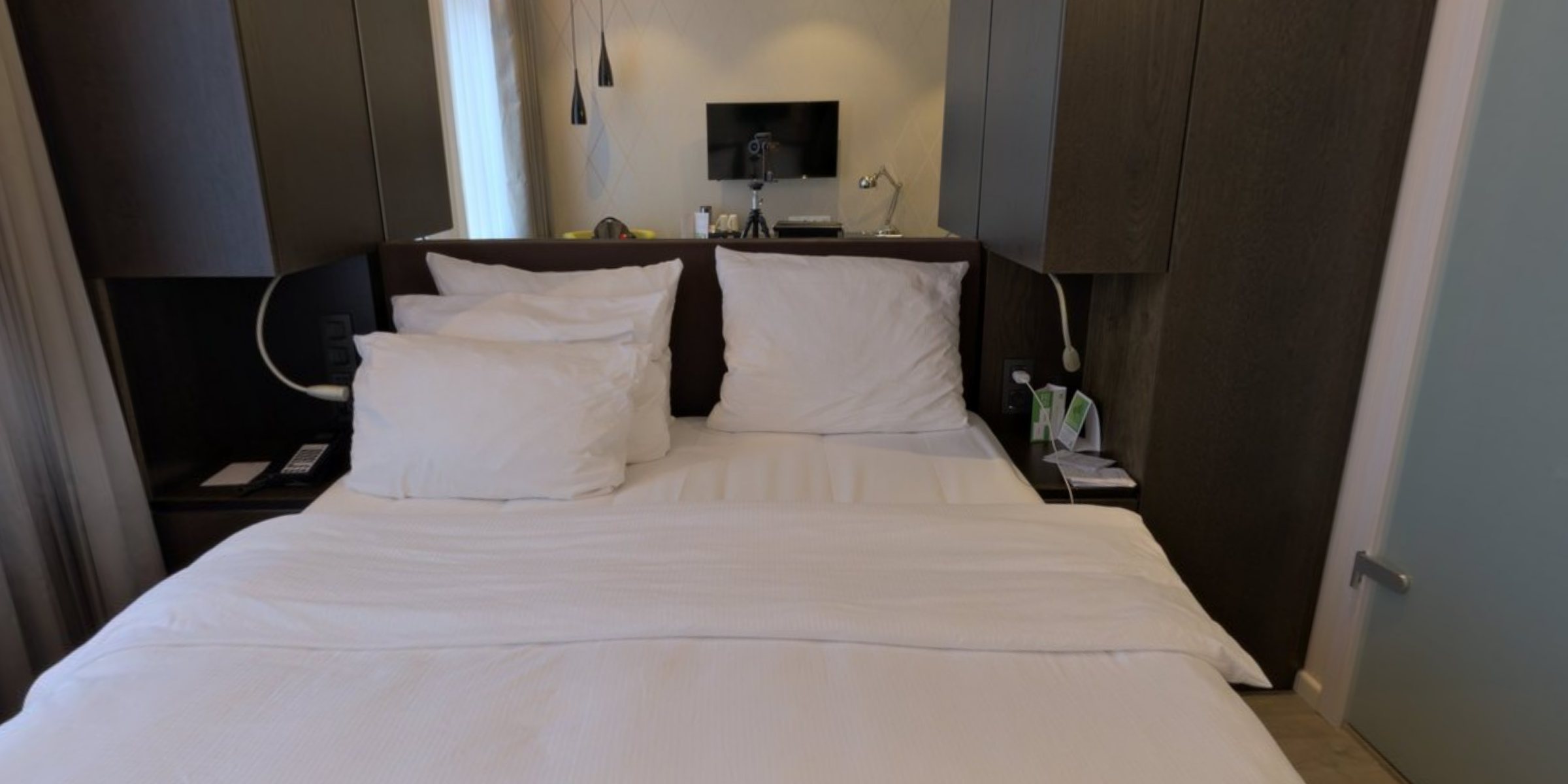
Reading a few pages before sleep is a habit for many people. Yet bedroom lighting often does not support it: the ceiling light falls from behind and casts a shadow on the page, while a decorative bedside lamp lights the room rather than the book. And if someone is sleeping next to you, the light should stay out of their eyes. Choosing a bedside reading light means balancing those three demands.
What a reading light has to do
A good bedside reading light has a simple job list:
- light should fall on the page from the side and slightly above, without your head shadowing it;
- the lamp itself, the bare bulb, should not be visible to the reader;
- little light should spill into the rest of the room or onto the next pillow;
- you should be able to turn it off while lying down.
Both a wall light and a bedside table lamp can meet these requirements, but to different degrees.
Bedside table lamp: flexible but space-hungry
The main advantage of a table lamp is simplicity: no installation, it plugs into a socket and can be moved at any time. A classic shaded lamp gives warm, soft light and sets the mood of a bedroom.
For reading, though, it has weaknesses. A shade spreads light in all directions, so your partner may be disturbed. Its height depends on the bedside table: a small lamp on a low table puts light at mattress level rather than on the page. And the table has limited room for a phone, a glass, a book and a lamp.
If you choose a table lamp, the bottom of the shade should be at roughly shoulder height when you sit up in bed. At that height light falls on the page and the inside of the shade stays out of sight.
Wall light: precise and compact
A wall light above the bed frees up the bedside table and lets you set the height of the light exactly. Two types suit reading particularly well:
- Adjustable-arm wall light. The arm and head swivel so light can be aimed straight at the book, then turned towards the wall afterwards.
- Narrow-beam reading light. A small head that gives a focused pool of light and hardly disturbs the person next to you.
The downside of a wall light is installation: it needs a wiring point in the wall or a cable running down it. Once positioned, it also makes moving the bed harder. During a renovation, preparing wiring points to match the planned bed position is the easiest route. New wiring for a bedside light is a job for an electrician.
There are also plug-in wall lights with a cable along the wall, a no-renovation option.
Switch position is part of the plan too. If the wall light has a switch on its body, you should be able to reach it without stretching. A wall switch goes slightly above pillow level near the edge of the bed, so you can find it by touch in the dark.
Height and position of a wall light
The reference point is the shoulders and head of someone sitting up against the pillows. Place the lamp head a little higher than your head and off to one side, so light comes over your shoulder onto the page. Mounted too low, the light gets in the way and causes glare; too high, and it casts a shadow on the page.
If you fit wall lights on both sides, place them at the same distance from the edges of the bed and at the same height. Each should have its own switch, so one person can read while the other sleeps in the dark.
The bulb
When choosing a bulb for reading light:
- Colour temperature. Warm white light is comfortable before sleep and keeps the bedroom mood. Very cool light can have an alerting effect in the evening.
- Brightness. You need enough light to read but not a harsh glare. With a dimmable set-up you can choose the level yourself.
- Flicker. On a page viewed at close range, flicker from a poor-quality lamp tires the eyes.
- Frosted glass. In an open shade or a lamp with a visible head, a frosted bulb reduces glare.
For small-headed wall lights and table lamps, the Zəfər İşığı catalogue offers E14 candle and filament lamps, and E27 LED bulbs for standard shaded lamps. Before choosing a colour temperature, you can compare how the bedroom looks in different light with the simulator on this site.
All news