
Lamp life: how many years 15,000 hours lasts in daily use
What do the hours printed on the box mean in everyday life? A simple way to turn rated life into years, and the conditions behind that figure.
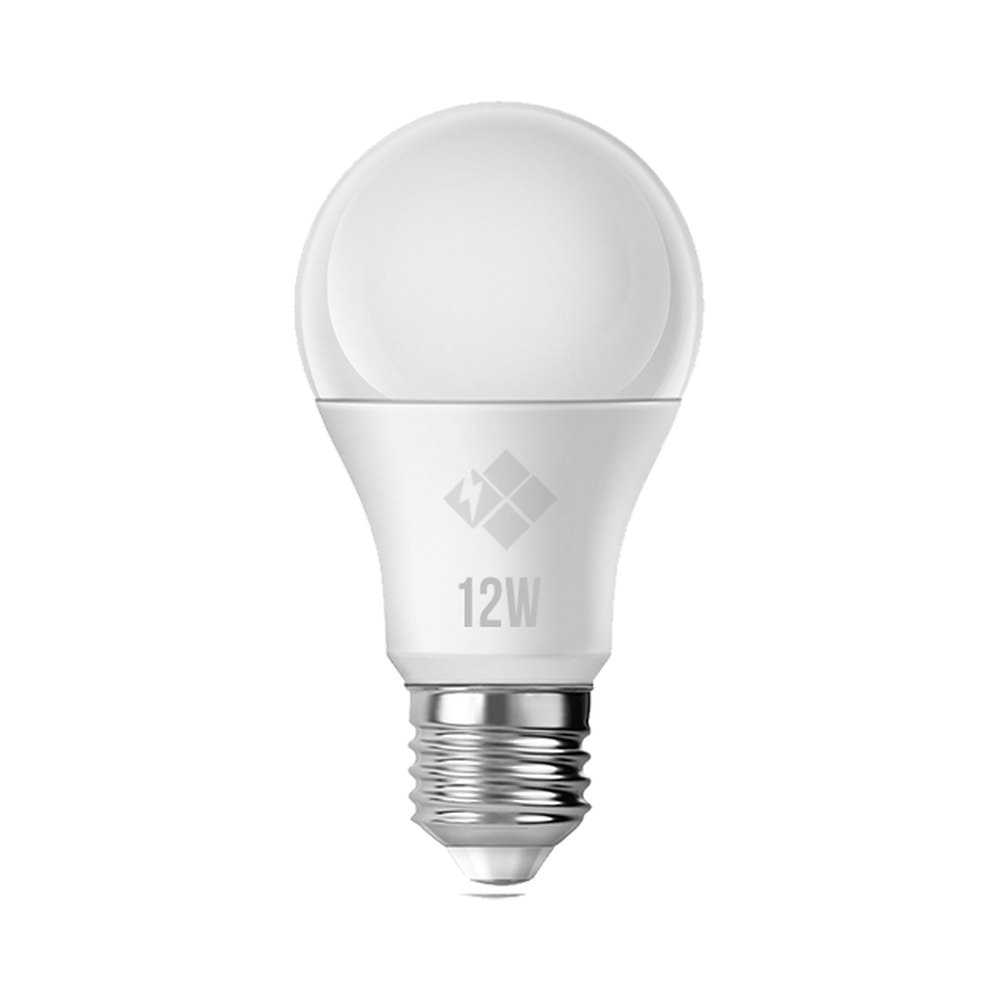
LED bulb boxes often say "15,000 hours" or "25,000 hours". The figures sound impressive, but it is hard to picture what they mean in daily life. How many years will a bulb last? And why do some bulbs fail much sooner despite the figure on the box? Below we use 15,000 hours as an example. It is not the rating of any particular product, just a number often seen on the market.
The simple sum: hours into years
The arithmetic is easy: divide the rated hours by the hours the lamp is on each day, then divide the resulting days by 365.
- A lamp on for 3 hours a day (bedroom, living room in the evening): 15,000 ÷ 3 = 5,000 days, about 13–14 years.
- 6 hours a day (kitchen, the room where the family spends most time): 2,500 days, about 7 years.
- 12 hours a day (shop, office, stairwell): 1,250 days, a little over 3 years.
- Round the clock (storeroom, permanent entrance light): 625 days, nearly 2 years.
The same bulb can therefore last more than ten years in one place and only two in another. The sum has one weakness: daily hours change with the seasons. Winter evenings are long, so the living room light burns longer than in summer. It is more accurate to answer "how many hours a day" with a yearly average; for a lamp on 5 hours in winter and 2 in summer, about 3.5 hours is a fair figure. The useful question is not "how many years" but "where, and for how many hours a day".
What the life figure really means
An LED bulb does not "blow" suddenly like an incandescent one. Its light output falls slowly over the years, so LED life is usually stated with a condition attached. In technical data sheets you will see:
- L70: the time until the lamp's light output falls to 70 per cent of its initial value. After the stated hours the bulb may still work, but it will be noticeably dimmer than when new.
- B50: the time by which half of the tested lamps have reached that point or failed. It is a statistical measure: some lamps in a batch fail earlier, some later.
If these markings are not given, it is unclear under what condition the hours on the box were calculated. Keep that in mind when comparing products.
What shortens lamp life
The figure on the box is measured in the lab, at normal temperature and on a stable supply. Conditions at home are often different, and several factors can shorten life considerably.
Heat is the main enemy. The life of LED chips and the electronic parts of the driver falls as temperature rises. Inside an enclosed glass shade, in an unventilated ceiling void or somewhere hot like a cooker hood, a bulb ages faster than in an open fitting. For enclosed fittings, choose a bulb the manufacturer approves for that use.
Voltage surges are the second factor. Where the supply often cuts out or spikes, the driver's capacitors are under more stress.
Dimmer mismatch is the third. A non-dimmable bulb run on a dimmer both flickers and fails sooner.
A poor lampholder or a loose contact also heats the base and damages the driver.
Does switching on and off matter?
Life is counted in hours, but switching cycles play a part too. A comparison with incandescent bulbs is useful here: those often failed exactly at switch-on, when the cold filament heated up in an instant. Each time the lamp is switched on the driver takes a brief surge. For good-quality LED bulbs this is insignificant in normal household use. For motion-sensor fittings that switch very often, it is wise to choose a bulb stated as suitable for use with sensors.
The practical takeaway
When you read a life figure, ask: where will this bulb be and for how many hours a day? Is the fitting open or enclosed? Is there a dimmer or sensor? Is the bulb easy to reach, or up on a high ceiling? The harder a lamp is to reach, the more a long life is worth.
Writing the purchase date on the box or on a small note is a simple but useful habit: later it is easy to know how long the bulb really lasted.
Anyone with questions about model-specific technical data for Zəfər İşığı lamps can contact Zaferoğlu Elektrik, which manufactures them in Ganja, through the contact form on the website.
All news