
Why incandescent bulbs waste most of their power as heat
An incandescent bulb makes light from a glowing metal filament, and that method has a physical limit. Where the energy goes, how halogen differs and how LEDs deal with heat.
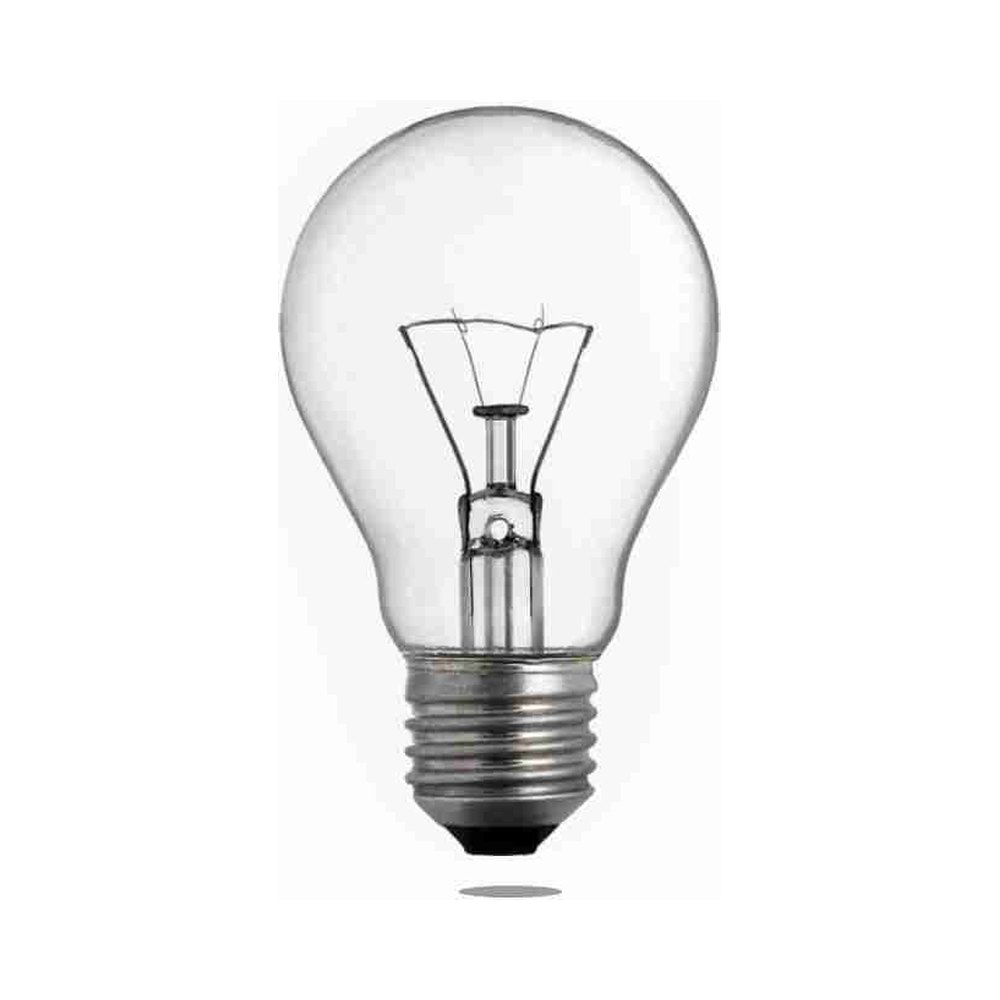
Anyone who touches a lit incandescent bulb pulls their finger back fast: the glass is very hot. That heat is no accident but a direct result of how the bulb works. An incandescent bulb is really a heater that happens to glow: the vast majority of the electrical energy it receives becomes heat, and only a small part becomes visible light. Understanding why also explains why modern lamps are so much more economical.
How a hot object gives off light
Every hot object emits radiation. When a stove plate heats up, you first feel only warmth, then see a dull red glow. As the temperature rises, the colour shifts towards orange, yellow and white. This is thermal radiation, and its spectrum depends on temperature.
In an incandescent bulb, a tungsten filament is heated by the current to a few thousand degrees. At that temperature it gives off visible light, but the peak of its radiation still lies outside the visible range, in the infrared. Most of the energy the filament emits cannot be seen by the eye, only felt on the skin as warmth.
On top of that, the filament passes heat to the surrounding gas and the glass. The result is that less than a tenth of the energy reaching the bulb turns into visible light; the rest spreads into the room as heat.
Why not simply run the filament hotter?
A logical question follows: if higher temperatures shift the radiation towards visible light, why not heat the filament more and get a more efficient bulb? In theory, you could. In practice, tungsten starts to evaporate at high temperatures. The filament thins, the evaporated metal blackens the inside of the glass, and the bulb fails quickly.
So an incandescent bulb’s design is a compromise between efficiency and life. A hotter filament gives more light but a shorter life. This limit is built into the technology and cannot be removed by small improvements.
Halogen: one step further
A halogen lamp is a refined version of the same principle. Its small quartz capsule contains a halogen gas that sets up a chemical cycle returning evaporated tungsten to the filament. This allows the filament to run hotter than in an ordinary bulb without the glass blackening.
The higher temperature gives slightly more visible light and a whiter colour. But a halogen lamp is still mostly a heater: the great majority of its energy still becomes heat. And because the small capsule gets extremely hot, halogen lamps need particular care.
What this heat means in practice
The heat is not just wasted energy; you notice it in everyday life:
- Burn risk. Changing a lit or just-switched-off bulb is dangerous; let it cool first.
- Shades and fittings. A fitting’s maximum wattage exists precisely because of heat. An incandescent bulb above that limit can yellow a shade or deform plastic.
- Extra load in summer. In an air-conditioned room, the heat from lamps adds to the cooling system’s work.
- Protecting goods. In shop windows and on shelves, food and sensitive materials warm up under strong light.
Some people see incandescent heat as “free heating” in winter. But the bulb sits near the ceiling and the heat collects up there; as a way of warming a room, it is less effective than proper heating.
How LEDs handle heat
An LED makes light in a completely different way: light is produced when electrons change energy levels in a semiconductor crystal, with no filament to heat. That is why an LED bulb uses far less energy for the same light.
This does not mean an LED is “cold”. It also produces some heat, but that heat goes backwards from the chip into the heat sink and body of the bulb rather than forwards with the beam. If the heat is not carried away well, the LED’s life shortens. That is why LED bulb bodies are often metal or special plastic, and why operating conditions in closed, unventilated shades matter.
The takeaway
The heat of an incandescent bulb is not a design flaw but the price of the physical principle it relies on. Because that principle cannot be made substantially more efficient, lighting has moved on to other technologies.
The Zaferoğlu Elektrik catalogue includes both traditional incandescent bulbs and Zəfər İşığı LED lamps made in Ganja. Put the two wattages side by side and the heat lost by the incandescent bulb becomes obvious.
All news