
A ceiling full of halogen spots: how consumption changes with LED
Dozens of halogen spots in a suspended ceiling can add up to several hundred watts. How to identify your spots, calculate the difference and avoid the traps when switching.
Filling suspended and plasterboard ceilings with small downlights was once one of the most fashionable renovation choices. Eight in the kitchen, twelve in the living room, six in the hallway, all with halogen lamps. Each one looks small, but together they can become the most energy-hungry lighting in the home. Converting these ceilings to LED is one of the most noticeable savings you can make, but there are technical points to understand first.
First, identify the type of spot
Homes typically have two kinds of halogen spot, and they are replaced differently.
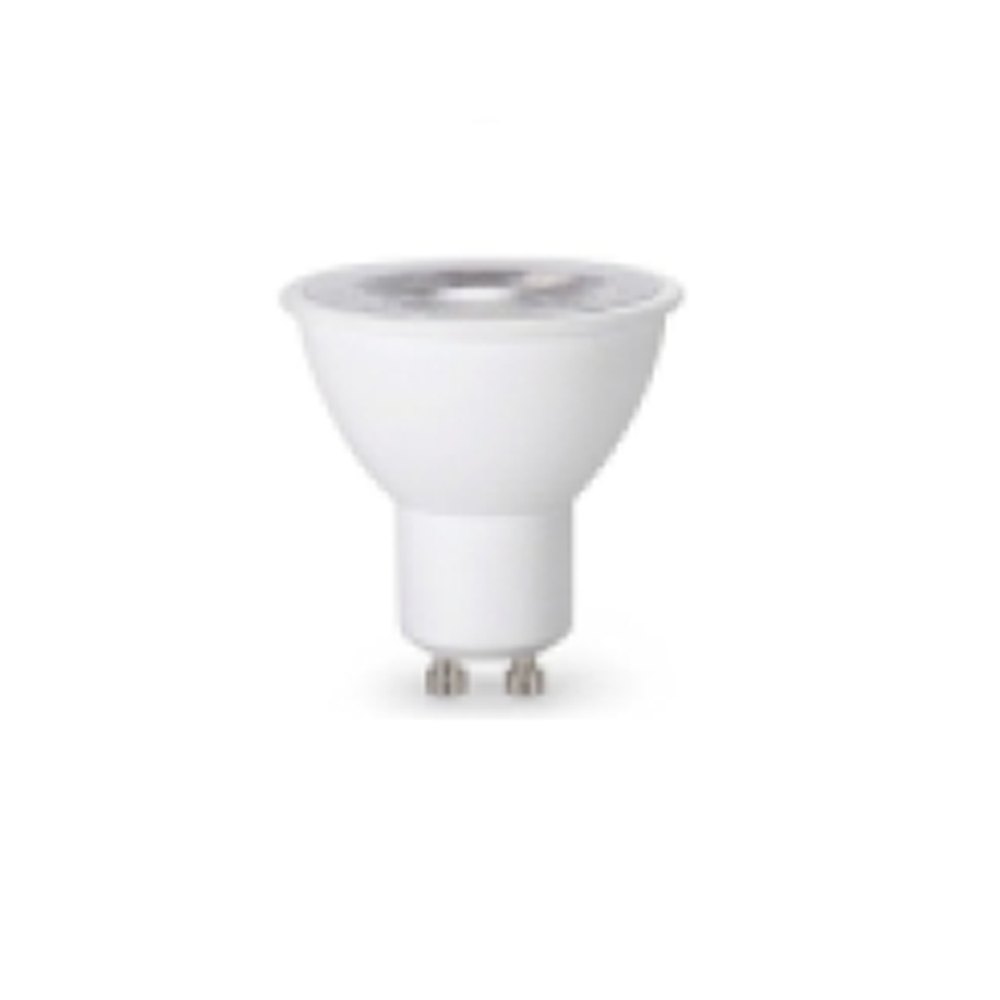
GU10 lamps have two thick pins with flared ends on the base. They are pushed into the holder and given a short twist. They run directly on 220–230 V mains and need no transformer.
GU5.3 (MR16) lamps have two thin, straight pins and usually an open-backed reflector. They push straight into the holder. They often run at low voltage, 12 V, with a transformer above the ceiling for each spot or group of spots.
To remove a spot, switch the light off and let the halogen lamp cool completely. In many fittings the lamp is held by a spring clip; squeeze and remove the clip and the lamp comes free. The voltage and wattage are printed on the back or rim of the lamp.
Calculating the difference
Halogen spots are usually 20, 35 or 50 watts. An LED spot giving the same light uses a small fraction of that. Work it out for your own ceiling:
1. Note the number of spots and the wattage of each.
2. Find the total: number × wattage.
3. Do the same with the wattage of the LED lamp you have in mind.
4. Take that difference, multiply it by the hours the spots burn each day and by the days in a year, and divide by a thousand: the result is the annual saving in kWh.
Example: twelve 50 W halogen spots together draw 600 W. Replace them with 7 W LED spots and the total drops to 84 W, a difference of 516 W. If this ceiling is on four hours a day, that is roughly 750 kWh saved a year. In systems with transformers, the transformers’ own losses also shrink, so the real difference may be slightly larger.
The transformer trap
With GU5.3 spots, most problems when switching to LED come from the transformer. Electronic transformers installed for halogen lamps have a minimum load. A 35–50 W halogen lamp exceeds it easily; a 5–7 W LED lamp may not. The symptoms are familiar: flickering, occasional cut-outs, or no light at all.
Possible fixes:
- replace the transformer with a constant-voltage driver designed for LED lamps;
- connect several spots to one transformer to raise the total load, within what the transformer allows;
- convert the fittings to a mains-voltage system with GU10 holders.
Each of these touches the wiring, so leave them to an electrician. Always check the lamp packaging for its voltage: connecting a 12 V lamp to the mains destroys it instantly.
Keeping the character of the light
Halogen spots give warm light, often with a narrow, crisp beam. To stop the room looking cold or flat after the switch:
- Colour temperature. Choose warm white LEDs for a result close to halogen. Neutral light can suit a kitchen worktop, but do not mix the two in one room.
- Beam angle. Check the old lamp’s angle. Swapping a narrow halogen for a wide LED lights the ceiling more evenly but loses the accent.
- Size. Some LED spots are longer than halogens and may not fit a shallow fitting. Measure first.
- Dimming. If the spots are on a dimmer, you need dimmable LED lamps and a dimmer suited to LED loads.
Less heat is a bonus
Halogen spots generate a lot of heat inside the ceiling void, warming cables, transformers and surrounding materials for years. After switching to LED, the void runs much cooler. Even so, LED spots still need air to shed their heat, so do not pack thermal insulation tightly over the fittings.
Switching in stages
There is no need to change every spot in the house in one day. Start with the room where the lights run longest, usually the kitchen or living room. Replace all the spots in a room at once so colour and brightness stay consistent.
LED replacements for both halogen spot types, GU10 and G5.3, are made under the Zəfər İşığı brand. Once you know the base type and voltage of your existing fittings, you can pick a suitable model or confirm the choice with Zaferoğlu Elektrik.
All news