
Saving on shop-window and sign lighting that runs day and night
Shop-window and sign lighting often burns around the clock and takes a large share of a shop’s bill. Ways to cut consumption without losing visibility.
For the owner of a shop, pharmacy or café, window lighting is advertising: passers-by look inside because the window is lit. That is why in many premises the window and sign lights run from opening until midnight, and sometimes around the clock. Those hours add up to thousands a year, so every watt makes a real difference on the bill. The good news is that you can save without becoming less visible.
First, ask when the window is actually working
Window lighting does two different jobs. By day it makes products stand out against bright daylight. In the evening and at night it attracts attention on a dark street. There is also a third state: the shop is closed and the street is nearly empty. At those hours a window burning at full power serves almost no one.
With that in mind, dividing the lighting into time periods is the simplest and most effective saving.
Timers and schedules
A digital weekly timer for window and sign lighting is inexpensive but very useful. With it you can:
- set different schedules for weekdays and weekends;
- switch the window off, or to a low setting, a set time after closing;
- switch the lights on shortly before opening in the morning.
Astronomical timers adjust themselves to sunrise and sunset through the year. Because darkness falls at very different times in winter and summer, an ordinary timer needs updating as the seasons change, while an astronomical one does it automatically.
If you do not want the window fully dark at night, a compromise is to keep a few accent lights on and switch off the general lighting: the window stays visible while consumption drops considerably.
More light by day, less at night
It sounds odd at first, but a shop window needs more light in the day than at night. On a sunny day, reflections on the glass and the brightness of the street wash out the display. At night, against a dark background, the same window looks bright with far less light.
With a dimmable or two-stage system, lowering the output after evening both saves energy and makes the window pleasant to look at rather than glaring. Some premises use a light-level sensor for this.
Upgrading lamps and fittings
Older windows still commonly use halogen spots, metal halide floodlights and lightboxes with fluorescent tubes. Halogen spots use a lot of energy and heat the display, which is bad news for chocolate, cosmetics and fabrics. Moving to LED spots reduces both problems.
In signs and lightboxes, fluorescent tubes can be replaced with LED modules or LED tubes. Even light across the box matters: the number and placement of modules should be chosen so the face shows no dark patches or bright stripes.
When choosing new fittings, consider:
- Beam angle. A narrow spot highlights a product; a wide beam floods the whole window. Lighting everything with wide beams often means excess light.
- Colour temperature. Food, bread and leather goods look better in warm light; electronics and jewellery in neutral or cool light.
- Colour rendering. For clothing and cosmetics, lamps that do not distort colours are important.
- Outdoor conditions. A street-facing sign needs a suitable level of protection against moisture and dust.
Cleaning and inspection
Dirty glass and dusty diffusers lose part of the light, and owners then add lamps because the window “looks dull”. Regular cleaning of glass and fittings prevents that unnecessary increase.
Replacing failed lamps promptly matters too: one or two dark spots spoil the whole display, and people tend to compensate by turning all the lighting up.
Check the rules
Some cities have local requirements for illuminated signs and façade lighting, covering operating hours, brightness or installation permits. Check them before installing a new sign or changing the schedule.
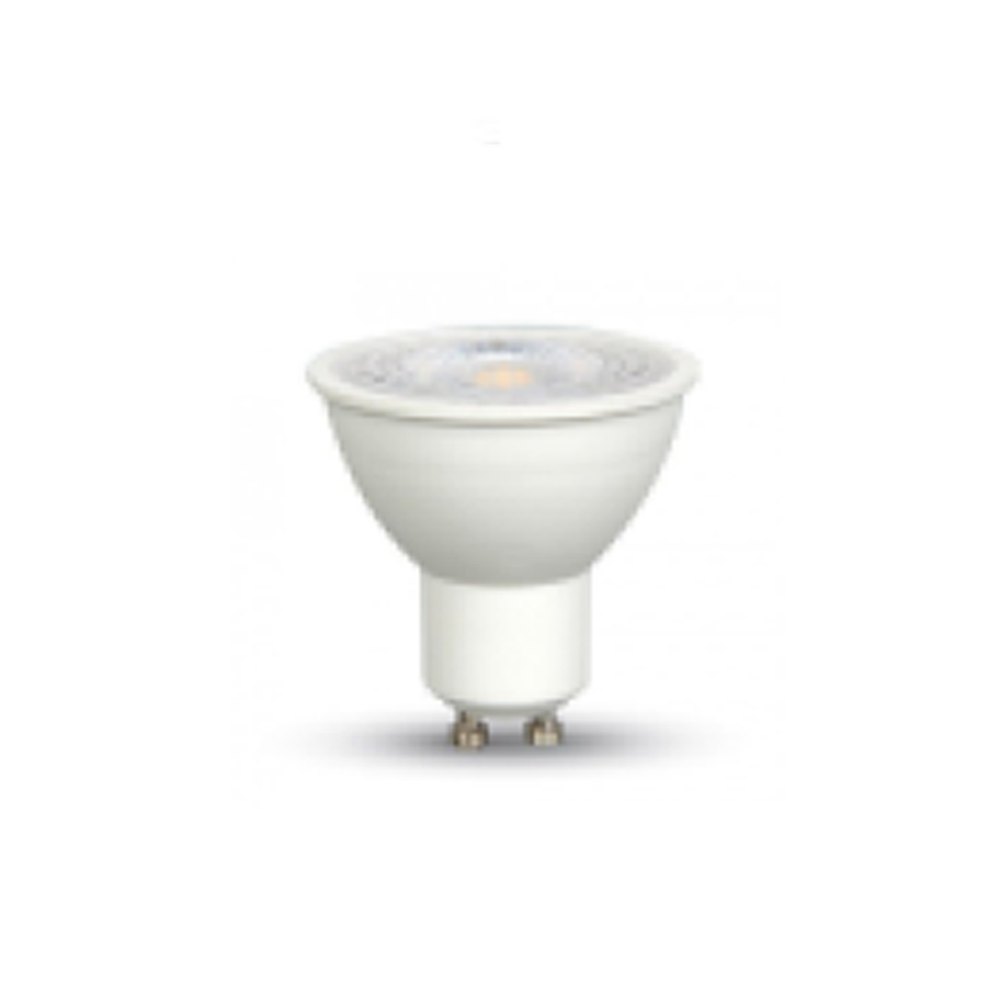
Halogen spots in a shop window can be swapped for Zəfər İşığı GU10 or G5.3 LED lamps, and a wide window can use the adjustable 3D spot. You can check which type suits your existing fittings by writing to Zaferoğlu Elektrik through the quote request form.
All news