
Do hot bulbs make your air conditioner work harder in summer?
Every watt a lamp uses ends up as heat in the room. Here is how that affects cooling in summer and when the difference is actually noticeable.
On a July evening the air conditioner runs non-stop while half a dozen halogen spots glow in the ceiling. It is a familiar scene in many homes. So how much does the heat from those lamps fight the cooling, and is the difference big enough to notice?
Where the energy goes
The physics is simple. Part of the electricity fed to a lamp becomes visible light and the rest turns straight into heat. The visible light then lands on walls, furniture and floor, is absorbed, and ends up as heat as well. So a 100-watt lamp in a room adds roughly 100 watts of heat, apart from the little light that escapes through the window, whatever its colour or technology.
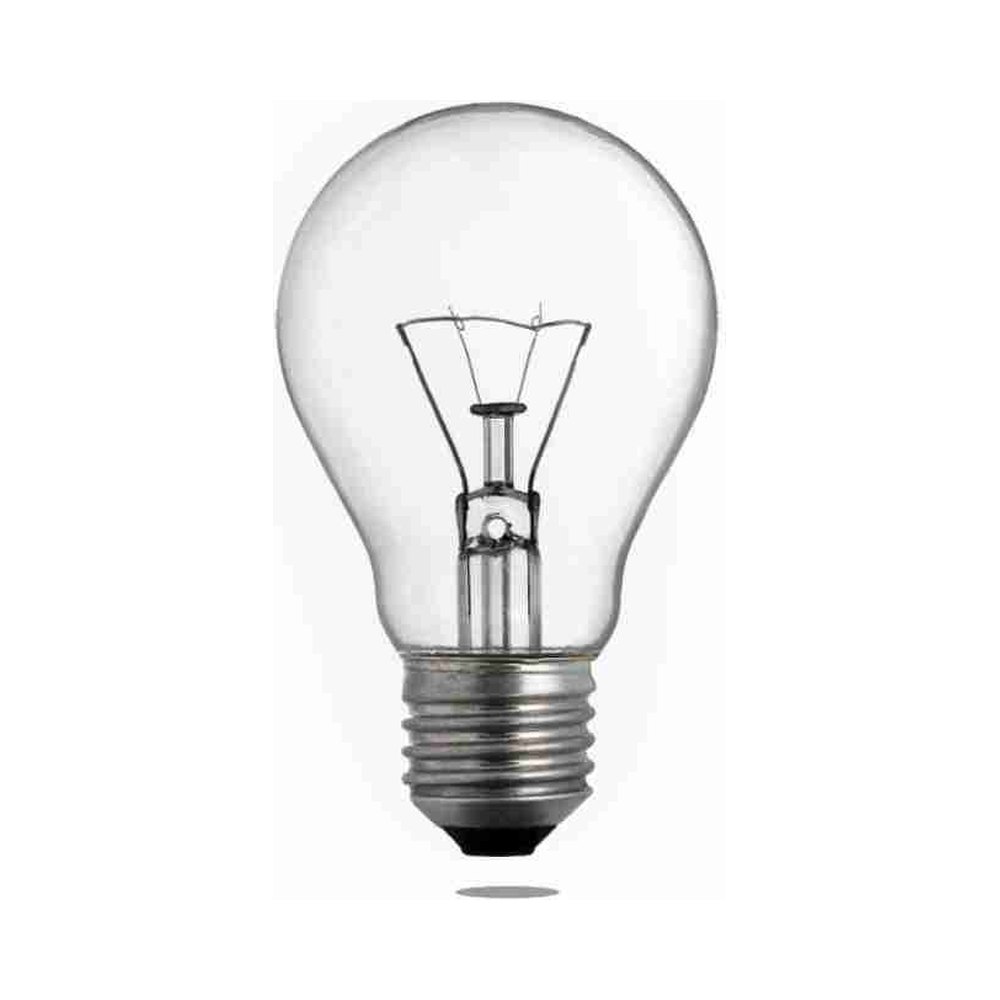
The real difference is how many watts each technology needs for the same amount of light. An incandescent bulb loses most of its energy as infrared radiation and heat, so it needs many times more watts than an LED to produce the same light. A halogen lamp is an improved incandescent and sits close to it. An LED delivers the same light output with far less power, which means far less heat released into the room.
How the air conditioner "pays" for that heat
An air conditioner moves heat from the room to the outside. It uses electricity to do so, but less than the heat it moves: in household split systems one watt of electricity typically shifts several watts of heat. The ratio depends on the model, the outdoor temperature and the condition of the unit, so no single exact figure applies.
There is one condition: the heat has to be released in the room being cooled. A lamp on the balcony, in the yard or in a storeroom without air conditioning adds nothing to the cooling load. The rule also works the other way: even a small night light left on all night in an air-conditioned bedroom adds a little to the cooling work. So it makes more sense to look at the numbers room by room rather than for the house as a whole.
The practical conclusion is this: for every watt of heat a lamp adds, the air conditioner spends a fraction of a watt extra, very roughly a third or a quarter. The real summer cost of a hot bulb is therefore its own consumption plus the energy the air conditioner uses to remove its heat.
A simple example
Picture a living room with ten 50-watt halogen spots in the ceiling. With all of them on, about 500 watts of heat enter the room, as much as a small electric heater on its low setting. Over a five-hour evening the lamps use 2.5 kWh, and the air conditioner may need roughly another 0.6–0.8 kWh to pump that heat out.
Replace the spots with LED versions drawing a few watts each and both figures fall by roughly the same proportion: the lighting's own consumption and the extra load on the cooling. The change is most noticeable:
- in small or poorly ventilated rooms where the air conditioner already runs flat out;
- in spaces with many spotlights or a multi-arm chandelier;
- in kitchens, where there is plenty of heat already;
- in shops and offices where lights stay on all day.
Other effects of the heat
Beyond the cooling bill, hot lamps cause other summer discomforts. Sitting under a halogen spot you feel warmth on your head, which spoils comfort even when the room air is cool. Heat trapped above a suspended ceiling ages cable insulation and lampholders faster. Inside an enclosed shade the temperature is much higher than in the room.
LED lamps are not completely cold either: their heat gathers mainly in the base and heat sink. But the total amount of heat is proportional to the wattage, and for the same light it is small.
What you can do
- Start with the lamps that burn longest in summer: living room, kitchen, hallway.
- Swap halogen spots for LED spots with the same base (GU10, G5.3); on 12-volt systems with transformers, check compatibility.
- Rather than closing the curtains and switching lights on during the day, use daylight from the side of the house the sun is not hitting.
- Make switching off unused lights a habit: a lamp that is off gives neither heat nor a bill.
The Zəfər İşığı range made by Zaferoğlu Elektrik in Ganja includes GU10 and G5.3 LED spots as well as E27 bulbs, so when replacing old halogens you can filter the catalogue by base to find a match.
All news