
Why bulbs with the same kelvin rating can look different
Bulbs labelled with the same kelvin can look like different shades side by side. The reasons, colour deviation, SDCM and Duv, explained in plain language.
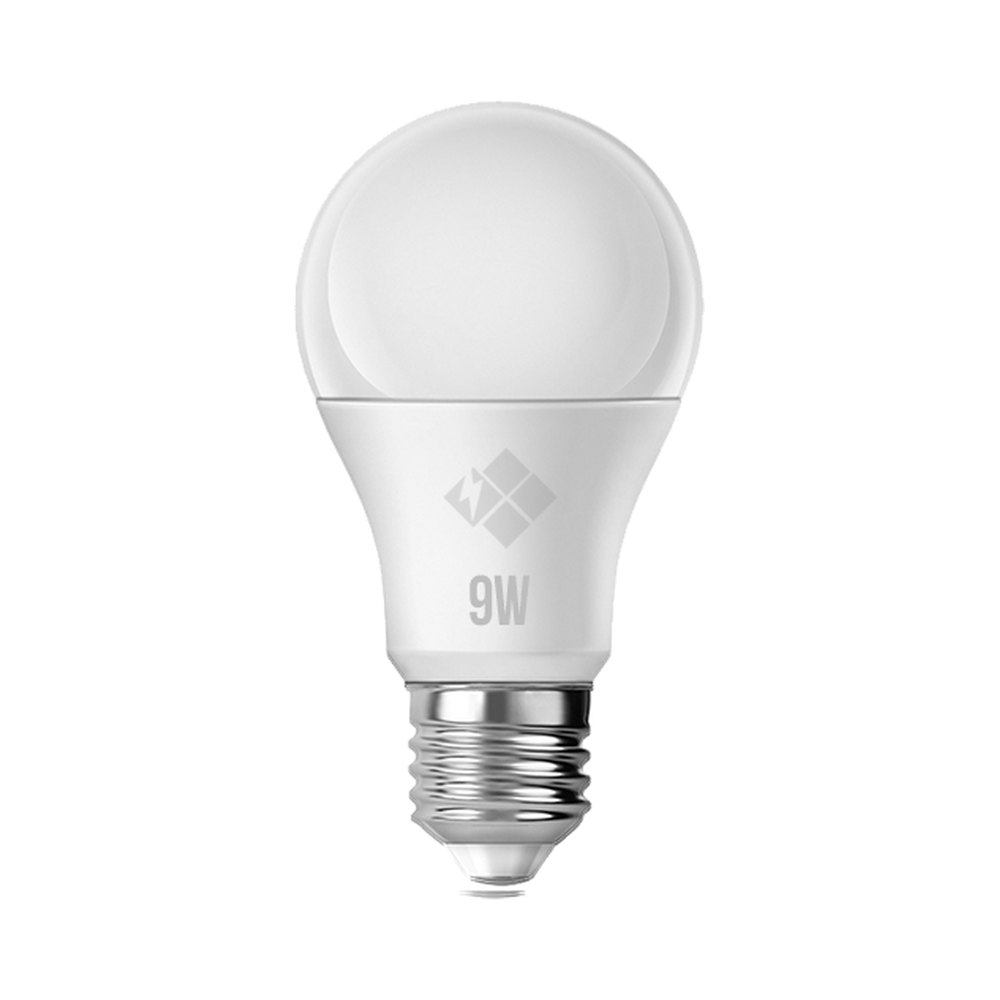
There are six spots in the ceiling, all bought from the same shop, all labelled “4000K”. Yet when switched on, two look slightly greenish and one slightly pinkish. The seller says “they're all the same”, and in terms of the number, that is true. The problem is that the kelvin figure does not fully describe the colour of light. Two concepts are enough to understand the difference: colour deviation and SDCM.
Kelvin describes only one direction
Colour temperature places light along a warm–cool line: low kelvin is yellow-orange, high kelvin is bluish white. But the tint of white light does not change along that line alone. At the same degree of “warmth”, light can lean slightly towards green or slightly towards pink-magenta.
The colours of light from an ideal heated body form a curved line on a colour diagram. A lamp's light may not sit exactly on that line; it can lie a little above it (towards green) or a little below (towards pink). The lamp is still labelled with the closest temperature, say 4000K. This is called “correlated colour temperature”, and it is exactly why bulbs with the same number can look different.
Duv: how far from the line
The measure of how far, and in which direction, a lamp's light deviates from the ideal line is called Duv. A positive Duv means the light is greenish; a negative Duv means it is pinkish-purplish. The closer the value is to zero, the more “clean” the white looks.
Home users rarely see Duv on a box, but they see its effect: under greenish light skin looks unwell, and under pinkish light a white wall looks slightly “cosmetic”. Interestingly, many people find light with a very slightly negative Duv, leaning a touch towards pink, more pleasant.
SDCM: variation between batches
In production, no two LED chips come out exactly the same. Even within one batch there are small colour differences. To show how tightly those differences are controlled, the SDCM (Standard Deviation of Colour Matching) figure is used. It is expressed in steps based on “MacAdam ellipses”, which reflect the threshold at which the human eye notices a difference.
- 1 step: even a trained eye struggles to see a difference;
- 3 steps: very slight difference side by side, a good level for quality lighting;
- 5 steps: a difference may be visible side by side, common in general-purpose lamps;
- 7 steps and above: a clearly visible difference.
“SDCM ≤ 3” or “3-step MacAdam” on the box or in the specification means the lamps will be very close in colour to one another.
Where the difference matters and where it does not
This subtlety does not matter equally everywhere:
- spots in a row, linear lights and panels close together, where even a small difference shows immediately;
- light falling on a white wall, ceiling or display, where patches appear in different tints;
- shops, hotels and office lobbies, where a uniform look is part of the visual quality;
- single lamps in separate rooms or bulbs inside shades, where the difference is practically unnoticeable.
Practical steps for choosing well
- Buy the lamps for one zone at the same time, of the same model and, if possible, from the same batch.
- Set aside several spares from the same delivery for future replacements.
- Do not mix brands in the same row, even if the kelvin rating matches.
- When buying for a project, ask the seller for the SDCM figure.
- Before fitting them, light a few lamps next to each other near a pale wall and compare the tint by eye.
- If a new lamp placed among old ones looks a different shade, bear in mind that ageing may also play a part.
These simple habits prevent most cases of a “multicoloured” row of ceiling spots.
If the problem already exists and you do not want to replace every lamp, regrouping the odd-coloured ones also helps. For example, the two greenish-looking lamps can move to a separate zone of the room while the rest stay in the main row. When they are not side by side, the eye barely notices a small difference.
Buying Zəfər İşığı lamps in quantity for a project? Use the quote form on the website to ask Zaferoğlu Elektrik whether the order can come from one batch and to request the technical data.
All news