
Big windows at night: stopping lamps reflecting in the glass
By day a large window opens up the view; after dark it becomes a black mirror repeating every lamp in the room. Here is why it happens and how to reduce it.
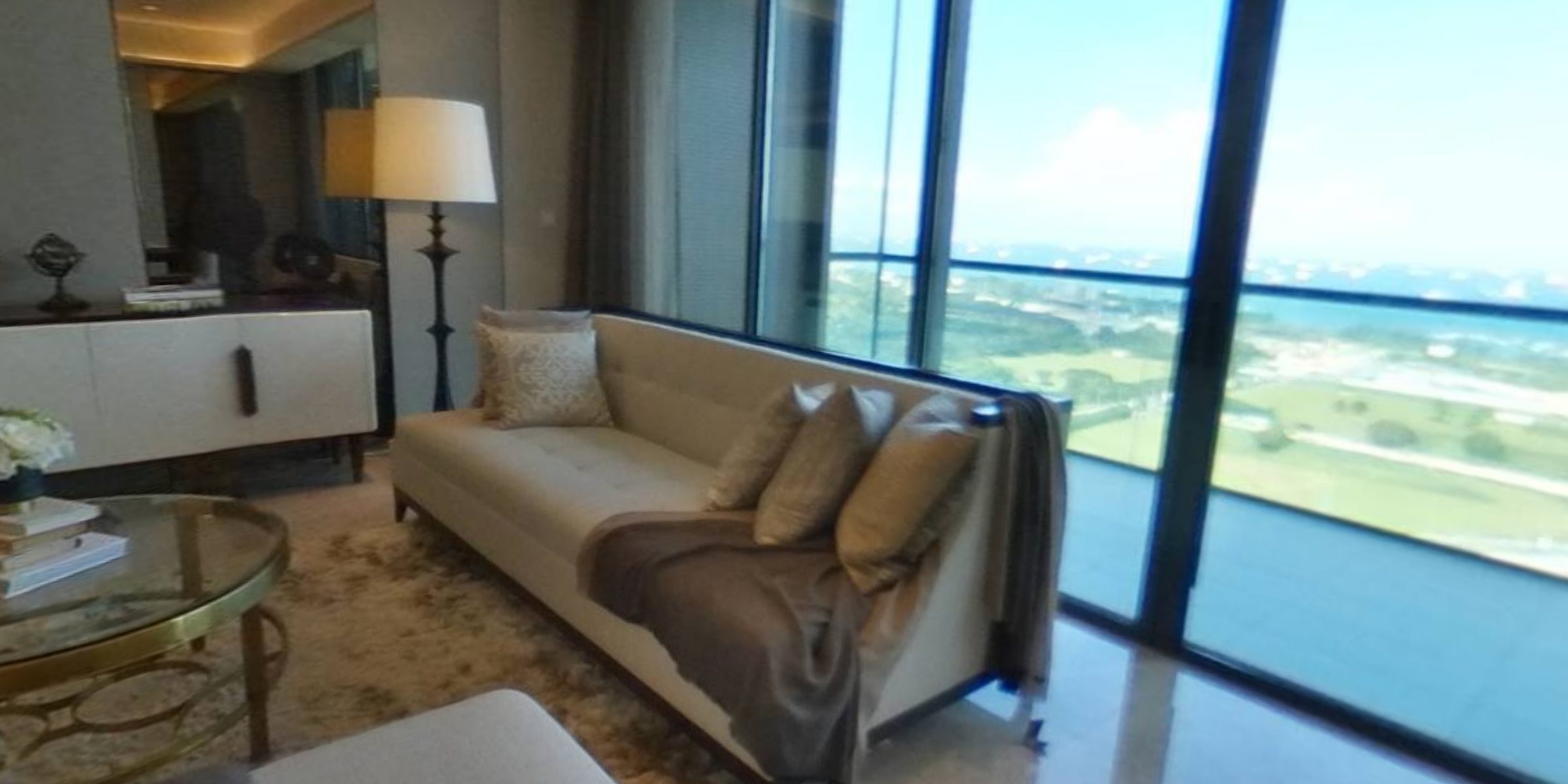
A living room with panoramic windows opens onto the city or the garden during the day. After dark, the same glass turns into a dark mirror: the chandelier, the ceiling spots, the TV screen and even the person on the sofa all show up a second time. Some people get used to it; others close the curtains every evening and lose the point of the view. You cannot eliminate the reflection completely, but you can weaken it a great deal by getting the position and balance of the lighting right.
Why glass becomes a mirror at night
Ordinary window glass always reflects a small share of the light that falls on it. During the day the outside is many times brighter than the inside, so the view coming through the glass overwhelms that faint reflection and we do not notice it. At night the situation is reversed: outside is dark and inside is bright. Now the light passing through the glass is weak and the reflected light is relatively strong, so the glass looks like a mirror.
Two conclusions follow. First, the reflections come mainly from the brightest points in the room: bare lamps, bright shades, lit screens. Second, the smaller the brightness difference between outside and inside, the fainter the reflection.
With double and triple glazing, each surface reflects separately, so you sometimes see not one copy of a lamp but two or three close together. That is not a defect in the glass, just a consequence of the layered construction.
Taking lamps out of sight
The most effective step is to make the bare light source invisible from the window. If you cannot see the lamp itself when you look at the glass from where you sit, you will not see its reflection either. To do this:
- instead of chandeliers and pendants with exposed bulbs, choose fittings that direct light downwards and hide the source;
- for ceiling spots, pick deeply recessed models that keep the lamp inside the housing;
- replace translucent shades with frosted or closed ones;
- do not put wall lights that look straight at the viewer on the wall opposite the window.
The layout of ceiling spots matters too. A row of spots running close along the glass creates a chain of bright points both in the window and, with curtains open, on the sill. Pulling the row slightly into the room and using fewer spots is often enough. Glossy surfaces such as a lacquered table or polished stone floor also bounce light back towards the glass a second time, so a matt rug or tablecloth cuts the number of reflections.
Light falling from above near the window also reduces reflections. A floor lamp aimed sideways or upwards towards the glass is the option that makes the problem worst.
Indirect light and brightness balance
Hidden LED strip lighting a wall or ceiling, light behind a curtain pelmet, and an uplighting floor lamp fill the room with soft light without creating bright points. In the glass, this kind of light appears as a faint, even band rather than a copy of a lamp.
Lowering the overall brightness helps too. If you want to enjoy the view in the evening, keep only the light you need and dim the rest. High-brightness white light shows up clearly in glass; warm, dim light reduces both the reflection and how visible the room is from outside.
The other side of the balance is outdoors. Low lighting on a balcony, terrace or in the garden raises the brightness outside and brings the view back behind the glass. The aim is not to make the outside bright, only to remove the black void: soft light on plants, a railing or trees is enough.
Screens and workspaces
TV and computer screens are strong light sources as well. When a screen faces the window, its bright image is reflected in the glass and distracts anyone sitting on the sofa. Placing the TV on a wall perpendicular to the window removes the problem entirely. If a desk faces the window, the head of the desk lamp should tilt down towards the paper, with the bulb not facing the glass.
Curtains and glass solutions
No lighting arrangement brings reflections down to zero when it is completely dark outside. If the view does not matter in the evening, a sheer curtain or blinds are a simple answer: they create a light background in front of the glass and remove the mirror effect. Special glass with an anti-reflective coating also exists, but that is a decision to make when windows are being replaced.
A short evening checklist:
- which lamps can you see reflected in the glass from where you sit;
- can that lamp's bulb be hidden or covered with a shade;
- is there an indirect light source in the room;
- can the brightness be reduced;
- is there a way to add low light outside;
- does a screen face the window.
After making changes, check the room again on a dark evening: seeing where reflections remain tells you what to do next.
The Zaferoğlu Elektrik plant, opened in central Ganja in December 2021, produces Zəfər İşığı LED lamps. The catalogue also includes compact shapes for shaded floor lamps and wall lights, such as the C37 E14 candle lamp and the C45 E27 lamp.
All news