
Coloured LED bulbs: using them for celebrations and décor
Coloured LED bulbs can transform a festive evening, a child’s room or a terrace in moments. How to use them properly and safely.
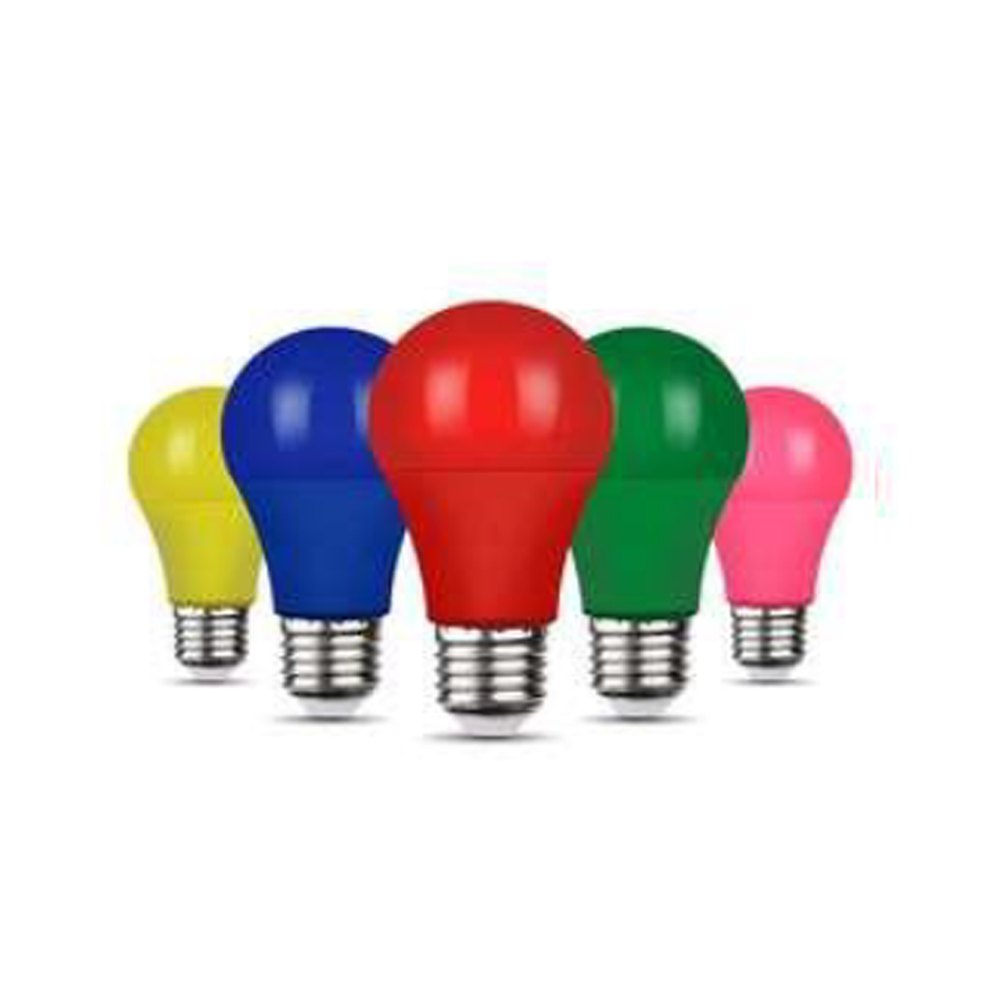
Swapping ordinary white light for a few coloured bulbs in the yard on Novruz evening, in the living room for a birthday or on the balcony on New Year's Eve changes the mood of a space beyond recognition. LED technology has made this both easier and safer: coloured light no longer needs hot bulbs with painted glass. But working with coloured light has its own rules.
How coloured LED bulbs work
There are two main types. In single-colour bulbs, the LED chip emits light of a particular colour directly: red, green, blue and so on. That is far more efficient than filtering white light through coloured glass, because no light is thrown away.
RGB bulbs contain red, green and blue LEDs in one body. By varying the brightness of each separately, many shades can be produced. These bulbs are usually controlled by a remote, a sequence of wall-switch presses or a phone app. Some also have an extra white LED so the bulb can serve as everyday light too.
Coloured light is not main light
A coloured bulb is for “painting” a room, not lighting it. There are several reasons not to rely on it as the main light:
- our eyes respond more weakly to deep blue and red, so a coloured bulb of the same wattage looks noticeably dimmer than a white one;
- under coloured light, object colours become unrecognisable: under red light, red and white objects look the same;
- reading or working for long periods in saturated coloured light tires the eyes.
So even on a festive evening, keep ordinary white light in the kitchen and on the stairs.
Practical decor ideas
Coloured bulbs work best when aimed at a surface rather than straight at the eye:
- a bulb hidden in a corner of a wall or ceiling colours the surface and creates a soft background;
- coloured light placed at the base of a tree in the yard lights the branches from below;
- a bulb behind a balcony railing creates a coloured band on the façade;
- at a children's party, a coloured bulb inside a shaded lamp gives a lively yet soft mood;
- for a festive table, white light over the table and coloured light on the walls is the most balanced combination.
Restraint in choosing colours gives a nicer result. One or two matching colours, such as warm orange with red or blue with purple, look more tasteful than five or six different ones. For Novruz, symbolic combinations like green, red and yellow are a sensible choice too.
Outdoor safety
When using coloured bulbs in a yard, on a terrace or a balcony, electrical safety comes first:
- check that the bulb and lampholder are suitable for outdoor use; an indoor holder is not protected against rain and damp;
- do not leave extension cables and multi-socket adapters on the ground or where water can collect;
- keep plugs and joints out of the rain and, where you can, plug into an RCD-protected outlet;
- when attaching bulbs to branches or fabric decorations, do not pull on the cable, and check that the insulation is undamaged;
- once the celebration is over, take down temporary lines rather than leaving them outdoors all year.
LED bulbs do not get as hot as incandescent ones. That makes them much safer near fabric, paper decorations and pine branches, but you should still make sure a bulb is not left without airflow inside enclosed decor.
About flashing effects
Many RGB bulbs have flashing or fast colour-changing modes. They can be fun for a short while, but they tire the eyes over time. For some people, particularly those with photosensitive epilepsy, rapid changes in light can be dangerous. Where there are many guests, a slow or steady mode is the better choice. Bright flashing light shining into neighbours' windows can also cause complaints.
Short checklist
- Where will the bulb be used: indoors or outdoors?
- Do you need a single colour or changing colours?
- What cap does the existing fitting take?
- Will the light be seen directly or aimed at a surface?
- Will the bulb be used for something else after the celebration?
A coloured LED bulb is also part of the Zəfər İşığı line. Its cap and other details are shown on the product page in the website catalogue.
All news