
“Daylight” bulbs: how close is 6500K to real daylight?
6500K “daylight” bulbs give cool white light, but they differ from real sunlight in several important ways. What those differences are and where the bulb is useful.
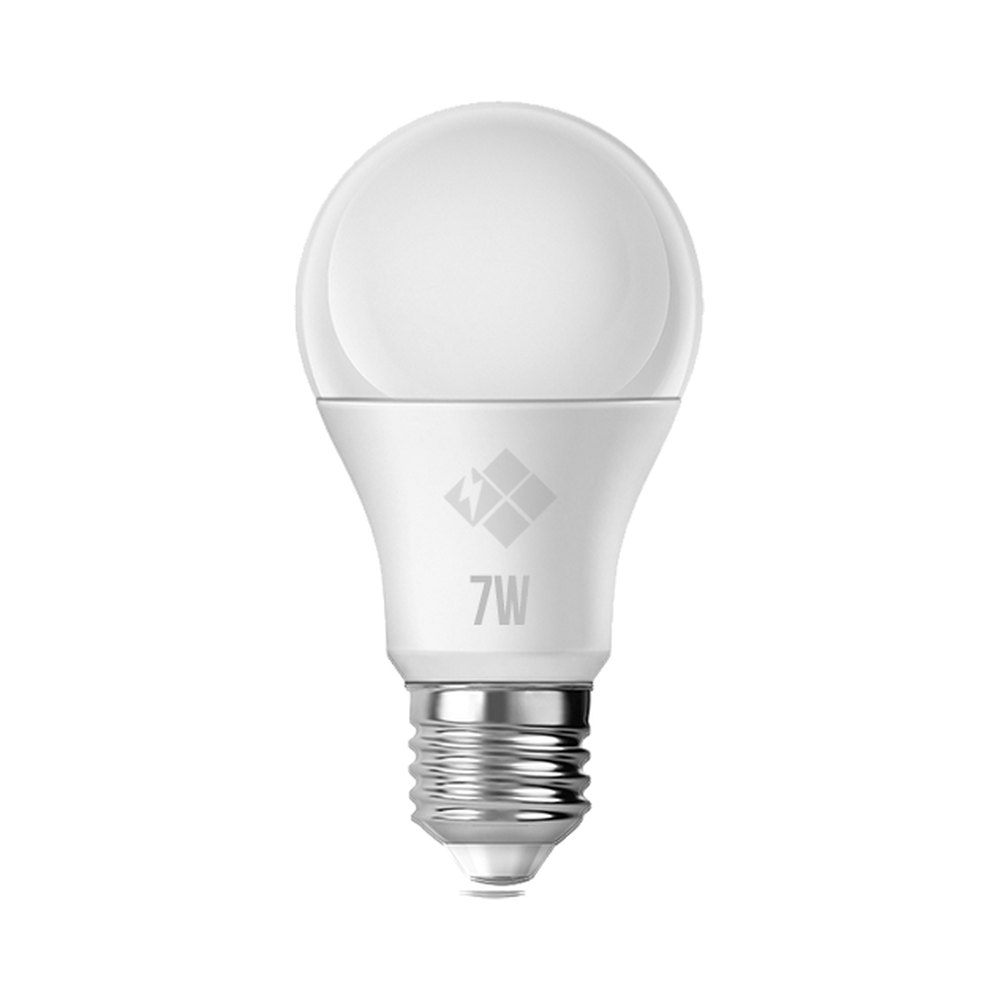
When shoppers see “daylight” on a lamp box, they often assume the bulb will bring the sunlight from a window into the room. In reality a 6500K bulb imitates only one property of daylight: its tint. On every other property the gap is large, and knowing that helps you use the bulb in the right place.
Where the 6500K figure comes from
Lighting and colour measurement use standard models that describe average daylight. The most widely used one corresponds to a colour temperature of about 6500K. Monitors, cameras and the printing industry use this same model as their reference for colour settings. That is where the name “daylight” comes from.
Real daylight, however, cannot be described by one number. Morning and evening sun is warm, around 2000–3000K; direct midday sun is about 5000–5500K; an overcast sky is close to 6500K; and light from a blue sky in the shade can exceed 10,000K. 6500K is just one point in this wide range.
A difference in spectrum
Sunlight has a broad, smooth spectrum: every visible colour is there, as well as invisible ultraviolet and infrared. White LEDs are really blue chips covered by a yellow-green phosphor layer, and the mix of the two reads as white. The spectrum therefore has a strong blue peak, a dip between blue and green, and weaker output in the red.
The eye sees this light as white, but some colours do not look the way they do in daylight. The measure for this is the colour rendering index, CRI: a high-CRI 6500K bulb is closer to daylight in terms of colour, while an ordinary one matches it only in tint.
Brightness: the biggest difference
The most overlooked difference is the amount of light. Outdoors, even on a cloudy day, light levels are dozens of times higher than ordinary indoor lighting, and in direct sun the gap is larger still. A ceiling bulb may resemble daylight in colour, but it comes nowhere near the amount of light needed to create a “daytime” feeling in a room.
So a 6500K bulb does not make a dark room “sunny”; it simply makes the tint cool white. When brightness is low, cool light can even look grey and gloomy.
Ultraviolet and vitamin D
Part of the ultraviolet in sunlight plays a role in producing vitamin D in the skin. Ordinary white LED bulbs do not emit ultraviolet, so a “daylight” bulb does not replace the sun in this respect. That is also an advantage: the light does not burn skin or objects with UV, and it does not fade fabrics.
The special light-therapy devices used for seasonal mood changes are also different from an ordinary bulb: they deliver very high light levels and are used on medical advice. An ordinary 6500K bulb is not a substitute for such a device.
Where 6500K is genuinely useful
Despite its limits, cool white light makes sense in the right place:
- technical spaces such as workshops, garages and storerooms, where clear, contrasty vision matters;
- detailed tasks such as precision assembly, repairs and sewing (with high CRI);
- workplaces used during the day, where the light mixes with window light;
- some shop floors and display windows where a bright, “clean” look is wanted;
- a high-CRI reference light for checking colours.
For bedrooms, living rooms and places used in the evening, 6500K usually looks too cold and formal. If you want these rooms to feel brighter during the day, making the most of window light and choosing light-coloured surfaces helps far more than making the bulb cooler.
What to check when buying
- The kelvin figure on the box: the name “daylight” can be used for 5000K, 5700K or 6500K.
- CRI: if colours need to look right, at least Ra 80, ideally Ra 90.
- Brightness: too little light looks especially dull when it is cool.
- Other lamps in the room: mixed with warm light, 6500K looks bluish.
The online simulator on the company's site lets you set 6500K next to warmer settings on a room photo, which makes the decision easier before you buy.
All news