
The amber glow of filament bulbs: what 2200–2700K gives you
Amber filament bulbs bring back the mood of old incandescent lamps using LED technology. Where this very warm light looks great and where it falls short.
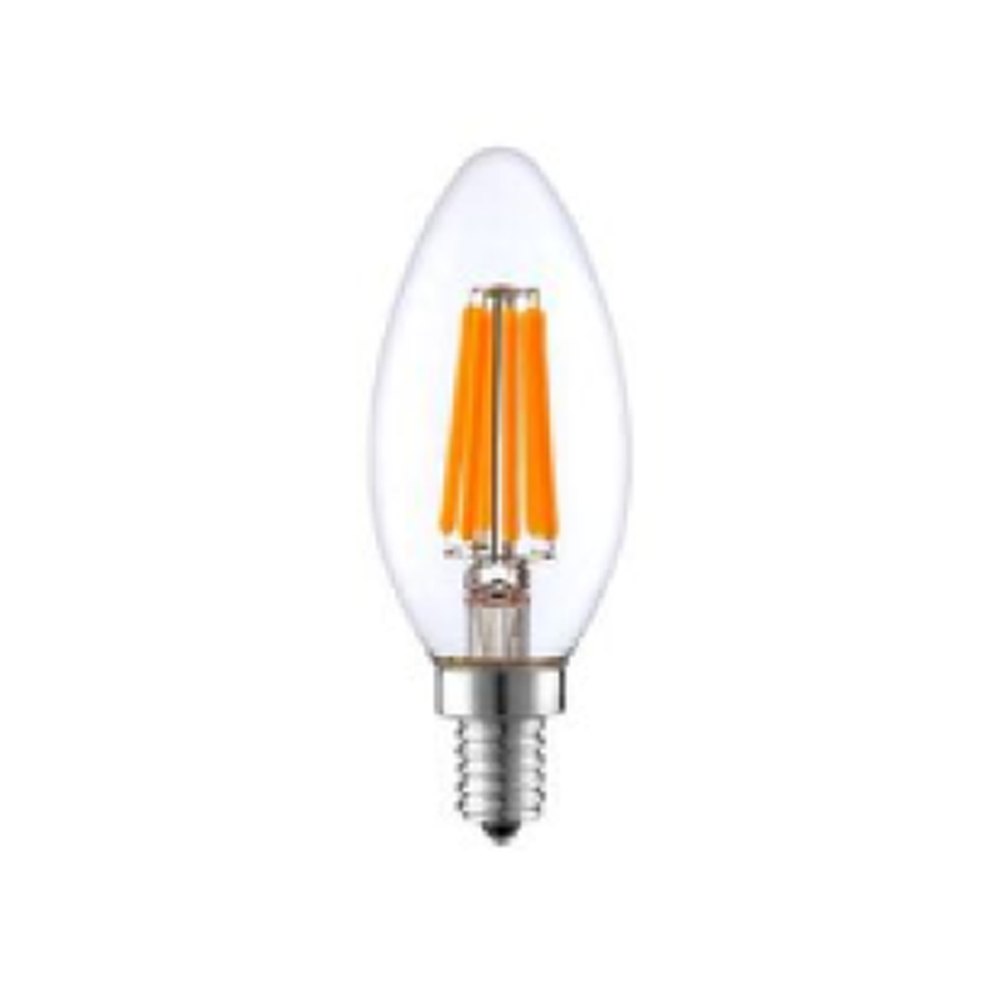
Clear glass bulbs with thin glowing lines inside are a familiar sight in restaurants, cafés and loft-style homes. These are LED filament bulbs. Some give ordinary warm white light; others give an amber, honey-coloured glow that is almost like a candle flame. This second group creates a special atmosphere, but it does not suit every place.
What a filament bulb is
In a classic incandescent bulb, light came from a heated tungsten wire. An LED filament bulb has thin strips that resemble that wire. Each strip carries many tiny LED chips covered with a phosphor layer. From the outside it looks like the coil of an old bulb, but the light comes from a semiconductor, not from heat.
The design is primarily about looks. Because the bulb sits in clear glass, it becomes part of the fitting and is often used in open pendants without a shade.
Where the amber glow comes from
The amber tint of filament bulbs is achieved in two ways. First, the phosphor layer of the LED strips is tuned to a very low colour temperature, around 2200K. Second, the glass itself is tinted amber or gold, which filters out part of the blue and green light and makes it look even warmer.
The result is noticeably more orange than an ordinary 2700K bulb, reminiscent of a sunset, candlelight or a fireplace. On the box these bulbs are often sold as “amber”, “vintage” or “gold”.
One point to note: tinted glass absorbs part of the light. At the same wattage, an amber bulb gives less light than a clear one. That is not a defect; it is simply the nature of such bulbs.
What this light does well
The strengths of amber filament bulbs are all about atmosphere:
- they create a cosy, intimate setting in an evening restaurant, bar or café;
- brick, wood, metal and leather look especially rich under this light;
- in a pendant, wall light or table lamp they act as a decorative element;
- at home in the evening, switching off the general light and keeping only these bulbs makes a room feel calm;
- on a balcony, terrace or garden corner they provide a warm, quiet background.
Where it falls short
The same features become drawbacks in some places:
- for precise tasks such as reading, writing or cooking, the light is both too little and too orange;
- where colours must look right, such as in front of a mirror or at the wardrobe, skin and fabric colours are distorted;
- it is unsuitable as the main light in a bathroom, a kitchen work zone or a child's homework desk;
- in cool interiors with white and blue tones it can look out of place.
So it is better to think of an amber filament bulb not as the only source of general light but as a “mood” layer added on top of the main lighting.
Glare: the downside of clear glass
Because a filament bulb sits in clear glass, the glowing strips are directly visible. Looking at a bright filament bulb hung at eye level can be uncomfortable. To reduce this:
- place filament bulbs above eye level or inside a shade;
- spread the light across a few gentle sources around the room rather than a single bright one;
- in a dimmable circuit, choose a compatible model and lower the brightness;
- amber or smoked glass, and gold-coated bulbs, soften the brightness.
If you plan to use a dimmer, make sure the box clearly says the bulb is dimmable; not every filament bulb is.
How to combine it in a room
When combining amber filament bulbs with other lights, consider the colour difference. Next to light around 2200K, a 4000K ceiling light will look very cold. For a more harmonious result, choose 2700K or 3000K for the general light and use the filament bulbs as an evening “second scene”: main light during the day and while working, only warm decorative bulbs in the evening.
When choosing, ask yourself: will the bulb be visible or hidden inside a shade? What other light is in the room? Will this spot be used for tasks or only for relaxing? The answers will show whether an amber or a clear filament bulb suits better.
Warm filament light from Zəfər İşığı comes in two E14 shapes: straight and teardrop. The product pages in the catalogue show which fittings these shapes suit.
All news