
How an incandescent bulb works and why its filament breaks
The incandescent bulb is the simplest light source, yet several physical effects lie behind a broken filament. Here is why bulbs so often fail the moment they are switched on.
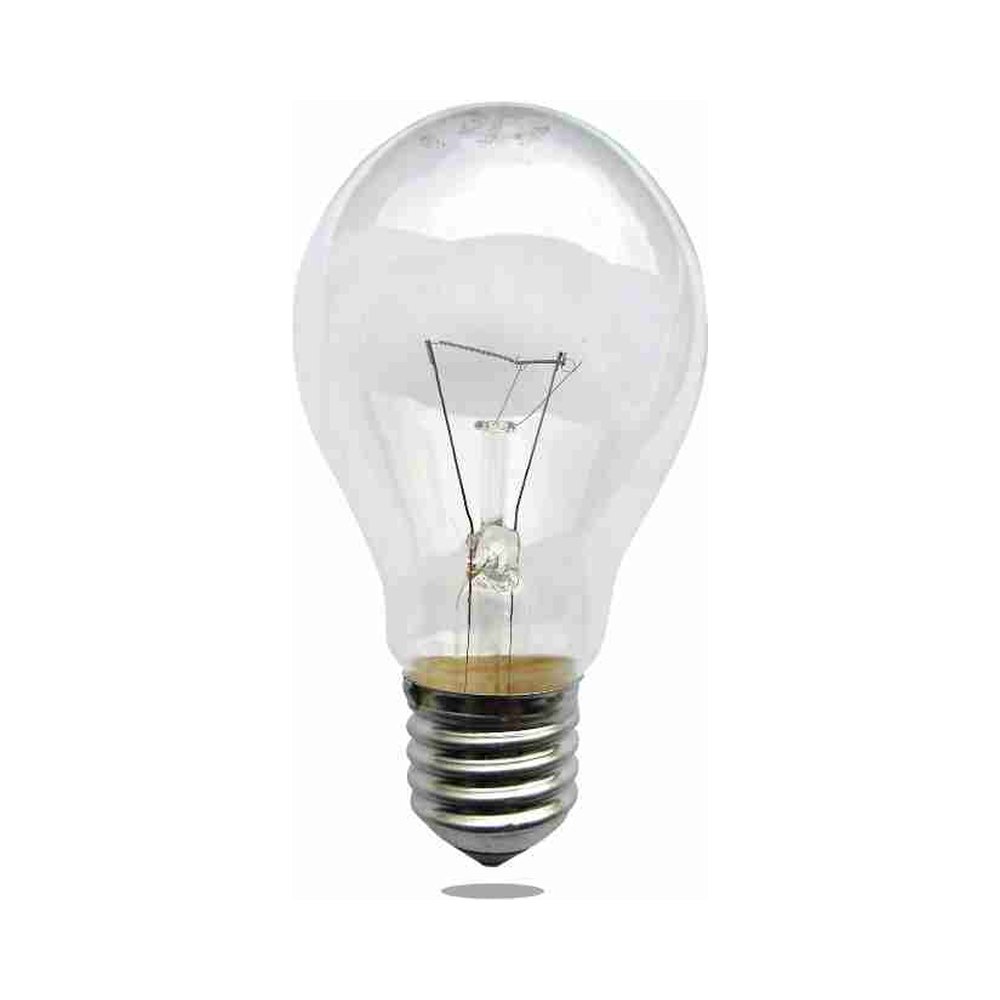
Most of us know the moment: you flick the switch, there is a brief blue flash and a small pop, and the bulb is dead. It is rarely while the bulb is burning that it fails, but right as it is switched on. That is no coincidence, and the reason becomes clear once you look at how an incandescent bulb is built.
A simple design at a very high temperature
An incandescent bulb consists of a glass envelope, a thin tungsten filament held between two lead wires, and a screw cap. When current passes through the filament, its resistance heats it. The temperature reaches thousands of degrees and the filament glows brightly.
Tungsten is used because it has one of the highest melting points of any metal. To fit a long filament into a small space it is coiled, and often coiled again, a so-called coiled coil. The air is pumped out of the envelope or replaced with an inert gas such as argon or nitrogen. In air, hot tungsten would oxidise almost instantly; the inert gas prevents oxidation and also slows evaporation.
The weak point of this method is efficiency. Most of what a hot filament radiates lies in the infrared range, so the bulb produces more heat than light. That is why an incandescent bulb gets hot enough to burn your fingers.
Why the filament thins
As the filament works, tungsten atoms slowly evaporate from its surface and settle on the inside of the glass. The greyish or dark film on an old bulb is exactly that deposit.
Evaporation is not even along the filament. Wherever a slightly thinner section appears, its resistance is higher, so it runs hotter than its neighbours. A hotter spot evaporates faster and becomes thinner still. The process feeds on itself: the weak spot keeps getting weaker until one day the filament breaks right there.
Why it happens at switch-on
The resistance of tungsten depends strongly on temperature. A cold filament has roughly a tenth, or even less, of the resistance it has at operating temperature. So in the first instant after the switch closes, the current is many times higher than the normal running current. The filament heats up within a fraction of a second, its resistance rises and the current settles back down.
This brief surge does damage in two ways. First, the thin spot heats faster than the rest and takes a larger share of the voltage, so it is the most stressed point. Second, the sudden heating puts mechanical stress on the filament. A filament that is already weakened breaks at that moment. A short arc may form across the gap, which is the blue flash you see. Some bulbs have a thin section in one lead wire that acts as an internal fuse so the arc does not persist.
Factors that shorten bulb life
When one fitting eats bulb after bulb, blame the fitting and its surroundings, not the bulbs:
- High voltage. Incandescent bulb life is very sensitive to voltage: even a few percent above the rated value shortens filament life noticeably. Bulbs that look clearly brighter in the evening are one sign of this.
- Vibration and knocks. A hot filament is soft and deforms easily. Fittings mounted on ceiling fans, bulbs next to a slamming door and workshop ceilings are typical risk spots.
- Frequent switching. Every switch-on means the current surge described above.
- Poor contact. If the contact tab in the holder is flattened or the bulb is not screwed in far enough, the contact heats, sparks and creates voltage spikes.
- Excess heat. A bulb above the rated wattage in a small enclosed shade overheats the bulb, the holder and the wiring.
- Moving a lit bulb. Pushing or adjusting a bulb while it is on, or knocking the fitting, can damage the hot filament.
What you can do
If early failures keep happening, check things in this order: first the contact in the holder (with the power off), then whether the fitting is subject to vibration, and finally the mains voltage. Measuring voltage and replacing a holder are safest left to an electrician. When changing a blown bulb, wait for the glass to cool.
Today incandescent bulbs are used mainly in special situations: in appliances that run hot, for a retro look, or where perfectly smooth dimming is wanted. For everyday lighting an LED bulb gives the same light with far less heat and is not nearly as sensitive to the cold-start surge.
Zaferoğlu Elektrik still lists incandescent bulbs next to its LEDs, and its E14 filament candles offer the familiar filament look with LED inside.
All news