
Dim-to-warm bulbs: light that gets warmer as it dims
A dim-to-warm bulb shifts its colour towards amber as you lower the brightness. How it works, where it makes sense and what to check before buying.
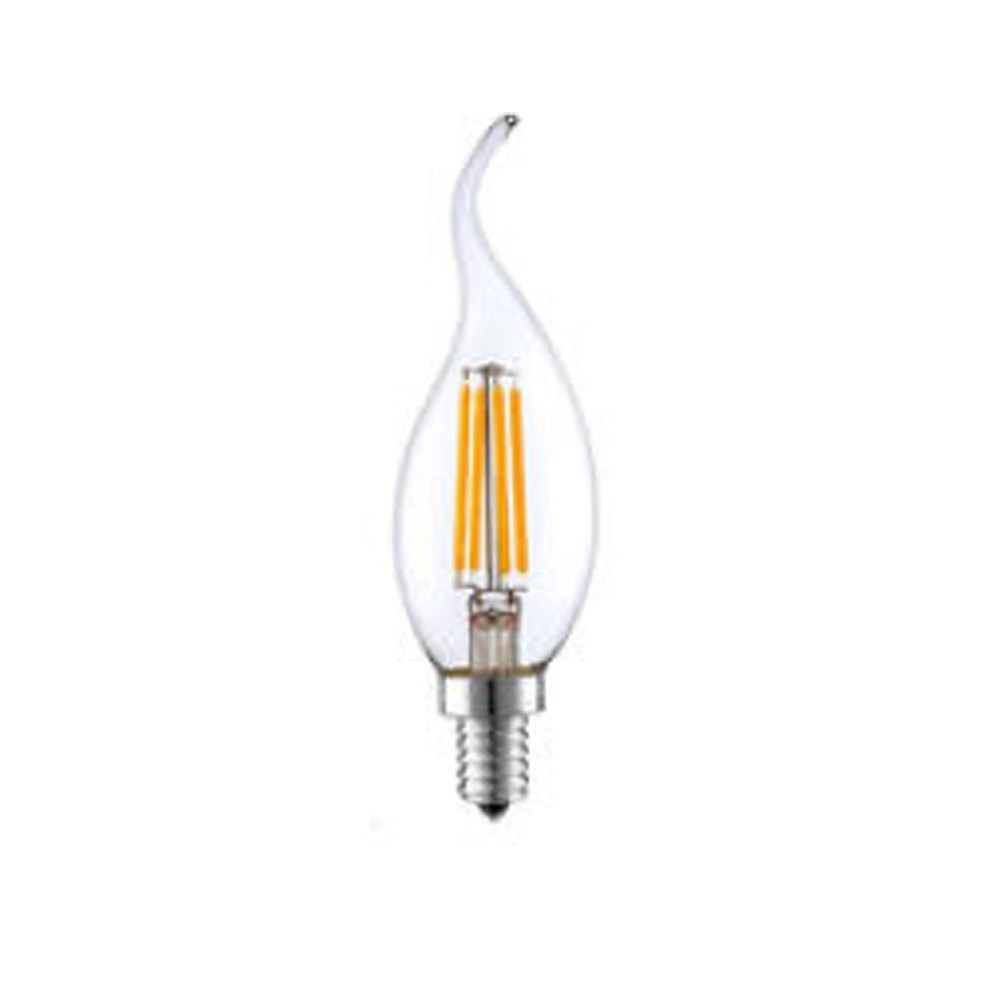
Anyone who has dimmed an old incandescent chandelier will remember that the light did not just get weaker, it turned golden and then orange. That shift is what gave a dinner table its candle-like mood. A standard LED behaves differently: dim a 3000K LED and it stays 3000K, only fainter, which can look flat and slightly grey. Dim-to-warm technology exists to close that gap.
Why incandescent bulbs warmed up
An incandescent bulb produces light from a glowing tungsten filament. When a dimmer reduces the power, the filament runs cooler. The cooler a glowing object is, the more its radiation shifts towards red and orange. So a bulb that looks yellowish-white at full power becomes golden, then amber, as it is dimmed.
This was never a designed feature, simply physics. But people grew used to it, and low light has come to feel natural when it is warm: firelight, candles and sunsets all combine dimness with a warm colour.
How an LED imitates it
An LED’s colour is set by the chip and its phosphor coating, not by the current flowing through it. That is why dim-to-warm needs a special design. The most common approach puts two groups of LEDs in one bulb, one giving a warm-neutral light and the other a very warm, almost amber light. The driver reads the dimmer signal and, as brightness falls, shifts more of the output to the warm group.
The result might be around 2700K at full brightness and around 2000K or warmer near the bottom of the range. The exact span depends on the model, so check the start and end colour temperatures given on the box or data sheet.
Some smart bulbs achieve a similar effect in software: you select a warm-dim mode in the app, and colour follows brightness. In that case the bulb is controlled from the app or a remote rather than a wall dimmer.
Where it works well
The benefit shows up where brightness changes often:
- pendants over a dining table, normal light by day and low, warm light at dinner;
- chandeliers and wall lights in a living room;
- bedrooms, especially in the hour before sleep;
- restaurants, cafés and hotel lobbies that change the atmosphere through the day.
In places such as a kitchen worktop, a reading desk or a bathroom mirror, dim-to-warm adds little. The light usually runs at full output there, and the priority is clear vision and accurate colour.
What to check before buying
A dim-to-warm bulb only does its job with a suitable dimmer. On a normal switch it simply behaves like a fixed-colour lamp. Before you buy, confirm:
- Dimmer type. The packaging states which dimmers the bulb supports, for example phase-cut types. A dimmer installed for old incandescent loads may cause flicker or buzzing with the small load of LEDs.
- Colour range. Both the full-brightness and minimum colour temperatures should be listed.
- Minimum level. Some models cut out or flicker at very low settings, so test in the shop if you can.
- One model per room. Dim-to-warm bulbs from different makers can show different colours at the same dimmer setting, which looks uneven in a chandelier.
- Shape and cap. The effect is available in candle, standard and filament-style bulbs; know whether you need E27 or E14 first.
Compared with an ordinary dimmable bulb
Not every dimmable LED is dim-to-warm. A regular dimmable LED only changes brightness. If you rarely dim, or already use warm 2700–3000K light, the difference may not matter much. In a room that is dimmed heavily every evening, though, dim-to-warm keeps the space from looking drained.
One more point: if you plan to fit a dimmer, have it installed by someone qualified, and make sure every bulb on that circuit is rated as dimmable. Put a bulb not rated for dimming behind a dimmer and its driver may give up long before its time.
For warm decorative light, Zəfər İşığı makes E14 filament lamps in two shapes, straight and teardrop. Whether a particular model works with a dimmer is best confirmed through the company’s enquiry form before you buy.
All news