
Lighting hallways and corridors
The entrance hall is a home's first impression, and the corridor is a path used day and night. Ways to light these narrow, windowless spaces comfortably and economically.
Open the front door and the first thing you see is the entrance hall. This is where shoes come off, keys are hunted for and you take a last look in the mirror. The corridor links the rooms and is the route used most at night. Both spaces are usually narrow, windowless and used for short periods. So the aim of their lighting is not to make them bright for their own sake but to allow safe movement, easy preparation and economical operation.
What happens in the entrance hall
Several small tasks happen at the entrance, and each makes its own demand on the light:
- Shoes and coats. There should be no shadow at floor level in front of the shoe rack. If the inside of the wardrobe is dark, a small light there is handy.
- The mirror. For a last look before going out, light the face from in front or from either side; light from above alone gives a shadowy reflection.
- Keys, bags, post. Local light for a small shelf or console by the door, such as a wall light, is practical and creates a soft, welcoming atmosphere for guests.
Since the entrance is a home's first impression, a decorative fitting makes sense here, but it should not replace functional light.
Even light in the corridor
In a long, narrow corridor, a single central lamp leaves both ends dark. For a better result, spread the light along the length. Place several small ceiling fittings or spotlights at even intervals so that each pool of light meets the next. Space the fittings too far apart and you walk through a striped pattern of light and shade, which quickly tires the eyes.
In a low-ceilinged corridor, a pendant can hit people's heads and makes the space feel even lower. A flush ceiling fitting or recessed spotlight is more suitable. Light-coloured walls increase reflection and make a narrow passage feel wider.
Colour temperature and consistency through the home
Because the hallway and corridor connect several rooms, their light should be in harmony with the neighbouring rooms. If the living room has warm light and the corridor cool white, you feel a sharp transition whenever a door opens. Warm-neutral light is often a good all-round choice for the whole circulation area.
Bright light dazzles sleepy eyes on a night-time walk down the corridor. A two-level solution helps: main light for day and evening, and dim light points low on the wall for the night.
Switches and sensors
Hallway lights are switched on and off often and frequently forgotten. This is one of the best places for automatic control.
- Two-way switches. Let you control the light from both ends of a long corridor, or from the front door and the bedroom.
- Motion sensors. Turn the light on when someone passes and off after a set time. Especially handy when your hands are full. Give the sensor a long enough delay to keep the light on while someone is still tying their shoes.
- Combined with a daylight sensor. If daylight reaches the corridor, the sensor only activates in the dark.
On a sensor-controlled circuit, the lamp switches on and off frequently. Incandescent bulbs used to fail quickly in this regime; LED bulbs reach full light instantly and tolerate frequent switching better. Still, check the manufacturer's guidance on sensor compatibility, as some sensors do not work properly with very low-wattage loads.
Typical mistakes
- A single central lamp in a long corridor.
- A mirror lit only from above.
- A switch far from the door, where you grope for it in the dark.
- A colour temperature that clashes with neighbouring rooms.
- Night light that is too bright.
A short plan
- Provide general light at the entrance and separate light for the mirror.
- Spread light points evenly along the corridor.
- Fit two-way switches at both ends or a motion sensor.
- Add dim, low-level light for the night.
- Match the colour temperature to neighbouring rooms.
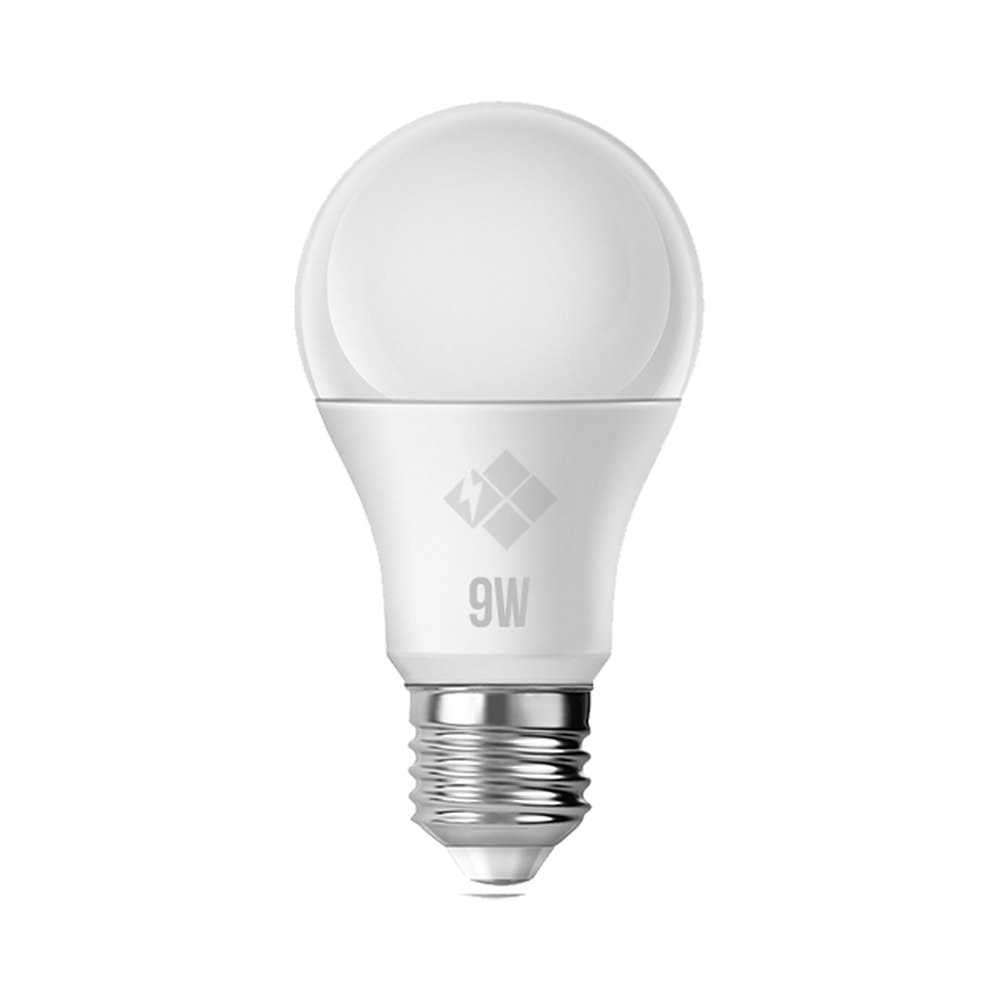
Corridor ceiling lights can take E27 Zəfər İşığı LED bulbs, and recessed spots can take the GU10 and G5.3 models from the same line.
All news