
What “60 W equivalent” on the box really means
What "60 W equivalent" on an LED bulb box means, which lumen value the comparison is based on, and what to keep in mind before relying on it.
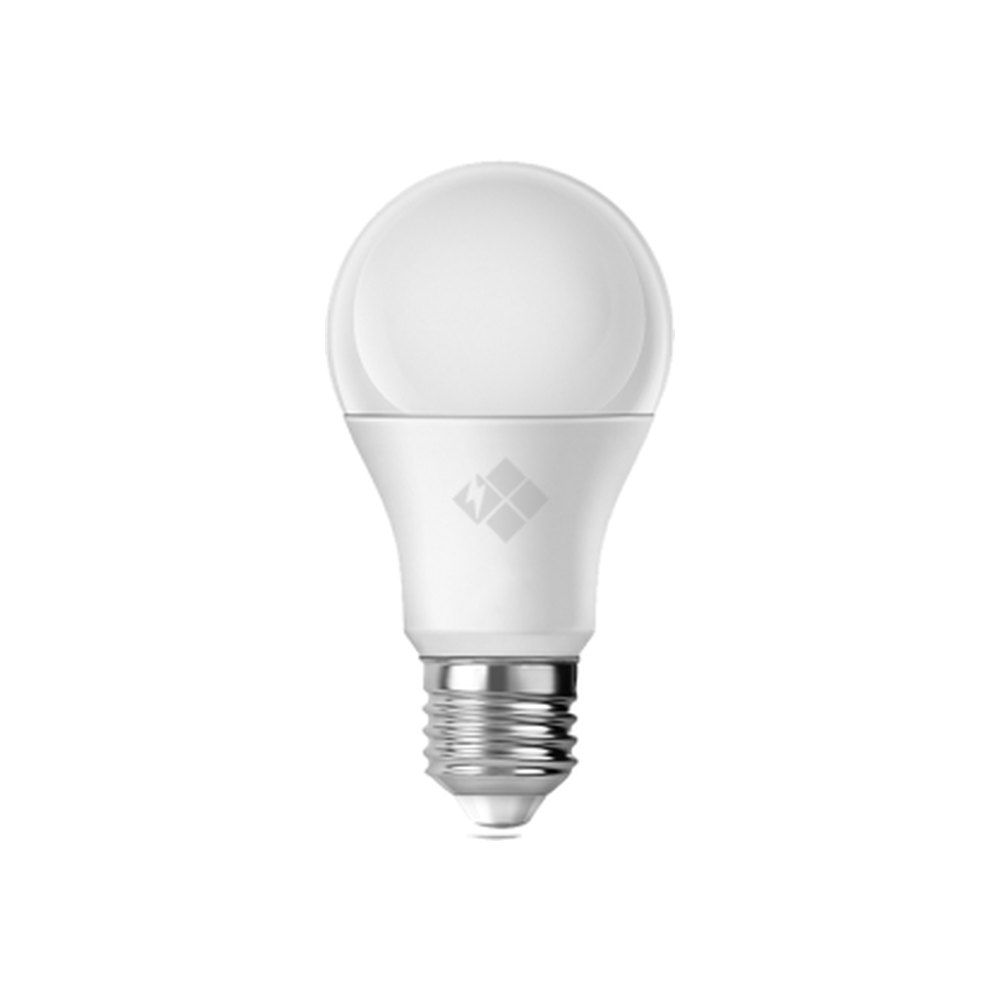
An LED bulb box shows two wattage figures side by side: for example, "8 W" in small print and "60 W equivalent" in large print. For the buyer it is a handy shortcut, showing at a glance what to buy in place of an old 60-watt bulb. But the label is often misunderstood: people assume the bulb uses 60 watts, or that it will definitely be as bright as the old bulb. In fact the equivalent figure is a comparison, and it has its limits.
Equivalent: a comparison of light, not consumption
In the incandescent era, people got used to judging brightness in watts: 40 W was dim, 60 W normal, 100 W bright. That worked because all incandescent bulbs had roughly the same efficiency, and light rose in proportion to wattage.
An LED bulb produces the same light with far less power. So "8 W", read the old way, says nothing about brightness. To help buyers, manufacturers print an "equivalent": this LED bulb gives about as much light as a 60-watt incandescent bulb.
Two important points follow:
- the bulb draws from the mains not the equivalent figure but the actual wattage shown separately on the box;
- the equivalent figure is not used to calculate electricity use, heat or load on the lampholder.
Which lumen value is meant
The comparison is not arbitrary. European Union lamp labelling rules set a minimum light output for using an incandescent equivalent claim. Under these rules, for a general-purpose, omnidirectional bulb:
- 25 W equivalent: about 249 lumens;
- 40 W equivalent: about 470 lumens;
- 60 W equivalent: about 806 lumens;
- 75 W equivalent: about 1055 lumens;
- 100 W equivalent: about 1521 lumens.
So a bulb labelled "60 W equivalent" should, if these rules are followed, give at least about 806 lumens. These figures may be rounded slightly differently depending on the country and manufacturer, but the logic is the same.
Why you cannot rely on the equivalent alone
Not every manufacturer follows the same rule. On some boxes the equivalent is rounded up, or no lumen value is given. To know how bright a bulb really is, look at the lumen figure.
Light distribution differs. An incandescent bulb spread light fairly evenly in all directions. Some LED bulbs send most of their light downwards. In a ceiling shade this makes the table look brighter and the ceiling darker. The same lumens create a different impression.
Colour temperature changes perception. Many people find a cool white bulb brighter than a warm white one with the same lumens. The old incandescent bulb gave very warm light, so a neutral or cool LED can feel "stronger than the equivalent".
Glass and shades. Frosted glass and a thick shade absorb part of the light. Even if the bulb's own lumens match the box, less light reaches the room.
Spotlights use a different measure. For directional bulbs such as GU10, the equivalent comparison is based not on total lumens but on light within a certain beam angle. Comparing them with the same table as ordinary bulbs is not correct.
Reading the box properly
Use the equivalent figure as a starting point when choosing, but base the decision on these details:
- Lumens: the main brightness figure;
- Actual wattage (W): electricity use;
- Colour temperature (K): the tone of the light;
- Beam angle: where the light goes;
- Size and shape: whether it fits the fitting.
A room that felt right with a 60-watt incandescent will feel much the same with an LED rated at roughly 800 lumens. If the room used to feel dark, go one step up, for example to 1000–1100 lumens.
Quick reminder
- The equivalent compares light, not consumption.
- Lumens show the real brightness.
- At the same lumens, cool light looks brighter and warm light softer.
- Shades and frosted glass take away part of the light.
The Zəfər İşığı catalogue lists LED bulbs by their actual wattage, such as 7, 9, 12 and 15 watts. Where the lumen output of a particular model matters, Zaferoğlu Elektrik can be asked directly via the form on its website.
All news